Category: Palestine briefing

Foreign Secretary in talks with French on new peace initiative

Former Middle East minister Ben Bradshaw among MPs urging support

Foreign Secretary Philip Hammond has held talks with the French to explore the idea of a peace conference in Paris this summer to start serious discussion on a solution to the Israel-Palestine conflict.Bradshaw

Former Middle East minister Ben Bradshaw (right) and Tom Sheppard and Paul Monaghan of the SNP are among the MPs who have pressed him to consider supporting the initiative of the French foreign minister Jean-Marc Ayrault.

Ben Bradshaw wrote to the Foreign Secretary and was told: “We are discussing with the French to explore their idea, which is still at an early stage…. We will continue to engage with the French as they develop their plans.”

Mr Hammond met the French special envoy for the initiative, Pierre Vimont, to discuss how the idea would work in practice.

MPs have an opportunity to urge Mr Hammond to give the UK’s full support to a Franco-British peace initiative at Foreign Office questions on Tuesday April 12th. 

The French Foreign Minister hopes to call a gathering of supportive countries in Paris to lay the groundwork for a peace conference in the summer.

This is supported by the Palestinians, by the EU foreign affairs representative Federica Mogherini and by several European countries including the Spanish and Italians, but will have a far better chance of success with UK support.

The plan was first put forward by the outgoing French foreign minister, Laurent Fabius, who also warned that – if this initiative fails – France will recognise Palestine.

His successor Jean-Marc Ayrault has said recognition will not follow “automatically” if Israel refuses to participate – in order to give the conference a better chance of success.

But if talks don’t take place, or break up, it is difficult to see what logical step remains other than a co-ordinated recognition of Palestine by the UK, France and other European countries such as Italy, Spain, Ireland and Belgium.

The state of Palestine is already recognised by 136 countries (out of 193), inclding ten in the EU, and a joint move by the UK, France and others would send a clear message without in any way changing the UK’s formal relationship with Israel, which it has recognised since 1950.  It would also impose responsibilities on the Palestinians. 

This is the time for British MPs of all parties to make the case to the Foreign Secretary. 

President Obama has made it clear he will make no further moves on the Israel-Palestine in the remainder of his term – though he has hinted he might lift his veto on a Security Council resolution.

The EU Council of Ministers is unlikely to be able to agree an initiative between all 28 countries – there will always be an East European country voting against – so the responsibility falls to the major West European powers. 

We all know why Germany will not take the lead, and France has already put forward an initiative, so it is now up to the UK to say whether it will join with the French.  There is no longer any excuse for sitting on the fence. 

It is important for the UK not only to back the conference this summer but also to support the French position that – if Israel does not engage realistically in the talks – there will be a concerted move to recognise Palestine before the end of the year.

Foreign and Commonwealth Office Questions Tuesday April 12th 11.30 am

  • Question 7 David Mowat (Warrington South): What recent assessment he has made of the likelihood of a two-state solution in the Middle East.
  • Question  9 Chris Philp (Croydon South): What recent discussions he has had with his counterparts in the EU, Africa and the Middle East on steps to tackle the refugee crisis in the Middle East.
  • Question 15 Tommy Sheppard (Edinburgh East): What representations he has made to his Israeli counterpart on the use of administrative detention in that country.


It’s the absence of a solution that causes the violence

MPs who have visited Jerusalem and the West Bank in the last few months will know how dire the situation is and how desperate the Palestinians feel.

It is now six months since the latest wave of violence started. Since October 1st lakerryst year 15,097 Palestinians and 215 Israelis have been injured (a ratio of 70:1) and 202 Palestiniansand 24 Israelis have been killed (a ratio of 8:1). Source: UN protection of civilians database

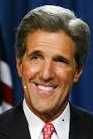
It’s nearly two years since the last round of talks between Israelis and Palestinians brokered by the US Secretary of State John Kerry (right) collapsed in April 2014 after Israel cancelled a promised release of prisoners and announced new settlement building.

The two facts are related. It is precisely because the West has hung the Palestinians out to dry by failing to follow up the collapse of the talks with any effective pressure on the Israeli government that some Palestinians have turned to violence.

It’s worth remembering that it’s only a tiny minority of young Palestinians who have attempted to kill or injure Israelis – and they have usually been executed on the spot without any serious attempt to arrest them.

The latest video of a young Palestinian being executed by an Israeli soldier as he lay apparently unconscious on the ground tells you a lot about the casual indifference of Israelis – even Israeli ambulance workers – to the lives of Palestinians. See injured Palestinian ignored by ambulance, shot in cold blood

But instead of focusing on the 202 who have been killed, it’s worth thinking about the 15,097 who have been injured.  That’s a huge number of (mainly) young people, the great majority of whom have committed no crime but have been treated in hospital for injuries sustained in protests and demonstrations.

They are victims of the Israeli army’s increasing use of excessive force against unarmed and peaceful demonstrations, including live ammunition and rubber-coated bullets.  The equivalent in Britain would be for 350,000 young people to have been treated in hospital for injuries sustained in demonstrations in the last six months, 63,000 hit by rubber-coated bullets, 50,000 hit by live ammunition and 15,000 suffering from physical assaults by soldiers or vigilantes (settlers).

The Israelis call it the ‘intifada of individuals’ –  an acknowledgment that it is not organised or even incited by outsiders, but the spontaneous and desperate retaliation of a generation of young Palestinians against the everyday hardships and indignities of a brutal occupation now nearly 50 years old.

The absence of any attempt by the Western powers to broker a solution means that moderate politicians are discredited and more people turn to violence.  A French or a Franco-British initiative would be an important step in the right direction.  But talks alone are not enough. They must be talks with a reasonable chance of success.  It’s the absence of a solution that causes the violence.

Did the Minister say ‘yes’ or ‘no’? It wasn’t clear from his answer.

Even after an hour and a half of parliamentary debate about whether it was legal fpenroseor councils to ban trade with illegal Israeli settlements, MPs were still scratching heads and asking what exactly the Cabinet Office minister had meant.

“The answer is that it depends. There are situations where councils will be able to and situations where they will not,” was the nearest that John Penrose (right) came to a clear answer.

“We are clear that settlements themselves are illegal, but a firm based in those settlements may be operating in an entirely whiter-than-white, above-board fashion.”

He cited various laws that allow councils to exclude suppliers that have breached international social, environmental or labour laws, but he said councils could not assume that everything done in an illegal settlement was implicitly wrong.

“A separate case-by-case decision must be made about whether each potential supplier satisfies the rules.”

A geographical ban on suppliers from Israel would be against World Trade Organisation rules, he said, but this would not apply to a ban on settlement goods, he conceded, as “the Government do not recognise the illegal settlements as part of Israel”.

The debate was called by Richard Burden MP, chair of All-Party Britain-Palestine Group, so the Cabinet Office could clarify whether their new Public Procurement Notice issued in February would make it illegal for councils to ban trade with companies based in illegal Israeli settlements in Palestine, as a press release from the Conservative Party had clearly implied.  He put six questions to the minister:

  1. Were civil servants consulted before the announcement of the proposed notice in a press release issued at the Conservative party conference?
  2. Is there anything in this notice or that is intended by the Government that in any way changes the law?
  3. Public bodies may already exclude tenderers from bidding for a contract where there is information showing grave misconduct by a company [or] where there are breaches of human rights. Does last month’s public procurement note in any way change or add to that advice?
  4. Does the Minister consider that a breach of the fourth Geneva convention is a breach of human rights. If so, would the note stop a public institution resolving not to deal with a company that was involved in aiding and abetting breaches of that convention?
  5. Pension fund trustees are already covered by a fiduciary duty, but will the changes being introduced in any way fetter the judgments that they make in line with that fiduciary duty in relation to not investing in fossil fuels, tobacco or the arms trade?
  6. Will the Minister outline what plans he has for parliamentary scrutiny of these changes to pension fund guidance?

At the end of the debate he said: “My six questions have not been answered to my satisfaction, nor have the questions asked by other Members. I ask the Minister to answer in writing.”

Read extracts from the debate

Read the whole debate here..

Richard Burden (Birmingham, Northfield) (Lab): For where this all starts, we need to go back to the Conservative party conference last October. A presRichard Burden MPs release was issued headlined “Government to stop ‘divisive’ town hall boycotts and sanctions” and “growing spread of militant divestment campaigns against .. Israeli firms.” [But] the behaviour most frequently mentioned in the press release was financial involvement with illegal settlements in the West Bank.

It is rather surprising that the Minister for the Cabinet Office (Matthew Hancock) took such exception to public institutions seeking to avoid dealings with co
mpanies involved with illegal settlements, given that the Foreign Office’s own website says there are “clear risks related to economic and financial activities in the settlements and we do not encourage or offer support to such activity”.

Chloe Smith (Norwich North) (Con): I believe that it is wrong for councils to attempt to use local government pension funds and procurement practices to make their own foreign policy, first, because foreign policy is reserved to Westminster, second because local boycotts can damage community cohesion, third because breaches of procurement legislation can result in severe penalties against the contracting authority and, finally, because it does not provide taxpayers with value for money.

Mr Clive Betts (Sheffield South East) (Lab): During the 1980s, some local authorities sought to sever links with firms that traded with South Africa. I think local authorities were right then and I think there is a lot of shame on the Conservative benches about the action that the then Conservative Government took in defence of the apartheid regime.

Can the Minister explain what he thinks the effect will be on race relations in my constituency, which has a large number of people of Muslim faith, if they saw their council tax being used to buy goods from the illegal Israeli settlements? How could that possibly be good for community relations?

Dr Matthew Offord (Hendon) (Con): Supporters of the BDS movement claim to embrace the boycott tactic as a non-violent way to pressure Israel into negotiations. But the Palestinian Authority themselves do not support a boycott. In December 2013 Mahmoud Abbas stated that, with the exception of settlement goods, the Palestinian Authority do not support a boycott on Israel. He said that “we do not ask anyone to boycott Israel itself. We have relations with Israel, we have mutual recognition of Israel.”

John McNally (Falkirk) (SNP): I would like the Minister to explain to me the reasons for interference with the decisions made by trustees on behalf of local communities, who appoint fund managers to look after the pension funds for them. The Chancellor of the Exchequer has stated that he wants to start Northern powerhouses; he wants to give local people more say in what is happening in their local communities. Yet he is telling them, “Sorry, you’re not going to get a say in what your pension funds do.”

Justin Madders (Ellesmere Port and Neston) (Lab): Local government procures around £12 billion a year of goods and services. Ethical procurement can produce tangible benefits. For example, in my local Labour council, the new adult social care contracts adhere to Unison’s ethical care charter, which stipulates that 80% of the workforce must be on contracted hours, not zero-hours contracts.

Our local authority had all-out elections last May. Ethical procurement was one of the key parts of the manifesto commitment, and it has been delivered. So I say to Ministers: resist the temptation to micromanage local government. Show us that the Government are genuine about devolution and withdraw the regulations.

Tristram Hunt: The point about local government is that democracy is not all focused in this place. Decisions about spending, representation and taxation can also be made at a local level. If we strip that out, it undermines the pluralism and democracy of this country.

Andy Slaughter (Hammersmith) (Lab): The specific issue being dealt with in this debate relates to the Occupied Palestinian Territories. This issue should not be conflated with BDS. The fact that we have labelling guidance, which the Government have maintained, allows people to make individual choices.

Let us remember what we are talking about here: theft of land, occupation, colonisation, and the arbitrary detention of many thousands of Palestinians. Those are crimes in international law as great as anything that happened in South Africa.

Robert Jenrick (Newark) (Con): BDS is unlikely to further the peace process. I personally believe that settlements are extremely unhelpful. I support the British Government’s policy in objecting to them and trying to use any opportunity, to try to change minds and to further that argument, but I do not think the BDS movement is at all likely to further that argument. In fact, it is likely to be totally counterproductive.

Naz Shah (Bradford West) (Lab): BDS is about upholding international law. Nobody in the House is saying we should boycott Israel; what we are saying is that councils and people should have a legitimate right to make decisions on procurement. It was shameful when this House voted against sanctions on South Africa. That is not how I want to go down in history.

Martyn Day (Linlithgow and East Falkirk) (SNP): The Scottish Government strongly discourages trade and investment with illegal settlements. For a company to be excluded from competition, it has to have been convicted of a specific offence or committed an act of grave misconduct in the course of its business. One view, supported by the Scottish Government, is that where a company exploits assets in illegal Israeli settlements in occupied Palestine, it may be guilty of grave professional misconduct, and it may therefore be permissible to exclude it from a procurement process.

Richard Burgon (Leeds East) (Lab): I visited Jerusalem and the West Bank recently and I was concerned that the Cabinet Office Minister announced the proposals not in the Commons—which was in recess—but at a press conference in Israel, with the Prime Minister of Israel, Benjamin Netanyahu. The experience that we had in the West Bank clarified why some councils might want to take action on illegal settlements. The policies pursued by the Government of Israel in allowing illegal settlements to flourish are a physical and political barrier to peace and a two-state solution.

Tommy Sheppard (Edinburgh East) (SNP): It is interesting that, rather than choosing an English town hall in which to make a pronouncement about the affairs of local authorities, the Minister for the Cabinet Office travelled to Tel Aviv to make an announcement alongside the Prime Minister of Israel and chose to illustrate his announcement by referring to the impact of local authorities’ actions on the settlements in the occupied territories.

Now, if we are to say that local councillors should not be having a foreign policy and should concern themselves with local matters, we might rightly ask ourselves, “What are the Ministers responsible for the UK civil service and English local authorities doing travelling to foreign countries to make pronouncements on foreign policy?” We need to understand whether this is actually a dispute among colleagues in the Cabinet and an attempt by some who disagree with the established position of the Foreign Office to undermine it.

I have visited the area recently and spoken to many Palestinians who are involved. They are absolutely of one mind in telling us that they want us to call for disinvestment in the illegal settlements in the occupied territories.

Jonathan Ashworth (Leicester South) (Lab): Councils such as Leicester and Tower Hamlets were not making decisions about Israel as a nation; it was about illegal settlements, which the Government recognises and accepts are illegal.

Is it not right that local councils should make such decisions and be accountable to the people who elect them? Leicester City Council, the area I represent, made its decisions in 2014 and the councillors who put those decisions to the council chamber stood for election in 2015. They were re-elected with people knowing about those decisions on trade with illegal settlements in the West Bank, not trade with Israel.

Sir Alan Duncan: At the beginning of his comments, will the Minister clarify an important point of fact, which is the kernel of this issue? Will the Government’s proposed procurement rules permit a local authority to adopt a policy against investment in, or purchase from, Israeli settlements in the Palestinian West Bank?

Cabinet Office minister John Penrose: The answer is that it depends; I am sorry to be a little indistinct. I hope to give him a proper answer, rather than just a straightforward yes or no, because there are situations where councils will be able to and situations where they will not.

Demolition rising ‘faster than any time since calculations began’ – Minister

Ruth Cadbury.jpg

Two well-timed questions to the Department for International Development – on demolitions from Ruth Cadbury (Lab) and on recognition from Tom Brake (Lib Dem) – yielded hints that the Government is getting even more frustrated with the Netanyahu government and is considering an initiative.
Ruth Cadbury said the Government had already made “representations” over home demolitions in February when the rate of increase had trebled, so what more effective action or sanction would they impose now that it had quadrupled?
Aid minister Desmond Swayne confirmed that the rate of increase “is now faster than at any time since calculations began to be made” and it was essential that the occupied territories should be governed in accordance with international law.
[Israel is currently breaking international law by annexing East Jerusalem, building settlements, building the wall on Palestinian land, carrying out punitive demolitions and by expropriating Palestinian land, water and mineral resources for non-military purposes.]
He admitted that the Government’s only planned response was to make yet more “representations” and added: “I know she wants to push me further and I entirely understand the strength of her frustration and anger.”
Tom Brake asked if it was not time that the UK recognised Palestine as a sovereign state given that any prospect of a two-state solution was fast disappearing.
The minister gave a response that made it clear that it was purely a question of judging the right moment and having maximum impact: “We can only recognise Palestine once. It is essential, therefore, that we do so at a moment where we will have maximum impact on any peace process. That is a fine judgment.”
[The French have said they will recognise Palestine by the end of this year if their new peace initiative is not off the ground by then and up to eight other European countries, including Spain, Ireland, Belgium and Luxembourg, are said to be planning to follow suit.]

Ruth Cadbury (Brentford and Isleworth)(Lab) (right)What recent representations she has made to the Israeli government on the effect of home demolitions in the West Bank on the humanitarian situation in that region.

Aid Minister Desmond Swayne: Their increase adds to the sum of human misery, undermines any prospect of a peace process and is contrary to international law. I have left the Israeli Government in no doubt about the strength of our disapproval; our embassy continues to do so.
Ruth Cadbury:  The latest figures from the UN, from early this month, show that there have been 400 demolitions since the start of the year, more than four times the rate of demolitions last year.
The wave of demolitions is depriving Palestinians of their homes and their livelihoods and preventing European taxpayer-funded organisations from providing essential humanitarian support.
As the British Government made representations when demolitions trebled, what more effective action or sanction will the Minister impose now that demolitions have quadrupled?
Mr Swayne: She is right that the rate of increase is now faster than at any time since calculations began to be made, and it is essential that the occupied territories, and in particular Area C, are governed in accordance with the fourth Geneva protocol. We will continue to make these representations to the Government.
I know she wants to push me further, and I entirely understand the strength of her frustration and anger, but jaw jaw is better than war war.
Michael Tomlinson (Mid Dorset and North Poole) (Con): Will the Minister join me in condemning incitement to violence or glorification of violence on either side?
 
Mr Swayne: Absolutely. We are wholly opposed to incitement, and when instances of incitement are brought to my attention, I go straight to the telephone to raise the matter with the chief executives of those organisations and make absolutely clear our fundamental disapproval, and our requirement that things are put right.
Tom Brake (Carshalton and Wallington) (LD): With any prospect of a two-state solution fast disappearing, it is of course right that we recognise Israel’s right to self-defence, but is it not also time that we recognised Palestine as a sovereign state?
Mr Swayne: We can only recognise Palestine once. It is essential, therefore, that we do so at a moment where we will have maximum impact on any peace process. That is a fine judgment.
Mr Gregory Campbell (East Londonderry) (DUP): What recent checks have the Government made in relation to support offered in the West Bank to moneys that end up in the coffers of terrorist-supporting groups on the West Bank?
Mr Swayne: Absolutely none of UK British aid, multilateral or bilateral, ends up in the hands of terrorists.

He dares to say it, but does he dare to do it?

Idavid_cameronf he finds what the Israelis are doing “genuinely shocking”, there’s plenty he can do.


Why not give him a few ideas?

It’s been true for some years now – according to the opinion polls – that the majority of people in this country who have an opinion disapprove of the behaviour of the Israeli government towards the Palestinians.
So they should have been comforted to hear David Cameron say at Prime Minister’s questions that he also finds the actions of the Israeli government to be “genuinely shocking”.
But, on reflection, his answer is more troubling than comforting. He says the settlements are “illegal”. He says East Jerusalem is “occupied”.  He says the actions of the Israeli government are “genuinely shocking”.
But he is not just an ordinary punter.  He is the Prime Minister.  He can do something about it.
But he hasn’t.
The newspapers are full of stories about people were once in positions of authority in the past, but failed to uphold the law.  Bishops who failed to report evidence of child abuse. Chief constables who failed to act on allegations of sex with minors. Directors of international sports organisations who failed to blow the whistle on corruption.
And history has already passed its judgment on politicians who defended South Africa’s apartheid régime in the 1980s.  It won’t be long now before a similar judgment is passed on politicians of the 2010s who fail to uphold international law on the illegal settlement of the West Bank and the illegal annexation of East Jerusalem.
David Cameron puts himself in a better place than many of his colleagues by saying he finds what is going on in East Jerusalem to be “genuinely shocking”, but this only makes it more important for him to answer the question: What will he do about it?
Far from being powerless, the UK is probably the country in the strongest position to lead. The US won’t, especially now (though Obama might lift the veto at the Security Council for a good European initiative). The EU can’t, because it needs all 28 countries to agree. So it is down to the major West European countries.
We all know why Germany won’t take the lead. France has already launched an initiative. If Cameron launched an initiative now, together with France or in parallel, it could use the prospect (or the reality) of a mass-recognition of Palestine by West European countries to put the Israelis in the right frame of mind.
It was in response to a question from Bradford West MP Imran Hussein that David Cameron said he found the current situation “genuinely shocking”. MPs can now table a question that will give the Foreign Secretary the opportunity to say what the UK is going to do about it.

MPs witness the utter hopelessness and despair of young Palestinians

Three delegations of British MPs were in Israel/Palestine in February and none of them can have failed to detect the sense of utter hopelessness and despair among young Palestinians.
It’s now nearly two years since the Kerry talks collapsed in April 2014 and the resulting political vacuum has led to frustration, to anger and to individual acts of violence – which are still continuing.
It is nearly a year since the election in March 2015 which Netanyahu won after saying that there would never be a Palestinian state while he was PM and making a racially provocative statement about Arabs “voting in droves”.

The first statement came in an election-eve interview when he said: “I think that anyone who moves to establish a Palestinian state and evacuate territory gives territory away to radical Islamist attacks against Israel.”

The interviewer then asked him if that meant a Palestinian state would not be established if he was prime minister and Netanyahu replied: “Indeed.”
The second came on election day itself when Netanyahu recorded a 30-second clip for YouTube in which he said the government was “in danger” because “Arab voters are heading to the polling stations in droves. Left-wing NGOs are bringing them in buses.”
These two statements have profoundly affected the mood of Palestinians, especially the young generation who now mock the advice of the older generation to avoid violence and trust the international community.
“What did the Oslo accord achieve?  What did 20 years of peace talks achieve?” they ask.
The older generation have no answer. There is no hope, no prospect.  The Israelis have always rejected a one-state solution – at least with equal rights – and the two-state solution is now being buried by Caterpillar bulldozers laying the concrete foundations of yet more illegal settlements.
Conservative and Labour Friends of Israel MPs have tried to blame the upsurge in violence on ‘incitement’ and ‘radicalisation’ by the Palestinian Authority.
In fact the upsurge started on October 1 immediately after the burning to death of three members of the Duwabshe family by illegal settlers in the village of Duma.
It has been sustained by the Israeli army’s excessive force in dealing with demonstrations and suspected terrorist attacks. According to the UN 14,925 Palestinians were injured by Israeli forces last year – about 150 for every Israeli injured by a Palestinian.
Very few of the injured were involved in any kind of attacks.  As the father of one teenage victim told the Israeli newspaper Haaretz: “The true source of incitement is the behaviour of the Israeli soldier and whoever gives him his orders.”
Even the chief of staff of the Israeli army, Lt Gen Gady Eisenkot, admitted last week that over-reaction by Israeli soldiers was a problem. Referring to a recent case he told a group of soldier that it was unthinkable that “you need to empty a magazine of bullets into a girl wielding a pair of scissors”.
The notion that the very mild-mannered, violence-hating president of the Palestine Authority Mahmoud Abbas has been goading Palestinian teenagers to acts of violence has caused nothing but mirth in the occupied territories. The 81-year-old Abbas is the most uninciting politician in Palestine.
The Middle East minister Tobias Ellwood pointed out to Labour Friends of Israel’s Louise Hanson that some of the acts of violence are not incited but are caused by the “frustration of some individuals who have lost faith in their own leadership.  The fact that youngsters can get out a knnfe and go off and kill an Israeli, knowing the consequences, reflects the dire situation we face”.
The Minister has told Louise Hanson MP that “we are concerned by the use of force by Israeli security personnel in response to protests and security incidents.  We regularly raise with Israel concerns over the use of force, including lethal force”.

Conflict between government departments on whether BDS is illegal for public bodies

Mr Clive Betts (Sheffield South East) (Lab): (right) On the Foreign Office website there is very clear advice to private companies thinking of doing business with illegal Israeli settlements. It states: “Financial transactions, investments, purchases, procurements as well as other economic activities…in Israeli settlements or benefiting Israeli settlements, entail legal and economic risks” and “we do not encourage or offer support to such activity.” Do the Government give exactly the same advice to public bodies, including local councils, with regard to their procurement decisions?

Mr Philip Hammond: Yes, we are clear with local authorities that they are bound by and must follow procurement rules, but we are clear that we do not support boycott movements. The Minister for the Cabinet Office was in Israel just last week and made that abundantly clear then.

Richard Burden (Birmingham, Northfield) (Lab): May I press the Foreign Secretary further on the answer he gave to the Member for Sheffield South East (Mr Betts)? Is there anything in World Trade Organisation or other rules that fetters a public institution’s ability to act on the advice that the WTO puts on its website, which quoted?
Mr Hammond: Public bodies in this country are bound by the EU procurement directive in their purchasing activity and must follow those rules.
Richard Burden: How will the Leader of the House arrange for parliamentary scrutiny of the changes that the Cabinet Office was intending to introduce to local government pension rules and procurement guidelines for public institutions. He may also know that the Minister for the Cabinet Office decided to announce the second of those changes last week, not in the House but in Israel, during a joint press conference with Prime Minister Netanyahu. Given that there is now real uncertainty about what those changes mean, and the apparent conflict between what the Minister for the Cabinet Office considers to be the target of the guidelines and official Foreign Office advice warning of the risks to business of becoming financially involved with illegal actions by Israel in the occupied territories, we are still waiting to hear how all this can be scrutinised. Will the Leader of the House arrange for the Minister for the Cabinet Office finally to come to the House, make a statement and answer questions?

Is the Foreign Office or the Cabinet Office right?

This all started in November 2014 with a motion to Leicester City council not to buy goods from illegal settlements “insofar as legal considerations allow”.  The motion was passed, but a pro-settler lobbying group filed for judicial review, so no action has been taken. Seven other councils have passed similar motions.
In December 2014 the Foreign Office and Business Department published their long-awaited guidance on trade with illegal settlements. This said that buying goods from illegal settlements carried risks, such as legal disputes over ownership of land or natural resources, over the abuse of human rights and they also carried “reputational implications” for companies, so the UK would not “encourage or support” trade with settlements.
This was a long way short of what many MPs had been calling for which was a complete ban on trade with illegal settlements or with firms complicit in the occupation, but at least it was a minimal step in the right direction.
The Israelis, alarmed at the success of the campaign against firms like Veolia and G4S who were at risk of losing local authority contracts, started to put pressure on sympathetic ministers to make it illegal for councils to follow Leicester’s example.
In October 2015 the Conservative Party issued a press release on the day before their conference saying the government would introduce new policy guidance to public bodies and new regulations for local authority pension funds to stop boycotts against countries that were not already being boycotted by the UK goverrnment.
This was announced as a joint initiative by the Department of Communities and the Cabinet Office to stop ‘militant leftwing councils’ boycotting Israeli goods. The Leicester motion on settlement goods was cited as a target.
In November 2015 there was another setback for the Israelis when the EU unanimously agreed new labelling rules. Goods from illegal settlements would have to be labelled “Produce of West Bank (Israeli settlement)”. This extended voluntary labelling rules already in force in the UK since 2009.
Labelling was introduced to enable individuals to boycott settlement goods if they wished. The new business guidance had the effect of encouraging firms to stop  trading with settlements. Would it now be illegal for councils to do what individuals and businesses were being enabled if not encouraged to do?
In February 2016 the Cabinet Office minister Matthew Hancock accounced the new public procurement guidance – at a press conference in Israeli with Benyamin Netanyah – claiming it would prevent “divisive town hall boycotts”, but the wording appeared to fudge the issue of how the guidance related to existing EU and WTO procurement rules.
Lawyers says that the guidance does not remove the power of councils to refuse a contract to a company on the grounds of gross misconduct, which can include using stolen land or mineral resources from an illegal settlement.
But campaigners fear that the guidance will put one more layer of difficulty in the path of councils considering action against illegal settlements knowing it will be contested by well-funded lobbying groups in the courts.
Councillors already take multi-million-pound decisions on contracts and procurement and pension fund investment involving companies that operate in illegal settlements, but so far no one has explicitly said they are taking that into account.
In any case the dividing line between financial and ethical considerations can be difficult to draw. The Foreign Office advises that it may be reputationally and therefore financially wise not to sign a contract with a company that is in breach of international law.
The government itself is facing in two directions on this issue, with the Foreign Office and the Department of Business warning companies and of the risks of doing business with illegal settlements while the Department of Communities and the Cabinet Office try to make it illegal for public bodies to avoid these risks.
Please support Clive Betts MP and Richard Burden MP in their campaign to clarify that ethical procurement and investment policies are both legal and desirable.

The Ariel finger is pointing at the heart of the two-state solution – Minister

Foreign and Commonwealth Office questions
Questions Tuesday February 23rd 11.30 am
Middle East minister Toby Ellwood admitted at Foreign Office questions last week that the West Bank, already in danger of being divided into two by the E1 area to the east of Jerusalem, is now in danger of being divided into three by the Ariel ‘finger’ – a narrow corridor of settlements that may one reach through from Israel to the Jordan Valley – which will mean “that there will be no two-state solution”.
 
But when asked by Clive Lewis MP what we was doing about the announcements by Israeli prime minister Benyamin Netanyahu that he is building yet more illegal settlements, he could only say that he “made it very clear on the record that that is unhelpful”.
Clive Lewis (Norwich South) (Lab): (right) What assessment he has made of the effect of the outcome of the March 2015 election in Israel on the peace process in that region.
Middle East minister Tobias Ellwood: Much gets said, as we know, during election cycles, and we were concerned by some of the statements that were made during the Israeli election. I was in Israel last week, and I can confirm that I had meetings with Prime Minister Netanyahu. He has made it very clear that he remains committed to the two-state solution.

Clive Lewis: It is more than 20 years since Oslo. There are now more than 350,000 illegal Israeli settlers in the occupied West Bank and 300,000 illegal Israeli settlers in occupied East Jerusalem, and the Netanyahu Government continue to announce the building of more illegal settlements. Does the Minister believe that that will aid the peace process? If not, what is he doing about it?

Mr Ellwood: The Prime Minister, the Foreign Secretary and I have made it very clear on the record that that is unhelpful and takes us in the wrong direction. During my visit last week, I visited some of the settlements that are developing. Although announcements of new settlements have slowed, the existing settlements are starting to grow, and that happens without people seeing it. There is an area to the north of Jerusalem called the Ariel finger, which, if it continues to grow as it is doing, will eventually link up towards the north of Jericho. That will essentially mean that there will be no two-state solution. We need Israel to show that it is committed to the process and stop the settlements.

Cameron finds encirclement of occupied East Jerusalem “genuinely shocking”

Prime Ministers’ Questions Wednesday February 24th 12.00 noon

Last week I visited Palestine, where we went to the home of Nora and her family, who have lived in the old city of East Jerusalem since 1953. Israeli settlers, however, are now trying to force Nora from her home of over 60 years. There are many other cases like that. Does the Prime Minister agree with me that illegal settlements and constructions are a major roadblock that hinder peaceful negotiations? What are this Government doing to help prevent these infringements into Palestinian lives and land?

The Prime Minister: The question is incredibly important. I am well known as a strong friend of Israel, but I have to say that the first time I visited Jerusalem, had a proper tour around that wonderful city and saw what has happened with the effective encirclement of East Jerusalem—occupied East Jerusalem— I found it genuinely shocking. What this Government have consistently done and go on doing is to say that we are supporters of Israel, but we do not support illegal settlements and we do not support what is happening in East Jerusalem. It is very important for this capital city to be maintained in the way it was in the past.
Was it a change of heart or a slip of the tongue?

It is rare for a Prime Minister to give a completely unscripted answer to a question. Even at Prime Minister’s Questions he usually knows what questions are coming from his own side and his PMQs team anticipate questions coming from the Opposition.  Just occasionally he will be caught out by a unexpected question.

This seems to be what happened at PMQs on February 24th.  Maybe the question could have been anticipated, as there had been three delegations of MPs in Jerusalem the previous week, but the Prime Minister gave an answer that sounded – for once – spontaneous.
Visits to East Jerusalem often start at the top of a hill – Jabel Mukaber – from which one can see clearly how Palestinian areas are being encircled by a ring of Israeli settlements to make it impossible for them to expand.
Visitors are then taken through the Palestinian areas – potholed roads, no pavements, no bus service, no playgrounds – where 38% of the city’s population live, paying 40% of the taxes yet getting only 10 to 15% of the budget.
The visit then ends at the 12-metre concrete wall which snakes inside Palestinian areas to gerrymander them out of the city, yet loops round distant Israeli settlements to put them inside the city.
The Prime Minister recalled his own first visit to East Jerusalem – pausing to emphasise that he was talking about “occupied” East Jerusalem – and said he found what was happening with the encirclement of Palestinian areas “genuinely shocking”.
He made a mistake, referring to Jerusalem as a “this capital city” (only the Israelis regard Jerusalem as the capital of Israel; the rest of the world regards Tel Aviv as the capital),  but this will not have cheered up the Israelis as he immediately went on to say it was important for Jerusalem to be maintained “in the way it was in the past”. In the past East Jerusalem was the capital of the Palestinian Authority and the UK still does not recognise it as part of Israel.
So in the space of 111 words the Prime Minister managed to cause double offence to the Israelis – by finding their treatment of the Palestinians “genuinely shocking” and by reminding them that East Jerusalem does not belong to them anyway.
Is this a change of heart or a slip of the tongue? Only last year Cameron was hailed in the Israeli press as the most pro-Israeli prime minister in the UK’s history (which is saying something!), but last week Netanyahu and Jerusalem Mayor Nir Barkat were quick to his criticise his comments.
The answer is probably the latter.  A little bit of candour that slipped out in an unscripted answer.  But if he is not prepared to take any effective action even when he does find things “genuinely shocking”, what difference does it make?

Can the upsurge in violence be blamed on Palestinian “incitement”?

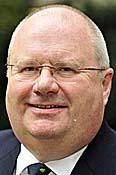
Eric Pickles gave up his post as Secretary of State for Communities in May 2015 and on the following day he became chairman of Conservative Friends of Israel. Ever since the the start of the current wave of violence in the West Bank he and his hit squad of CFI MPs have been trying to persuade ministers that the whole thing can be blamed on “incitement” by the Palestinian government – as though there were no other possible cause for the anger felt by young Palestinians.
He took it one stage further at Foreign Office questions when he contrasted the way the Palestinian and Israeli governments deal with violence and extremism:


SiEric Picklesr Eric Pickles (Brentwood and Ongar) (Con): The Israeli authorities deal with Jewish extremism—they investigate, they prosecute and they condemn—whereas the Palestinian Authority names schools after violent extremists, names sporting events after them and glorifies them on television. Will take this opportunity to condemn absolutely the attitude of the Palestinian Authority and urge it to cease this senseless encouragement of violence?

I accompanied a cross-party group of MPs on a visit to Jerusalem and the West Bank last month and this point was put to an Israeli journalist. Is the Palestinian Authority guilty of incitement? Is it true that streets are named after murderers?
He said the MPs who believed this should visit his part of Jerusalem where “ALL the streets are named after murderers” – members of Irgun, Lehi and Haganah who fought for independence for Israel in 1948.
He was exaggerating, but there are streets named after Shlomo Ben-Yosef (who threw a grenade at an Arab bus), Eliyahu Hakim (who assassinated Lord Moyne), Eliyahu Bet-Zuri (who tried to assassinate Winston Churchill), Menachem Begin (leader of the group that blew up the King David Hotel killing 91 and later Prime Minister) and Olei Hagardom (the 12 militants executed by the British on charges of terrorism).
There are certainly public buildings in the West Bank named after people Israelis would regard as “terrorists” and there are posters celebrating “martyrs” who have died in the conflict, but the truth is that every country that has fought for its independence glorifies people that the other side regard as “terrorists”.
The irony is that the current Palestinian government is led by politicians who advocate non-violent resistance and are more often under attack for being too “moderate” while the current leaders of the Israeli government are rightly regarded as “extremists” in almost every country other than Israel.
Eric Pickles also holds up the way that the Israeli government deals with Jewish extremism as exemplary.  Not many would agree. The United Nations has recorded more than 2,100 settler attacks on unarmed Palestinians in the last eight years.  Often the attacks are witnessed by Israeli soldiers who take no action.  If Palestinian police are present, they are not allowed to arrest Israelis. Over 90% of complaints have not even led to a charge and only the most extreme cases (such as the burning alive of Mohammed Khdair and the fire-bombing of the Duwabshe family) have led to custodial sentences for settlers.
See Mehdi Hasan’s clip on this subject: