Category: blog and news

GAZA: Questions to be answered

Gaza questions cover

On July 8 2014 the Israeli Defence Forces launched a military offensive against Gaza. During the next 51 days the Israelis directed an estimated 20,000 tons of explosives at Gaza – more than the Hiroshima bomb – in response to rockets directed at them by armed groups in Gaza which were estimated to have carried somewhere between 20 and 40 tons of explosives in total.

It was difficult to call it a war when there was such a stark disproportionality between the two sides.  In terms of quantity of explosives the ratio was between 500-to-one and 1,000-to-one.  Even that understates the disparity because the weapons used by Israel were equipped with sophisticated guidance systems which could direct missiles to within a few feet of their targets, whereas rockets sent into Israel by armed groups in Gaza were rudimentary and mostly lacked any guidance system at all. The great majority landed in the desert.

Thus the disproportionality in firepower resulted in a similar disproportionality in casualties. 1,462 civilians were killed on the Palestinian side compared with six on the Israeli side, according to the United Nations. 552 children were killed on the Palestinian side, one on the Israeli side.

On July 8 2015 – the first anniversary of the Israeli offensive – the House of Commons held a debate to consider the Independent Commission on Inquiry on the Gaza conflict, commissioned by the United Nations and chaired by the American Judge Mary McGowan, which had been endorsed by the UK Government in a 41-1 voted at the UN Human Rights Council in the preceding week. Only the US voted against.

The debate was introduced by the new MP for Halifax, Holly Lynch, and in an unusual move the deputy speaker presiding over the debate, Philip Hollobone, restricted backbench speakers to 2½ minutes and urged them not to intervene on one another’s speeches in order to give as many MPs as possible the chance to speak.

This allowed 22 MPs to take part in the debate. This report does not claim to be a full transcript. It leaves out parts of speeches which are made solely because of parliamentary protocol and omits four speeches which simply rehearse the Israeli government’s objections to the United Nations Commission of Inquiry, which have been fully reported elsewhere.

Nowadays the press reports very little of what is said in Parliament and nothing at all of debates like this.  But we believe people will find it rewarding to read this debate and to see how many MPs from all parties feel strongly and speak passionately about what is happening in Gaza.  

You can read the debate on this website below or you can read it as it appears in print by clicking on this link: Gaza Questions to be answered 3 or you can order a print copy from martin@palestinebriefing.org.

 Holly Lynch MP

Holly Lynch (Halifax) (Lab): I beg to move that this House has considered the report of the UN Independent Commission of Inquiry on the 2014 Gaza conflict.

I start by saying how pleased I was that Britain was one of the 41 countries at the United Nations Human Rights Council in Geneva to support the adoption of a resolution on the Gaza Commission of Inquiry report, which looked into the 2014 Gaza conflict and will now be referred to the UN General Assembly and the Office of the High Commissioner for Human Rights. Like many other people, I feel that is an important step in both highlighting and addressing the ongoing conflict, which has blighted lives for more than half a century. It is shameful that the international community has failed to make any real progress towards achieving peace in the region in that time.

Today marks a year since Israel launched Operation Protective Edge in Gaza, a conflict that lasted 51 days, claimed 2,251 lives, including the lives of 551 children, displaced more than half a million people, and destroyed 77 health facilities and 261 schools. Each day, an average of 680 tank and artillery shells pummelled the densely populated areas of Gaza, leaving barely anywhere safe. Although the report recognises that Israel issued warnings to people to evacuate, there was often nowhere for them to evacuate to and no means of escaping the conflict zone.

Gaza is a tiny strip of land covering just 139 square miles. If we bear in mind that West Yorkshire alone covers 780 square miles, it gives us some perspective of just how small Gaza is, yet 1.8 million Palestinians live in what is increasingly becoming a densely populated open-air prison, and they have nowhere to go. In 2012 the World Bank published a report, “Gaza 2020”, which predicted that Gaza would become uninhabitable by 2020 as a result of the blockade, an increase in population size, and insufficient access to clean drinking water, electricity, and health and education services. After the devastation of July and August 2014 Gaza has reached 2020 five years ahead of schedule.

Currently, 860,000 Palestinians in Gaza survive on the UN Relief and Works Agency food parcels. In addition to the destruction of health facilities, schools and homes, there has been massive disruption of water supplies, sewage disposal and electricity supplies, and they have not yet been repaired. One year on, not one of the 8,377 homes that were totally destroyed in the conflict has been rebuilt, and repairs have been carried out on only 5% of the 23,597 homes that were partially destroyed.

Much of the aid pledged at the Cairo conference for reconstruction in Gaza in 2014 has not yet materialised and I hope the Minister can update us about the UK’s contribution. The UN requested $720 million, but it has received only about $210 million. The UN Relief and Works Agency faces a severe funding crisis, as it has a deficit of $100 million, which is having a serious impact on its ability to deliver essential humanitarian aid.

“Why are the Government are proposing a 17% cut in their contribution?”

I hope the Minister can also say why, at a time of such turmoil in the Middle East and when institutions such as the UN Relief and Works Agency are delivering vital aid and support to vulnerable communities, the Government are proposing a 17% cut in the Department for International Development’s contribution. Given the fragility of the region, the mass displacement of people and the rising threat of terrorism, it is in our own interests to invest—both politically and financially—in bringing about a stable Middle East to ensure that Palestinians have a future within their own borders.

There is one glaringly obvious way in which we can ensure the effectiveness of UK taxpayers’ money when it is spent in Palestine, with a view to achieving long-term reductions. That is to stop Israel flattening projects funded by the EU, DFID and the UN Relief and Works Agency, and institutions that are part-financed by Britain. In July the Chancellor announced further cuts in and scrutiny of public spending. I would like to see the Government apply the same level of scrutiny and accountability to the destruction of those buildings and projects in Gaza. Perhaps the Minister will update us on that and say whether he will send Israel a bill for the damage.

We must consider what cuts might mean for Palestine at this time.  The UN Relief and Works Agency provides schooling to 500,000 students across the Middle East in 700 schools, but it will be unable to do so if its current financial deficit continues. At a time of rising militancy in the region, we have to ensure that young people have access to a good education and have a future beyond schooling. Otherwise, they will inevitably look elsewhere for promises—false ones—of a better life.

The UN Relief and Works Agency’s Commissioner-General, Pierre Krähenbühl, said in an interview:

“Palestinian refugees are facing their most severe situation since 1948. They have had 50 years of occupation, nine years of a blockade in Gaza and now five years of conflict in Syria. When you look at all of that, how much more can they absorb?”

That is a stark warning to all of us.

The UN inquiry will investigate actions undertaken by both sides, which is right and proper. Acts of violence committed by either side against innocent civilians are wholly unjustifiable, and those responsible must be held to account. Although the report finds that both the Israel defence forces and armed Palestinian groups failed to distinguish adequately between civilians and combatants the conflict in 2014, the scale of the arsenal available to the IDF makes their failure particularly devastating.

“Civilians felt that there was simply nowhere safer for them to evacuate to”

The Commission’s report highlights the IDF’s method of issuing warnings as an example of the failure to differentiate adequately between civilians and combatants in an attempt to create “sterile combat zones”. Leaflet drops or “roof knocks”, which involved a drop of small missiles prior to a much larger strike, were used to warn civilians of an impending attack. The Commission found that those attempts failed to have the desired effect, either because there was not enough time between warnings and the much larger strikes, or because, as was often the case, civilians felt that there was simply nowhere safer for them to evacuate to. The IDF then refused to recognise anyone who chose to stay in the area as a civilian, denying them the protections that would ordinarily accompany civilian status under international law.

The Commission’s report also looked at the West Bank during the same period in 2014. Between 12 June and 26 August 2014, 27 Palestinians, including five children, were killed and 3,100 Palestinians were injured by Israeli security forces. That was largely due to increased use of live rounds as a means of achieving crowd control.

The Commission’s report calls on Israel to bring its systems for investigating alleged violations of the law of armed conflict in line with international standards, and I hope that the UK will also take this opportunity to demand that. The examples that I have given must be the basis upon which we find ways to bring about change. We would be naive to think that these injustices are not feeding into a rise in militancy and unrest right across the region, as well as much closer to home.

Gaza has been under blockade for eight years, and the Palestinian people have been living under Israeli occupation for almost 50 years. That is a damning indictment of the international community, and of our failure to secure peace and justice for the people of Palestine. It is now 21 years since the Oslo accord, and an entire generation of young Palestinians—the Oslo generation—have grown up to witness a worsening situation on the ground. There have been significant expansions of illegal Israeli settlements in the West Bank, heightened security threats to both sides, the construction of an illegal separation barrier, restrictions on Palestinian movement, the suffocation of productivity, punitive home demolitions and a humanitarian crisis in Gaza, and there is no end or hope in sight. It is depressing that, 21 years since Oslo, both sides seem to be further away from peace and security than ever before.

I welcome Britain’s support for the Commission of Inquiry on Gaza. However, although the report identifies in great detail the violations against international law and makes recommendations about addressing those, it also recognises that we have been here before, time and again. The empty rhetoric about opening dialogue and, increasingly, getting round negotiation tables has now been ongoing for more than 50 years. It is time to think carefully about why the international community has failed and time to consider all the options available to us, to ensure that we are not still sitting here in five, 10 or 20 years’ time, discussing yet more reports on further conflict.

That leads me on to what the UK could do, unilaterally if we must, to take concrete steps towards peace. We have condemned the illegal settlements in the West Bank, as well the collective punishment inflicted on the civilian population of Gaza, in breach of the Geneva Convention, which has been described as a war crime by the EU, the Red Cross and the UN.

However, we simultaneously continue to trade freely with Israel. We support the Commission’s report, which outlines the deaths of innocent civilians in both Gaza and Israel, yet we continue to export arms to Israel.

I am aware that the Government are reviewing the sale of arms to Israel case by case, but in the context of the conflict, surely even the most limited attempts at evaluating risk would conclude that the potential risk of a breach of international humanitarian law would be too high, and that arms should not be changing hands. According to the EU code of conduct on arms exports: “Member of Parliament States will not issue an export licence if there is a clear risk that the intended recipient would use the proposed export aggressively against another country or to assert by force a territorial claim.”

“Since the brutal conflict in 2014 Britain has approved new arms licences for Israel of up to £4 million”

Yet since the brutal conflict in 2014, Britain has approved new arms licences for Israel of up to £4 million. Furthermore, The Independent newspaper reports that the Government also approved arms exports to Israel worth nearly £7 million in the six months prior to Operation Protective Edge. Does the Minister agree that turning a blind eye to violations of international humanitarian law when an arms deal is on the table undermines our standing in the world and begins to compromise our integrity?

A new approach to diplomacy must be based on the protection of civilians, on equal respect for the human rights, security and sovereignty of both Israelis and Palestinians, and on the realisation and implementation of international law, beyond just the rhetoric. It is not enough to focus exclusively on negotiations while failing to hold Israel accountable for violating international humanitarian law. In 2010, on a visit to Turkey, the Prime Minister said: “Everybody knows that we are not going to sort out the problem of the Middle East peace process while there is, effectively, a giant open prison in Gaza” and called for an end to the blockade, to allow a free flow of humanitarian goods and people.

Five years later, under the stranglehold of an eight-year blockade, the situation in Gaza is still precarious and, indeed, worse. I welcome the remarks just days ago by the Minister for the Middle East, Tobias Ellwood: “The UK supports EU efforts to develop options for easing movement and access into and out of Gaza. This includes the possibility of EU assistance in establishing a sea-link from Gaza to another international port. The UK and EU have consistently called on the Government of Israel to ease movement and access restrictions, and will continue to do so.”

I hope that we all support him in making that a reality, beyond the rhetoric. The crisis in Gaza must be understood in a wider context of a 48-year illegal occupation of Palestine. It is essential that the UK and the wider international community are honest brokers for peace and take practical steps towards addressing the root causes of the conflict, starting by ending the illegal occupation of Palestine and ensuring that Palestinians are able to enjoy their basic human rights and freedoms.

Some 64% of Gaza’s population is under the age of 25. The report recognises that, without any economic horizon or sustainable productivity, there is an inevitability about the cycle of conflict and unrest. That will serve neither Israel nor Palestine, so it must be addressed. I am proud that the Labour party supported the motion in 2014 to recognise a state of Palestine. Surely that would be an easy starting point.

In 2012 at the UN General Assembly 135 countries voted in favour of Palestinian statehood. In 2014 a number of EU Member of Parliament states also voted in their Parliaments in support of recognising a Palestinian state. The argument that the recognition of a Palestinian state should come at a time that is deemed suitable is hollow. Israel should have no right of veto over the right of Palestinians to self-determination. Recognising Israel was not subject to negotiation, and recognition of Palestine should not be either.

We can and should do more with our European partners to hold to account those who commit violations of international law and to promote endeavours such as this report, which is a welcome first step. I hope that the Minster will consider and respond to some my proposals.

 Sir Gerald Kaurman MP

Sir Gerald Kaufman (Manchester, Gorton) (Lab): When I was in Gaza, I spoke to a girl who told me she was standing between her parents when an Israeli soldier came up and shot her father dead in the head, and then shot her mother dead in the head. The Israelis use the holocaust: they use the murder of six million Jews to justify their murder of thousands upon thousands of Palestinians.

The issue is every single way in which the Israelis deal with the situation. An Israeli told me that when there was insufficient electricity in the summer to supply air-conditioning to the luxury flats of Tel Aviv, the Israelis cut off electricity to Gaza in order to allow the people of Tel Aviv to be air-conditioned. The horrors mount up and the horrors have mounted up. There are children whose brains will never develop because their inadequate diet prevents them from developing physically and therefore mentally.

It is satisfactory that the Government voted for the UN report, but it is not enough. We have to take action. We have to impose an arms ban and economic sanctions on these murderers, who live a first-world life courtesy of America and the European Union. The Palestinians are a persecuted people and it is time that that persecution was brought to an end. We will not rest until the Palestinians are free.

Richard Burden MP

Richard Burden (Birmingham, Northfield) (Lab):  I congratulate the Government on voting for the Human Rights Council resolution, but the whole question is about what happens as a result. The background, as the Member of Parliament for Halifax said, is that we have been here before. The resolution bemoaned the lack of progress on the previous inquiry into the Israeli assault on Gaza in 2008-09. Given that the Human Rights Council has noted a failure by Israel and Hamas in co-operating with legal investigations and that the International Criminal Court is looking into this matter, what can the Minister and the international community do to force that co-operation?

My second question is about Recommendation 6 of the Human Rights Council resolution, which calls on all states to “promote compliance with human rights obligations” and calls on all high-contracting parties to the Fourth Geneva Convention to “make particular efforts in that regard”.

Britain is a high-contracting party to the Geneva Convention. What will Britain do to ensure compliance with the provisions of that resolution?

Thirdly, given that the resolution is all about what happens now and does not look back, will the Minister guarantee that a statement to the House will be made before the summer recess on what the Government suggest we should do, in conjunction with other countries, to ensure that that resolution is complied with and taken forward?

Tania Mathias MP

Dr Tania Mathias (Twickenham) (Con):  I want to speak briefly about the Independent Commission of Inquiry and in particular about the points made in the concluding observations of its report. The fourth concluding observation mentions the use of live ammunition and “the destruction of entire neighbourhoods… the policy itself violates the laws of war.”

I commend to everyone the concluding observations and recommendations. They are important for all the debates in this area.The report recommends that Palestinians and Israelis should be “refraining from and taking active steps to prevent statements that dehumanize the other side”.

Having seen the United Nations Relief and Works Agency director-general, Pierre Krähenbühl, on his visit to MPs, I note the critical importance of the conflict. Daesh is in the area, and I want all the recommendations to be implemented. As the Independent Commission has said, the greatest challenge is to implement its fair recommendations.

Andy Slaughter MP

Andy Slaughter (Hammersmith) (Lab): We should welcome the report, even though, in an attempt to placate the Israel lobby, it does not address the issue of asymmetry in the 2014 conflict—or, indeed, in previous conflicts.

Israel is a state that is out of control, but this country and others are not prepared to criticise it. Israel is not only engaged in the longest occupation of Palestinian lands, but continues to colonise and settle those lands on an industrial scale. It is indulging in installing an apartheid regime in the West Bank; it has not withdrawn from Gaza, which is under a full embargo; and, most shamefully, it engages periodically—I am sure that we will see it again before long—in the murder of civilians and the control and cowing of the Gazan population.

In the invasion in 2014, more than 500 Palestinian children were killed, compared with one Israeli child. Any death of a child—any death of a civilian—is to be mourned, but we cannot ignore the ratios. Five hundred times as much high explosive was dropped on Gaza as was fired into Israel. I went there after Cast Lead and saw the effects. I saw children who were traumatised, who were permanently disabled and who were permanently crippled by those actions. This is not only a state with which we retain good relations; it is a state that we condone.

During the attack in 2014, the Minister thought about the possibility of restricting arms sales to Israel, but, by the time he had finished thinking about it, the 50 days of invasion were over. I say it with great reluctance, but I am increasingly of the view that we are going to have to take steps. We are going to have to give encouragement to the Palestinian people by recognising Palestine. It is disgraceful that the Government are not prepared to do that and use every possible excuse. We must also look at sanctions, embargoes, not importing settlement goods and not selling arms to a country that is about to use them for another attack on children and civilians in Gaza.

Debbie Abrahams MP

Debbie Abrahams (Oldham East and Saddleworth) (Lab): It is important to recognise that although the report mentioned atrocities committed by both Hamas and Israel, it focused on the disproportionate and indiscriminate nature of the attack on Gaza. The report identifies many possible war crimes, including air strikes on residential buildings, the use of wide-area shells and heavy artillery in densely populated areas, and the targeting of civilians by Israelis, as well as the use of human shields and the execution of collaborators by Hamas and other armed Palestinian groups. That must be recognised as we move forward.

The report recommended that the international community support the work of the International Criminal Court, which is currently conducting a preliminary investigation into the war. Will the Minister lend his support to Palestine becoming a member of the ICC? I am pleased that we signed up to the UN resolution, but will the Minister outline how the Government will be taking forward the elements that relate to the UK? When will the Government be in a position to recognise Palestine as a state? In September 2014 I asked about the review of UK-supplied arms and components, and I would be grateful for a response on that as well.

 Grahame Morris MP

Grahame Morris (Easington) (Lab):  It is precisely because Israel suffered no consequences for its earlier crimes committed during the operations in 2008 and 2012, that it was able to go on to commit even greater atrocities a year ago today.

International law is only as strong as the parties that are willing to enforce it. We have witnessed generations of failure because of a lack of political will not only to acknowledge but to take action against Israel’s violations. Over the past half century, Israel has placed itself above international law, breaching human rights and failing or refusing to adhere to the duties and obligations placed on it as an occupying power. Its position has been strengthened by an international community that, to varying degrees, has acknowledged significant and persistent violations of international law, whether they be human rights violations during military conflicts, as we saw in 2014, or the prolonged injustice of Israel’s illegal and brutal occupation and settlement policy.

If the Government are sincere when they claim that we, as a nation, support the rule of law and wish to see a peaceful resolution to the Israel-Palestine conflict, we should expect Israel to be held to account for its litany of crimes under international law. I am happy the Government supported the UN Human Rights Council resolution, and I certainly acknowledge that to the Minister, but if we are to make a positive contribution to resolving the conflict, our foreign policy should be to refuse to profit from the illegal activities of others. Without such a commitment, we will forever stand on the wrong side of history, in that we will be promoting injustice and undermining international law. If the two-state solution is to mean anything and to become a reality, the international community must be willing to take practical action to end the Israeli Government’s illegal behaviour.

Andy McDonald MP

Andy McDonald (Middlesbrough) (Lab):  I, too, welcome the fact that the Government voted in favour of the report at the UN Human Rights Council last Friday. I look forward to seeing how they implement the robust recommendations of the report, which highlights Israel’s targeting of residential buildings, including schools, hospitals and apartment blocks, the use of heavy artillery in densely populated areas, and the targeting of civilians.

Given the way in which Israel conducted its assault—it used 20,000 tonnes of explosives, dropping 120 one-tonne bombs and attacking residential neighbourhoods in one of the youngest and most densely populated areas in the world—the primary victims were always going to be civilians and children. The UN report found that [at least] 65% of Palestinian deaths were civilian, including more than 500 children. The images of the four boys killed by explosive rounds while playing on Gaza’s beach are the most enduring of the conflict.

Britain approved the sale of £7 million of arms to Israel in the six months before the offensive. That included components for drones, combat aircraft and helicopters. The Export Control Organisation, which is part of the Department for Business, Innovation and Skills, is responsible for assessing arms export licences, with each licence assessed on a case-by-case basis against the consolidated EU and national arms export licensing criteria. Those include consideration of whether the proposed export would “provoke or prolong armed conflicts or aggravate existing tensions in the destination country…be used aggressively against another country…be to a destination where the behaviour of the buyer country raises concerns with regard to its attitude to terrorism or respect of international law”.

If the proposed export fails to meet one or more of the criteria, a licence will be refused.

If more evidence were needed that the Government had little commitment to their own arms export licensing criteria, it was recently reported that, in the few months between the end of hostilities in Gaza last August and the end of December, BIS approved 32 military exports, worth £3.97 million, to Israel. The first licence was granted just six days after the announcement of the Israeli ceasefire. If we play the role of honest broker in the conflict while selling the occupying power the arms it uses to occupy its neighbour, how can we hold our head up?

Mark Durkan MP

Mark Durkan (Foyle) (SDLP):  Like other Members of Parliament, I commend the Government for supporting the July 2015 resolution. I do not see the report as unbalanced. Paragraph 668 states that “the Commission was able to gather substantial information pointing to serious violations of international humanitarian law and international human rights law by Israel and by Palestinian armed groups. In some cases, these violations may amount to war crimes.” That is what we should be addressing.

We should also be clear that we need to move forward. Other Members of Parliament have rightly said that arms sales continue. In the four months following the attacks, arms sales went to Israel, so more has been done to replenish its arsenals, which were depleted in these massive attacks, than has been done to repair Gaza’s battered, blasted and rubbled civic fabric. We also need to remember that the building of that civic fabric, which is now damaged, was supported by aid from this country and others. People have a right to defend health facilities, schools and civil infrastructure, which need to be protected.

The state of Israel needs to recognise that people in the international community are not making an anti-Israel case. Many of us totally oppose conflict and violence. I am not one of those who tries to pretend that there is military equivalence between the violence wreaked by Hamas and the massive violence wreaked by Israel. Equally, I do not pretend there is a moral difference between the violence of the two sides when it ends up killing innocent civilians and putting in dread people who should be living in peace together.

Today, however, we have heard the pretence that Israel has the right to treat Gaza as though it is a foreign state and to attack it on the basis that Israel is under threat from another state. That is from the same Members of Parliament who then tell us that we in this House do not have the right to call for Palestine to be recognised as a state. How come people can recognise Palestine as a state when they want to justify violence—for military purposes—when the rest of us are not allowed to recognise it as a state for diplomatic and political purposes and to achieve a peaceful resolution?

Dawn Butler MP

Dawn Butler (Brent Central) (Lab): I need to declare an interest because I am vice-chair of Labour Friends of Palestine. I plan to visit Gaza, God willing, in 2015.

I support a two-state solution, but it must be recognised by neighbouring countries, it has to be sustainable, and peace has to prevail. Part of that must be about educating and empowering a new generation of young people on both sides. Will the Minister tell us what plans the Government have in that regard, including working with organisations such as OneVoice? Palestinian statehood is not a gift to be given, but a right to be recognised. It should be recognised to kick-start the debate on this issue.

When we speak in the House, we must be careful, because we are speaking about the loss of many lives, and the numbers were very disproportionate. During the year of tension, cross-border rocket attacks led to a military offensive by Israel, resulting in the deaths of 2,100 people in Gaza, with 11,000 injured, as well as the deaths of 64 Israeli soldiers and seven Israeli citizens. We need to avoid all such deaths, and some Member of Parliament need to be careful about how they talk about the loss of such innocent lives.

One priority, which the Minister could perhaps address in his comments, should be rebuilding the houses and hospitals that have still not been rebuilt. It must be the international community’s priority to make sure we provide humanitarian aid and rebuild basic infrastructure. Thousands of people from my constituency contacted me last summer, and some were crying—there was such devastation. We need to address this issue in the best way possible to ensure there is a sustainable two-state solution.

 Naz Shah MP

Naz Shah (Bradford West) (Lab): I echo the sentiments of the Member of Parliament for Halifax, Holly Lynch. I welcome the report, but it stops short on many points. I struggle to reconcile the Government’s position of arming Israel and breaking the EU restrictions, and of condemning the illegal settlements yet allowing free trade with the UK and EU markets.

We need to achieve a peaceful and sustainable settlement. In the current climate, without the recognition of Palestine, that will not happen. I call on the Government to go further and to change our position from one that allows arms into Israel and breaches international laws. David Miliband revoked five licences in 2009. Why are we not doing that now? Why are we allowing this arms trade?

Why are we trading with Israel’s occupied territories? Are we not, by definition, handling stolen goods if we recognise that that land is stolen and continue to trade with Israel? To me, it is common sense that we should stop.

Would the recognition of Palestine by the UK not help the peace process? The recognition of

Israel was not subject to negotiation, and neither should the recognition of Palestine be. Israel should have no right of veto over the Palestinians’ right to self-determination.

We have an open prison in Gaza. When will the Government take bold and brave steps to recognise that this is not a race issue or a religious issue but a humanitarian crisis that we have a duty to respond to, rather than hiding behind language that is not conducive to the peace process?

Cat Smith MP

Cat Smith (Lancaster and Fleetwood) (Lab): It is 21 years since Oslo, and peace does not seem any closer. To put that in context, I am not the only Member of Parliament of the House who was still at primary school at the time of the Oslo agreement. There have been 48 years of illegal occupation of Palestine, including the West Bank and East Jerusalem, as well as Gaza. In Gaza, 80% of the population have been living in poverty and 61% in food insecurity since the blockade. That is the effect on the humanitarian situation.

Does the Minister agree with Baroness Anelay, the Minister in the Lords, who said: “All countries…have a legitimate right to self-defence”? If so, when the UK finally joins the 137 countries that already recognise Palestine, will he recognise that it too has the right to self-defence when it comes under attack?

A new report by Medical Aid for Palestinians highlights the fact that 17 hospitals and 56 primary healthcare facilities were hit during the 2014 attack. How much damage was done to UK-funded projects in the attack in 2014?

It is right that we should mourn the deaths of all those killed in the 2014 attack; but is it possible truly to mourn and to continue to export arms to Israel in breach of the EU arms export rules? By ignoring Israeli violations of international law the Government weaken Britain’s authority and influence on the world stage.

Jo Cox MP

Jo Cox (Batley and Spen) (Lab): As a former Oxfam aid worker for many years, I have worked for far too long on and in the conflict that we are debating, but I still believe that there will be a resolution in my lifetime—hopefully in the next few years.

I will focus on three things. First, I would love a response from the Minister about what confidence building action the Government are taking, particularly on Gaza. The Gaza reconstruction mechanism is clearly not working, but it is also not a substitute for easing the closure. There is a need for urgent expansion of access to Israeli markets for Palestinian exports. What measures are the Government taking to that end? We also need to remove the last restrictions on the export of Gazan products to the West Bank.

I would like construction materials to be allowed into Gaza urgently. The facts are clear: only one home has been rebuilt in the past year, since the bombing, and the projections are that it will take hundreds of years to rebuild at the current rate. There is a need for materials to get into Gaza so that people can rebuild their lives. What is the Government’s view on that?

In addition, people need to get in and out of Gaza. In 2000 about 500,000 people were leaving and returning to Gaza, for work or to see family members. This year the number is 18,000, which is very low, and we need to raise it quickly. We also need the Israeli Government to continue to believe that there will be a cost to their allowing further settlement expansion in the West Bank. I would love to know what the Government are doing to get that message clearly heard by the Israeli Government. I would be interested also in the Government’s view of the Israeli Government’s silent policy of retrospectively legalising illegal outposts.

Finally, the allegations—including allegations of war crimes—in the Commission of Inquiry’s report must be investigated fully by Israel and Hamas. Both sides of the conflict deserve access to justice and accountability. For the most part domestic mechanisms and investigations are poor; they are either rejected quickly or not run to international standards. Indeed, the report notes that Israel has a “lamentable track record in holding wrong doers accountable” and that investigation by Hamas is “woefully inadequate”. Following the UK’s welcome endorsement of the report in July 2015, I would love to hear what the Government intend to do to support international mechanisms to pursue justice and accountability, particularly in relation to preliminary work by the International Criminal Court.

Stephen Kinnock MP

Stephen Kinnock (Aberavon) (Lab): The report, much like the issue of Gaza, is about proportionality. Although its conclusions are 60% devoted to what Gaza endured, they are 40% devoted to what Israel endured. Yet those figures do not stack up. When we consider that 551 Palestinian children and one Israeli child died, we begin to see how massively the issue of proportionality figures not just in Operation Protective Edge but in the report. I am delighted that the British Government endorsed the report, but it does not reflect the proportionality of the situation.

Looking forward to how to rebuild Gaza, I agree with the Member of Parliament for Batley and Spen Jo Cox that it is currently simply not working. It is pretty clear that Gaza is not going to be a viable place to live in. Why is the Department for International Development cutting its contribution to The UN Relief and Works Agency by 17% in the 2015-6 budget year? The UN Relief and Works Agency plays a critical role in the reconstruction of Gaza, so it seems a completely counterintuitive and counterproductive thing to do.

As to the broader issues around the future of the Israel-Palestine conflict, I had the pleasure of making a visit recently and it is clear to me that, with 700,000 settlers based illegally in the West Bank, many of us would agree with President Obama, who said in June that the world no longer believes “that Israel is serious about the two-state solution.”

Does the Minister believe that it is? Should we now start to look into the detail of the potential for a one-state solution? That is the elephant in the room.

The threat and application of EU sanctions proved very successful. What measures are we taking to ensure that they are applied fully and comprehensively to businesses that trade illegally in the West Bank?
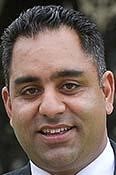
Imran Hussein MP

Imran Hussain (Bradford East) (Lab): The report makes clear the scale of the mass slaughter committed during the 2014 war on Gaza, and the escalation of violence and disregard for life perpetrated by all involved. I am deeply concerned that those events, and the failure of Israel in particular to engage with the investigation into them pose a great challenge to the chance of finding a peaceful solution to the conflict.

Let us be clear; the actions of the Israeli Government and their armed forces in 2014 were criminal and murderous. They were committed with a complete disregard for the taking of civilian lives, including those of hundreds of women and children. The report is absolutely clear about that. Israel showed a callous disregard about who was being hit by its bombs, and that was emphasised by the fact that it did nothing to modify its behaviour when the results were evident to all.

The question that I want to ask, which I think is central to the debate, is why the Israeli Government are allowed constantly to flout international law and UN motions. Why are they allowed to act with impunity, not just in this case but in the illegal land grabbing on the West Bank? The fact that they refused even to engage with the investigation speaks volumes about how they continually ignore international law. It is time for that to end. It is time that Israel was held accountable for its actions and those of its military.

The events of 2014 were, as the report makes clear, a worrying escalation with attacks by Israel on residential buildings resulting in the deaths of entire families, ground operations that levelled urban neighbourhoods, and a continued land grab. That escalation could happen precisely because Israel regards itself as somehow adjacent to international law.

The report makes some critical recommendations, in particular with respect to international human rights, but none of them will mean anything if they are not adhered to. Prosecutions, convictions and punishments must be applied and must not stop with the individual soldiers involved; they must include those who are responsible for giving the orders, and the military and political establishment. Israel should address all the issues that fuel the conflict and impede respect for human rights. In particular, it should lift the blockade on Gaza and stop building illegal settlements.

Dr Philippa Whitford MP

Dr Philippa Whitford, SNP spokeswoman: I must declare an interest. I worked in Gaza for 18 months as a surgeon in 1991 and 1992, just after the first Gulf war and during the first intifada, when George Bush was President of America.

On the morning of the Madrid conference there was absolute chaos in Gaza and we had no idea how things were going to go. I had five patients with chest wounds in A&E by 7.30 am and we did not know whether Hamas and Fatah were going to turn the situation into a total civil fight. By half-past 4 in the afternoon, the shebab, or young men, known at that time for throwing stones in protest at the IDF, were on armoured cars with olive branches. People saw this as their chance for change 24 years ago.

The problem is that all of us—all of Europe and all the rest of the developed world, especially America—took our eye off the ball. We have been busy doing other things. We come back and we talk about the running sore of the Israeli-Palestine conflict. It was talked about by Colin Powell after 9/11, and four weeks later normal service had been resumed: Israel had the absolute right to do within its territories what it chose.

Like many people here, I was brought up to be pro-Israel because of what the Jewish people suffered in the second world war. However, living there and watching how people were treated—watching people being lifted; watching my hospital being raided and having to hide injured people in panels in ceilings and walls, like something out of a world war two movie—made me realise that one of the saddest things was that a lot of what is done to Palestine and Palestinians is like a pale version of what happened 70 years ago.

“I hate hearing how Hamas “seized power”. Hamas was elected.”

People in Israel want peace. There are many groups in Israel who want peace and want the attitude to change. We need to realise that that is not going to happen by itself. We also need to realise that we have a vested interest. I hate hearing how Hamas “seized power”. Hamas was elected. There have not been any new elections, but Hamas was elected because 11 years after the peace process, life was worse for people in Gaza. They had no work. Young people there know nothing other than how they are treated. They have zero future and no investment. Is it any wonder that they can be attracted to terrorism or extremism?

It has been mentioned that recent rockets may have been associated with ISIS. What do we expect? People in Gaza are trapped in a large open-air prison. We talk about the warnings that people got from the IDF, either from leaflets or roof knocks. I am still in touch with people in Gaza through the wonders of Facebook. The gaps to get out were far too short, and people fed back to me that they had no idea where to go because schools and vulnerable buildings had been bombed. They stayed put because they thought that going out on the street was probably dangerous.

The place is intensely populated. Almost half of it was being saturation-bombed. Where were they meant to get to following a five-minute warning? They had nowhere to go. If we look at the maps in the report, Shejaiya, which is at the east end of Gaza city, where I lived, was almost carpet-bombed. There is no way that those people could have got anywhere.

Proportionality has been mentioned. Of course Israel needs to be secure. We will never get Hamas to recognise Israel if there is no safety for Palestine. Hamas sees the situation as a war. I am no fan of Hamas—I was no fan of Hamas when I lived there—but we must realise that the more we do not allow a future for the Palestinians, the more we offer people into the hands of extremism.

If we were to go back to before 1987, before the first intifada, we would find that the Palestinians were one of the most educated populations in the world. They had lost their land, so people invested in education for their children. They sent them to Eastern Europe. Doctors and engineers were their biggest production. I visited people and saw their wedding photographs with women in modern clothing and people travelling everywhere. They were very secular and pro-western. What drove them to the intifada were years and years of occupation and seeing no alternative.

The intifada has not worked, either. We are not far from a 30-year anniversary of the first intifada in 1987. Palestinians are being driven to become more and more extreme, and we need to see our culpability in that. We must not sell arms that we know will be used in that

way. We should not import arms that we know have been tested by being used in the occupied territories. We absolutely need to stop settlements.

I went back in 2010 and I could not get into Gaza because of the blockade, but I spent time working with a doctor I had trained, who is now a consultant in East Jerusalem. I spent a day in the breast cancer clinic, because that is my specialty. At every appointment, half the time was spent on how the person had got through the wall and through the checkpoint, on how we were going to get them back, and on making sure we did the paperwork so that they could come back for their next breast cancer clinic appointment. It dominated everything.

The West Bank is being eaten up into a Swiss cheese, and the two-state solution is not far from being totally unviable unless there is a withdrawal. When I visited Bethlehem, all I could see was tsunamis of modern buildings coming across the hills, and in East Jerusalem many settlements are being either purchased or possessed, because families do not have the paperwork that goes back to when the house was built. Little mini-settlements of three or four houses are being created. That allows the IDF to get on the roofs. The flags and barbed wire go up, and then the pressure on the people around starts. We need to see our culpability.

I commend the Government for supporting the vote, but we need to go a lot further. Only America can bring Israel to the table. One country that has the ear of America through our special relationship is Britain. We need to get America round the table, or we will not be talking about this problem, but about ISIS and the horrors that are coming out of the occupied territories, because the people there do not see anywhere else to go. We need to realise that the issue is for the people of Israel as much as for the people of Palestine. People in Israel want normalised lives. They will never get that while living next door to the largest open prison in the world.

Kerry McCarthy MP 

Kerry McCarthy, Labour’s spokeswoman on the Middle East: Each and every death during this conflict on both sides was a tragedy. The appalling bloodshed underlined once more that there cannot be a military resolution. The only way forward is the diplomatic route and a negotiated two-state solution that recognises the state of Palestine alongside the state of Israel. As such, we welcomed the Egypt-brokered ceasefire last August. If we are finally to end the cycle of violence, we have yet again to ensure that the necessary lessons are learned from this most recent conflict. That includes holding accountable those responsible, and securing access to remedy for the victims.

As we have heard, the UK abstained on the resolution that initiated the Commission of Inquiry in 2014. The Foreign Secretary at the time said that the resolution was “fundamentally unbalanced” and would not help to achieve a lasting ceasefire. The UK Government subsequently encouraged all sides to co-operate, but I suspect that the Foreign Secretary’s initial rejection of the inquiry might have undermined the UK’s influence in that regard. It was certainly disappointing that Israel declined to co-operate and that that prevented the Commission from investigating Israel’s claims. UK support for the resolution at the Human Rights Council in July 2015, though, was welcome. I hope that the Minister will tell us whether he now feels that the report has made a positive contribution.

The report makes disturbing reading in identifying serious breaches of international law, by both Israel and the Palestinian armed groups that it warned could amount to war crimes. Last summer the Opposition condemned Hamas’s rocket fire, tunnels and extra-judicial killings, and I reiterate our condemnation. The Commission report conveys the sense of fear that the tunnels in particular stoked up among innocent Israelis. Rocket fire, however, by the very nature of such weapons systems, was indiscriminate and in violation of international humanitarian law. We recognise, too, Israel’s right to defend itself, but we agree with the Commission that the conduct of Palestinian armed groups does not “modify Israel’s own obligations to abide by international law”.

In that respect, there were clear differences between the Government and the Opposition last summer. We felt that the Prime Minister had remained silent and should have spoken out when the victims were predominantly civilians, in particular given the number of children killed. We felt that he was too unequivocal in backing Israel’s right to defend itself, despite the disproportionate manner in which it exercised that right. The Commission concluded that Israel might have failed to do everything it could to adhere to the three principles of distinction, proportionality and precaution. The implication is that the terrible death toll could have been avoided.

The report documents some of the issues already touched on by other Members of Parliament: how residential areas were targeted; how strikes came in the evening or at dawn, as families were gathering during Ramadan; how ineffective the roof knocks were as a warning system; and how artillery and mortars with a wide-area effect were used. The report attempts to convey the extent to which Palestinian civilians felt trapped. Even if they had received warnings, there was nowhere obvious for them to flee to where they would be safe, as we have heard. It is difficult to imagine the sense of terror that that would engender in such a densely populated area. There were also distressing allegations that civilians carrying white flags were attacked.

The cumulative impact of all that became evident all too soon. The Israel defence forces and/or the Israeli Government failed to re-examine their approach or to alter their tactics. In light of the report, I hope that the Minister will be able to reflect on whether the UK Government, and others, could have done more in 2014 to press Israel to re-evaluate its response to the rocket fire. Does the Minister think that the Prime Minister could have questioned the proportionality, the legality and the morality of Israel’s use of force, and questioned at the time what it would ultimately achieve?

The Commission noted that “Israel’s interpretation of what constitutes a ‘military objective’ may be broader than the definition provided for by international law”. I hope that that is one of the many findings that the Foreign Office will discuss with its Israeli counterparts, in addition to expressing concerns about such things as Israel’s choice of weaponry. Does the Minister believe that Israel could have done more to uphold those three principles of proportionality, distinction and precaution?

Several Members of Parliament have touched on the issue of arms export licences. The Government chose not to suspend any such licences for export to Israel in 2014 and sales have continued over the past few months. Members of Parliament have no doubt received emails from their constituents concerned that £4 million in arms sales to Israel were approved in the four months following the conflict in 2014. In light of the Commission’s findings, I hope that the Minister will tell us whether the Foreign and Commonwealth Office or the Department for Business, Innovation and Skills intend to review the licences, or Israel’s use of arms sold by the UK. Baroness Anelay, the Minister of State, said in the debate in the Lords in July 2015 that we are “most cautious” when we issue export licences. She ruled out a blanket arms embargo. I will be grateful if the Minister touches on whether a case-by-case arms embargo, or the revoking of certain licences, has been or will be considered.

We cannot neglect the lasting legacy of last summer’s incursion and the humanitarian catastrophe that it triggered. As well as the loss of life, more than 11,000 Palestinians were injured, more than 3,000 of them children. It has been reported that 10% of them suffered a serious disability, and 1,500 children were orphaned. Furthermore, as we have heard, 18,000 homes were destroyed. I will be grateful if the Minister responds to the questions asked about the international support available to the victims of the incursion, about Department for International Development support to the UN Relief and Works Agency being cut and about what we are doing to help people in Gaza rebuild their infrastructure and homes.

Looking to the future, the Commission acknowledged that its report is only the latest in a long line of inquiries and missions seeking to aid accountability and end violence for the people of Israel and Palestine. The report rightly highlighted that there has been a “persistent lack of implementation of recommendations”.

With Israel and Hamas already rejecting the report and the US voting against the Human Rights Council resolution in July 2015, how can the international community ensure that the report is not yet another footnote in the history of the suffering of the Palestinian and Israeli people, or that last summer’s incursion was not simply another chapter in the cycle of violence in Gaza, which is doomed to be repeated? I hope that the Minister will be able to tell us how the Government will work with Israel, Palestine, and the Human Rights Council and UN to end the culture of impunity that has prevailed, to support new dialogue and to promote co-operation with the International Criminal Court.

Finally, the Commission of Inquiry recognised that it could not investigate the events of last summer in isolation; it also needed to look at the West Bank. It rightly expressed its concerns about administrative detention, torture and ill treatment. I hope that the Minister will

be able to update us on the UK’s discussions with Israel in that regard, on talks to lift the blockade and end the illegal settlements, and on efforts to strengthen moderate voices within Palestine.

Tobias Ellwood MP

Minister for the Middle East Tobias Ellwood: I will outline the Government’s position on the vote and the report, on what Britain is doing in Gaza unilaterally and multilaterally on the humanitarian front and so forth, and on the longer term aspects.

We deeply regret the loss of civilian life during the Gaza conflict last summer and the terrible toll of the ongoing Israeli-Palestinian conflict on citizens of both sides. The UN Commission of Inquiry report brings the scale of human suffering into sharp relief. It notes the victims’ continued hope that leaders will “act more resolutely to address the root causes of the conflict so as to restore human rights, dignity, justice, and security to all residents of the Occupied Palestinian Territory and Israel”.

As many Members of Parliament have said, this is not the first time that we have been around this buoy—Operation Cast Lead, Operation Pillar of Defence—and it seems to be something that we do every two years, with Gaza getting destroyed and rebuilt. We must break that cycle, if we are to hope to move forward. We continue to believe in the critical importance of a negotiated two-state solution to end the conflict once and for all. We strongly condemn the indiscriminate firing of rockets into Israel by Hamas and militant groups in the Gaza strip, as detailed in the report. On the seeming imbalance of munitions going from one side to the other Members of Parliament will be aware of the Iron Dome project in Israel, which has stopped many of the munitions fired by Hamas. That is why there is the disproportionate number of fatalities or injuries on one side. I simply state that as a comment, not to justify anything.

As we have made clear, we recognise Israel’s right to defend itself. Every country, including ours, has a right to defend itself from terrorist groups and organisations, such as Hamas, and attacks. But it is a principle of international humanitarian law that the use of force in self-defence must be proportionate. The Commission of Inquiry report calls on all parties to fully respect the main principles of international humanitarian law and international human rights law that Kerry McCarthy —distinction, proportionality and precaution—and to establish credible, effective, transparent and independent accountability mechanisms promptly. We echo those calls.

We note that the report highlights “substantial information pointing to serious violations of international humanitarian law and international human rights law by Israel and by Palestinian armed groups. In some cases, these violations may amount to war crimes”.

Those allegations must be fully investigated by Israel, the Palestinian Authority and the authorities in Gaza. We welcome the fact that Israel is already conducting its own internal investigations into specific incidents. Where there is evidence of wrongdoing by either party, those responsible must be held accountable.

The UK, along with our EU partners, voted in favour of the resolution on the report at the Human Rights Council in July 2015. We would have preferred to see a text that gave more weight to Israel’s legitimate right to self-defence, and to the threat Israel faces from militant groups operating from inside Gaza, including Hamas. However, despite those concerns, we supported the resolution. I make it clear to Members of Parliament, who will be familiar with this from texts agreed behind the scenes in this place, that we need to find a balanced text to support; we found that resolution to be a balanced and appropriate text.

A number of Members of Parliament have raised concerns about the political and humanitarian situation in Gaza. We must do everything we can to avoid another conflict. The ceasefire agreement reached in 2014 holds, by and large, but there has not been the necessary progress toward a durable solution that addresses the underlying causes of the conflict. Indeed, worse than that, we are aware that the tunnels are being rebuilt and that Hamas is re-engaging and purchasing new weapons systems. We are also aware that other extremist groups such as ISIS are taking an interest. Where would it take this conflict if we were to see that extremist operation move into the area?

The current situation in Gaza is unacceptable. As has been articulated by others, the humanitarian situation remains bleak. More than 100,000 people remain displaced, there are power outages for up to 12 hours a day and 120,000 people across Gaza remain without a water supply. I am afraid, however, that the Palestinians have not taken the steps needed for progress on reconciliation and for the Palestinian Authority to resume control of Gaza. That is one of the main causes of frustration here: the Palestinian Authority are denied access because of Hamas. Israel has eased some of its restrictions, but far more needs to be done to ease the suffering of ordinary Palestinians, and there is more that Israel can do. Egypt, too, is wary of extremists in Sinai—the Ansar Beit Al-Maqdis—and is reluctant to reopen the Rafah crossing in the south. It opens it sporadically, but is further restricting the movement and access of both people and goods.

Members of Parliament have asked what can be done. It is clear that there is an urgent need to do more to address the terrible situation now. We need bold political steps: without addressing the underlying causes of the conflict, we will never break the cycle of violence I alluded to earlier—there is no alternative that can deliver peace and security for Israelis and Palestinians alike.

We welcome the recent positive steps that Israel has taken in easing some restrictions, including doubling the water supply and permitting an increase in exports from Gaza. However, we want to see Israel go much further, as I have articulated on every visit I have made to Gaza, Israel and the West Bank, and to visitors from there to the UK. We call on Israel to ease restrictions much further, on President Abbas to take concrete steps to return the Palestinian Authority to Gaza and on Egypt to show maximum flexibility in opening the Rafah crossing once and for all.

Holly Lynch: I will reiterate some key points. A key concern for me is the young people of Gaza. We have already heard that the population is increasingly dominated by young people.

At this point, they are without a future.

While that remains the case, there is an inevitability about any unrest or increase in conflict. For as long as we cannot address that issue, we will be in the same position time and time again. There is currently no economic horizon in Palestine, and in the Gaza strip in particular. Productivity has been suffocated, there are no jobs and 860,000 Palestinians are reliant on food parcels provided by the UN Relief and Works Agency. That is unsustainable, and we have to look at how to reconcile some of those issues.

A number of Members of Parliament made the connection between Hamas and Daesh. That is precisely why we need a real commitment to a peace process. As we have talked about, it seems inevitable that the conflict will go in that direction, but that is why we have to look with renewed vigour to resolve the issue and find peace for the region, so that it does not slip further into turmoil that has an impact not just on the region but on our shores. It is in all our interests to work towards resolving the situation.

That is one reason why we need to look at all the options available to us, simply because of the international failure to bring about more progress through dialogue alone. We end up in this position time and again, so what other options are now available to us to make a real commitment and to make progress? Our commitments to dialogue have failed to make that progress thus far.

The report acknowledges that the warnings saved lives. I am not here to make excuses or give justifications for Hamas. The civilian deaths across the board are inexcusable. However, again, that is why we need a real commitment to investigative procedures on both sides and to look with more clarity at why so many civilian deaths occurred. Although the warnings saved lives, they failed to adequately create the sterile combat zone that Israel was looking to achieve, so we have to look at that again.

I echo the sentiment of the Member of Parliament for Aberavon Stephen Kinnock: 40% of the report focuses on acts committed by armed Palestinian groups, so it is not one-sided. It looks into atrocities committed on all sides. There will inevitably be gaps in the report, as one or two Members of Parliament pointed out. That is partly because Israel failed to co-operate with the UN and provide the evidence needed to plug some of the gaps and allow more informed decisions to be made and reported.

Question put and agreed to.

Resolved,That this House has considered the report of the UN Independent Commission of Inquiry on the 2014 Gaza conflict.

Why Foreign Office ministers are wrong about recognition

And why Britain is one of the few countries that can help in the Israel-Palestine conflict

Foreign and Commonwealth Office questions, Tuesday 9th June 11.30 am

Attempts by Government ministers to justify their continuing refusal to recognise Palestine are looking threadbare after MPs raised the issue at Foreign Office questions last week.

The Foreign Secretary Philip Hammond did not challenge the statement by aid minister Desmond Swayne that “the Palestine Authority is now ready for statehood” when it was put to him by Labour MP Sir Gerald Kaufman.

He even forgot the Foreign Office rule and called the country “Palestine” in his reply instead of the officially preferred “occupied Palestinian territories”.

The main reason he gave for witholding recognition was that it would be “throwing away ..an opportunity that the European Union has to exercise leverage collectively by holding out the prospect of recognition or non-recognition as a way of influencing behaviour”.

This overlooks the fact that nine of the 28 counties in the EU have already recognised Palestine (Czech Republic, Hungary, Poland, Sweden, Bulgaria, Malta, Romania, Estonia and Cyprus).

It overlooks the fact the fact that 137 countries in the UN (out of 193) have already recognised Palestine.

It also overlooks the fact that the House of Commons has voted by 274 to 12 to recognise Palestine.

But the main factor it overlooks is that there is very little leverage in holding out the prospect of “recognition or non-recognition” when it’s pretty clear it’s only a matter of time before we recognise.

If we say a country should be given statehood and is “ready for statehood” and we already call it “Palestine”, then we are close to recognising Palestine as a state. All that is missing is the diplomatic nicety of conferring the recognition by accepting the credentials of its ambassador at the Court of St James.

The other reason the Foreign Secretary gives is one of timing. “We will recognise Palestinian statehood at a time that we judge contributes most to the delivery of a settlement”, as he said at Foreign Office questions this week,.

This seems to imply that the decision is already taken and it is just a question of when to announce it. But he has already passed over several opportunities to say it is the right time to recognise, notably the collapse of the Kerry talks in April 2014.

Palestinians could certainly be forgiven for concluding that Hammond is playing a game with their national aspirations and wants to postpone recogntion as long as possible.

Certainly he sometimes gives the impression of hiding behind the US. He repeated his mantra this week that the “United States … is the only power that has any leverage over Israel” and we should be pressing for “a new, American-led initiative”.

He must surely know by now that this will not happen. Even if President Obama wants one, he could not get another peace mission through Congress.

In any case the EU does have leverage over Israel. The EU is Israel’s biggest trading partner. A third of Israel’s trade is with the EU (while only a fortieth of the EU’s trade is with Israel). The EU’s most generous trading agreement is with Israel, giving it duty-free access to the world’s largest market on condition that it respects human rights and democratic values.

If the EU enforced this human rights clause, suspending tariff reductions until Israel reversed its settlement programme, they could make progress overnight. But this would require a unanimous vote by all 28 members. As well as hiding behind the US, Hammond hides behind the EU, calling for “collective action” when he knows it is unlikely to happen.

The truth is that the only countries in a position to make a difference in the Israel-Palestine conflict are Britain, France and other leading EU countries and the first small step in that direction would be for Britain to go ahead – with or without other European powers – and recognise the state of Palestine.

Aid Minister urges Gaza exports

Allow Gazan entrepreneurs to start exporting to Israel again, says minister|

International Development questions – Wednesday 3rd June 

Aid minister Desmond Swayne said at International Development questions in the House of Commons that there could be no future for Gaza until exports were again allowed into and out of the strip.He was responding to a question from Andy Slaughter MP calling for the re-opening of all the goods and passenger crossings between Gaza and Israel.

The result of the blockade is that hundreds of factories are standing idle. Unemployment is 44.8 per cent (2014 Q4) which the World Bank says in “probably the highest in the world”. Youth unemployment is 60 per cent.

The only hope for young people is to continue their education, and many go abroad to study for higher degrees, but then they come back and find they still cannot get a job. No prizes for guessing what this does to young people.

Gaza is desperate and Gaza is angry, UN Special Coordinator for Gaza
The UN Special Coordinator for Gaza said after his first visit in his report to the Security Council: “Gaza is desperate and Gaza is angry.”So why do the Israelis persist in restricting exports out of Gaza even more tightly than imports? There is no plausible security reason for banning exports. Lorries laden with Gazan strawberries or tulips are hardly a terrorist threat.

One can accept it is possible for a lorry full of imported food to be used to conceal weapons and for cement to be used to build tunnels, but what is the security concern about exports?

It’s not as though Gazans are exporting arms to Israel. And in any case there is a scanning machine donated by the Dutch government and sitting unused at the Kerem Shalom crossing. It could be used to scan the contents of exports.

Israel restricts imports to just under half their pre-blockade level (49 per cent), but they restrict exports to only 8 per cent of their pre-blockade level. In the first half of 2007 there were 240 lorryloads of exports out of Gaza a week; in the last week for which figures are available (May 19-25th) there were 19.

The 19 lorryloads are not even all technically exports. More than half are just being transferred across Israel to the West Bank. It was part of the Oslo agreement to build a secure road to link Gaza and the West Bank, only 25 miles apart, so there could be unrestricted trade between two parts of Palestine, but the Israelis have never allowed it.

It is not as though Israeli businessmen are frightened of competition from Gaza.  Quite the reverse. The Gazan and Israeli economies are complementary.  Before the blockade Israel exported half-finished goods to Gaza’s factories and then imported them back as high-quality furniture and textiles for the Israeli market.

Gaza is a very entrepreneurial society.  Before the blockade there were business parks along the border with Israel, full of modern factories producing furniture, textiles, shoes and foodstuffs which were immediately sent across the Karni crossing to be sold on the Israeli market.

But in the final days of the Israeli attack on Gaza in 2009 and again in 2014 Israeli tank brigades targeted factories, dynamiting buildings and systematically destroying machinery. Palestinian businessmen who had been trading with Israel for years and were on good terms with their Israeli counterparts could not understand these vindictive acts.

Today one million Gazans, more than half the population, are dependent on food aid from the United Nations agency for refugees, UNRWA, and Gaza is top of the aid-recipients’ league table. The Qataris have recently been sending huge amounts of aid through the Rafah crossing with Egypt.

But as the World Bank has said and as British government ministers have said many times, Gaza’s need for aid will soon disappear when the blockade is lifted. British ministers press for free trade between Gaza and the West Bank, for an expansion of the Erez and Kerem Shalom crossings, for a sea route from Cyprus to Gaza – but none of these will happen unless Britain starts to use or threaten trade sanctions.

Gaza also used to export labour to run Israel’s factories.  Before the blockade in 2004 there were half a million crossings through the Erez crossing into Israel and now there are less than 30 per cent of that number – roughly12,600 a month.

Israeli businesses have been pressing for the lifting of restrictions and the resumption of exports. The Quartet has negotiated an agreement between Israel and the Palestinian Authority. But it would mean Israel having to accept value-added tax forms issued by Hamas in Gaza and they refuse to do that.

The Israelis seem to believe that a policy of “semi-starvation” will force the Gaza’s Palestinians into submission, but this is clearly counter-productive. A policy of unrestricted trade (with all the normal border security controls) is far more likely to lead to normalisation.

There is nothing in this world worse than unnecessary suffering. There is already far too much suffering from wars and famines and natural disasters, but what is unforgivable is the imposition of unnecessary suffering on the Palestine people.

French MPs vote to recognise Palestine

parti socialiste fabius
Photo: Parti Socialiste

France’s Assemblée Nationale followed the lead of the House of Commons this week by passing a motion to recognise the state of Palestine by 339 votes to 151 – on the same day as Israel’s coalition government collapsed, plunging the country into a three-month election campaign.

French Foreign Minister Laurent Fabius also took the initiative that the UK Government failed to take by announcing that he will recognise Palestine in November 2016 at the latest if an Israel-Palestine agreement has not been reached by then.

“An international conference would be organised – France is prepared to take the initiative on this – and in these talks, recognition would be an instrument ….for the definitive resolution of the conflict,” Fabius said.

“If these efforts fail, if this last attempt at a negotiated settlement does not work, then France will have to do its duty and recognise the state of Palestine without delay.”

The motion to the Assemblée Nationale was tabled by Elisabeth Guigou from the French Socialist Party who said: “If we do not act now, there is a risk of entering into an irreversible cycle of violence and transforming this territorial conflict into a regional conflict.”

The French are also working with the Jordanians to draft a resolution for the United Nations Security Council to call for a resolution of the conflict within two years – by the end of 2016 – that can win the required 9-6 majority in the 15-seat council and may even persuade the US to refrain from using its veto.

According to reports in the Israeli newspaper Ha’aretz on Thursday US President Obama’s administration has held classified discussions on the possibility of taking active measures – rather than the usual verbal protests – to stop Israel from continuing to build settlements in East Jerusalem.

This follows the White House warnings after Netanyahu visited President Obama in October that by building settlements in East Jerusalem, Israel risks losing support of “even its closest allies” and “poisons the atmosphere”.

Jordan’s UN Ambassador Dina Kawar said Jordan will push for a UN Security Council vote inn December. Kawar told reporters, “We’re going to try to make it before Christmas. If not, it will be in January.”

Meanwhile senior Palestinian politicians say that the result of the Israeli election on March 17 – important as it is for the Israelis – will make “no serious difference” to the chances of a resolution of the Israel-Palestine conflict.

Only one Israeli party – apart from the three small parties that represent the Israeli Arabs – calls for an immediate end to the Israeli occupation of the West Bank and that party – Meretz – has only six seats at present in the 120-member Knesset.

The Israeli Arab parties hold another 13 seats, but even if all these parties won twice as many seats they would still be outnumbered three or four to one by parties that support continued occupation and in some cases annexation of the West Bank.

After nine years as prime minister Netanyahu’s approval rating has dived from 77% in early August to 38% last week and Haaretz has described his government as ‘one of the worst in Israel’s history. If he wins again, Israel’s future is in danger.’

His party, Likud, has now only 18 of the 120 seats, but despite all this the universal expectation is that he will be re-elected.

The only faint hope of his opponents is that Israeli voters will step back from the brink when they realise how much a new Netanyahu government would risk in lost support from their main backer, the US, and from European countries like Britain.


Hammond stonewalls MPs’ call to recognise Palestine

Foreign Secretary Philip Hammond stonewalled pressure to recognise Palestine from MPs of all parties at question time in the Commons on Tuesday December 2 – and stuck to William Hague’s formula that the Government will recognise Palestine “at a time of its own choosing”.

Labour’s Michael Connarty reminded him that Parliament had voted by 274 to 12 in favour of recognition with some 40 Conservative MPs and 40% of Labour Friends of Israel voting for the motion: “What will it take to get this Government to stand up, do the right thing, get out from under the shadow of the USA and speak for the UK Parliament?”

The Minister for the Middle East, Toby Ellwood, caused controversy when he said he issue was when to ‘play the recognition card’: “We can only use this card once, and we need to use it sensibly. We need to bring parties back to the table.”

Richard Burden asked him “how it would sound to a Palestinian to hear him say that recognition of their right to self-determination is a card to be played” and Lisa Nandy asked “how many more children have to die before the Government decide that it is the right time to play the card”.

Philip Hammond sprang to the defence of his minister, saying that recognition was “a tool to be used in trying to bring about the peace settlement” and claiming that the UK is supporting “US-led efforts to bring Israeli and Palestinian leaders back to negotiations” – though there has been no sign of talks since April when Netanyahu torpedoed the John Kerry negotiations with his deliberately ill-timed announcement of new settlements.

It was no clearer by the end of question time whether or when the UK will take the small step of conferring diplomatic recognition on the State of Palestine – a measure which has no practical consequences or cost and is of purely symbolic value.

If it was just a question of when to ‘play the card’, Britain’s former Consul-General in Jerusalem, Sir Vincent Fean, has persuasively argued the time would surely have been after the collapse of the peace talks. The Israeli election on March 17 means now is an even better time for the UK to ‘play the card’. Israeli voters need to know whether the UK is actually going to do something or whether they can continue their 47-year-old occupation of Palestine with impunity.

The Foreign Secretary gave a total of three reasons for inaction: apart from the issue of when to ‘play the card’ with best effect, he was also waiting for the unspecified “US-led efforts” to restart negotiations and thirdly there was “much work to do before Britain is going to be ready to recognise Palestine” – though there was no explanation of what work he had in mind.

In the end it is a chicken-and-egg argument about whether, as Lisa Nandy said at question time, recognition is a contribution to meaningful negotiations or a consequence of them.  Palestinians say recognising them as a state will help level up the playing field for negotiations.

At the Palestine debate on the previous day the Minister for the Middle East had also said that recognition would have to wait for talks to start, as though they were imminent: “We want to use recognition to assist the strategic process. As parties return to the table, now is not the right time to make that decision, because it would have consequences.”

The Foreign Secretary did however hint at a tougher UK negotiating stance, saying that the Israelis will have to freeze settlement building (“there will have to be a cessation of settlement activity while the process is ongoing”) and the talks cannot take existing settlements as a starting point.

“We will not allow the fact of illegal settlements to define the shape of an eventual settlement. We cannot allow one of the parties to this conflict to build themselves into a position to dictate the eventual peace. Settlements can be built and settlements can be removed, but every settlement that is built is illegal and it cannot be allowed to stand immovably in the way of the peace process.”

Palestinians have never insisted that settlement buildings should be physically removed and in Gaza it was the Israeli army that destroyed settlements as they withdrew – but the fact that the Foreign Secretary says settlements “can be removed” must be intended as some kind of warning to the Israelis.

Foreign Office questions Tuesday December 2nd

Question 4. Michael Connarty (Linlithgow and East Falkirk) (Lab): What assessment he has made of the implications for his policies of the vote by the House on 13 October 2014 on recognising Palestine as a state alongside Israel.

The Parliamentary Under-Secretary of State for Foreign and Commonwealth Affairs (Mr Tobias Ellwood): This weekend marks 67 years since the UN General Assembly adopted resolution 181, which recommended a two-state solution, and it has been 21 years since the Oslo peace accords, so it is no wonder that Parliaments and citizens around the world are calling for debates and for leadership in implementing plans that were devised and agreed decades ago. However, British recognition of Palestine must be not just symbolic but strategic and used in the wider context of securing that solution.

Michael Connarty: I think I half-thank the Minister for that answer, because really he has not done anything, and nor have this Government, to recognise what Parliament has said. By 274 votes to 12 we called for recognition. Some 40% of Labour Friends of Israel voted for that recognition, as did 40 Conservative Members of Parliament. What will it take to get this Government to stand up, do the right thing, get out from under the shadow of the USA and speak for the UK Parliament?

Mr Ellwood: Well, I ask the Member what is the right thing. We can only use this card once, and we need to use it sensibly. We need to bring parties back to the table. This Government share Parliament’s commitment to recognising a Palestinian state, but as a contribution to a negotiated two-state solution. We are in the process of getting people back around the table. That is what John Kerry is committed to, and that is what should happen next.

Mr Peter Bone (Wellingborough) (Con): I accept what Michael Connarty said about the Back-Bench debate, and I think it was unfortunate that the Government did not ask more Members to be here to express those views. I take the view myself that if we are going to get peace, the overall position is that a recognition of Palestine has to come at the same time as an overall peace agreement. Do the Government agree that that is the best way forward?

Mr Ellwood: I pay tribute not only to the debate that took place in this Chamber but the debate that took place yesterday called by Grahame Morris and prompted by an e-petition signed by over 100,000 constituents. We do pay attention to these issues. Bilateral recognition would not end the occupation. Without a negotiated settlement, the occupation and the problems that come with it would still continue. That is why, at the stage we are at now, we must invite people back to the table, and I hope this will happen very soon.

Lisa Nandy (Wigan) (Lab): The Minister said that the Government can only play this card once. After the horrific events in Gaza over the summer and the recent violent clashes in the West Bank and Jerusalem, will he tell this House how many more children have to die before the Government decide that it is the right time to play the card to give the Palestinian people an equal seat at the negotiating table, and recognise that recognition of the Palestinian state is a contribution to meaningful negotiations and not a consequence of them?

Mr Ellwood: I hear what the Member says, but if she had attended yesterday’s debate she would be aware that the whole world is concerned about this. Ban Ki-moon, the UN Secretary-General, has said, “Is this what we do—reconstruct and then it gets destroyed, reconstruct and then it gets destroyed?” We must bring people to the table to make sure that there is a long-term solution to the problems and so that we do not see another Operation Cast Lead, Operation Pillar of Defence or Operation Protective Edge. That requires both sides to come together, and there is much work to do before Britain is going to be ready to recognise Palestine as a state.

Richard Burden (Birmingham, Northfield) (Lab): Will the Minister consider for a minute how it would sound to a Palestinian to hear him say that recognition of their right to self-determination is a card to be played, any more than how it would sound to an Israeli to say that recognition of Israel is a card to be played? What is he actually doing to talk to European partners to secure recognition and not to put the day off?

Mr Ellwood: Forgive me if my comment sounded flippant—that was not my intention at all. Anybody who attended the debate yesterday, or indeed the debate that took place in this Chamber, will know of my personal commitment to working with people on both sides. I spent some time in Israel. I visited Gaza and saw the destruction with my own eyes. I should also underline the commitment that Britain is making to the reconstruction; that was outlined when I attended the conference in Cairo. I say again that it is important that given where we are in the process, with John Kerry about to embark on a new round of talks, that is what we should allow to take place at this very moment.


  1. Jim McGovern (Dundee West) (Lab): What steps his Department is taking to help bring Israeli and Palestinian leaders back to peace talks.
  2. David Mowat (Warrington South) (Con): What recent assessment he has made of the likelihood of a two-state solution emerging in the Middle East.

Philip Hammond: The UK is fully supporting US-led efforts, working with the Egyptians, to bring Israeli and Palestinian leaders back to negotiations aimed at achieving a lasting peace. We are also working with European partners, especially France and Germany, to support that US-led process.

Jim McGovern: Illegal Israeli settlements are causing friction, to say the least, and they are a roadblock in the peace process. What is the Secretary of State doing with his EU counterparts to challenge this and to make sure that there are no roadblocks?

Mr Hammond: The settlements are illegal. We condemn them, and every time a new one is proposed, we make that view known to the Israeli Government. But I have gone further than that, and I repeat today that we have to be clear that we will not allow the fact of illegal settlements to define the shape of an eventual settlement. We cannot allow one of the parties to this conflict to build themselves into a position to dictate the eventual peace. Settlements can be built and settlements can be removed, but every settlement that is built is illegal and it cannot be allowed to stand immovably in the way of the peace process.

David Mowat: The Secretary of State has talked about the preference for a successful peace process, but actions speak louder than words. The 1,000 acre land-grab around Bethlehem in September surely indicates that Israel does not really have the serious intention of allowing a two-state solution. Given that, should we not be thinking about how we are going to recognise Palestine?

Mr Hammond: This is not an excuse, but a great deal of domestic politics is involved in this issue. The 1,000 acres that my Member Friend mentioned have not, as I understand it, been developed in any way; it was simply a designation. It is unacceptable, but it is a political statement, and we have to make sure that it does not stand in the way of an eventual two-state solution.


Mr David Winnick (Walsall North) (Lab): For nearly half a century, on and off, I have heard Ministers say that they are committed on behalf of the British Government to justice for Palestinians, yet the situation has deteriorated for Palestinians over that time—it is has certainly not improved in any way. Would recognising a Palestinian state not show a genuine commitment on behalf of the United Kingdom that we want justice for Palestinians, as well as ensuring that the state of Israel is secure?

Mr Philip Hammond: The Member’s timeline merely serves to underscore how complex, difficult and intractable the problem is. Our commitment to a two-state solution is loudly expressed at every opportunity—no one can be in any doubt about it—but, as Toby Ellwood has made clear, recognition is a tool to be used in trying to bring about the peace settlement all Members ardently desire.

Mr Angus MacNeil (Na h-Eileanan an Iar) (SNP): In this Question Time, Members have mentioned official Palestinian media and TV, and the Palestinian Authority. Effectively, they are talking about the apparatus of a Palestinian state. Surely calls for peace should be heard with equal respect for both Israel and Palestine. Is it not time the UK Government followed this House of Commons and gave recognition to the Palestinian state, which would be the first stage of the two-state solution?

Mr Hammond: This is a bit like groundhog day. The Government will recognise a Palestinian state at a time of our choosing. We will choose that time on the basis that it is designed to deliver the maximum possible impetus to the peace process.

Andy McDonald (Middlesbrough) (Lab): The Israeli Knesset will soon vote on the Jewish state Bill, which would deny national rights to Israeli’s minorities, remove Arabic as a national language and assert that Israeli’s identity as a Jewish state comes before its nature as a democracy. At a time when tensions between Jews and Arabs are running high, does the Foreign Secretary agree that it is wrong for the Government of Israel to press ahead with that discriminatory piece of legislation?

Mr Hammond: That is a piece of legislation before the Israeli Parliament, but I can tell the Member that we are always opposed to discriminatory legislation. Depriving people who are resident within a state of their citizenship and discriminating against them with regard to language will never be conducive to the peaceful co-existence that I think virtually everybody seeks for Israel and Palestine.

Sir Bob Russell (Colchester) (LD): Does the Foreign Secretary agree that public opinion in the UK is moving strongly against Israel because it is morally indefensible to support a state that has policies of ethnic cleansing and apartheid?

Mr Hammond: I am not sure that I agree with the Member’s characterisation of the reasons, but I agree that public opinion is moving against Israel in a country that has traditionally been understanding of the Israeli position. We have made the point strongly to Israeli Ministers and politicians that they are losing the argument and public opinion not only in Britain, but in Europe and, perhaps more importantly for them, in the United States.

Sir Gerald Kaufman (Manchester, Gorton) (Lab): What will be the effect on the Palestinian media of the renewed Israeli policy of demolishing the houses of offenders, thus making their families homeless and punishing the entire family for the crimes of one person? Is not that inhumane, and ought it not to be stopped?

Mr Hammond: We do not approve of the collective punishment strategy and make our views on that very well known on every possible occasion. I cannot give the right Member an analysis of the impact on the Palestinian media, but I can see exactly where he is coming from. We will continue robustly to oppose policies of collective punishment.


Allegations of incitement

  1. Mrs Louise Ellman (Liverpool, Riverside) (Lab/Co-op): What assessment he has made of the effects of incitement to hatred in the Palestinian media on prospects for a peace settlement in that region.

Philip Hammond: I am aware of recent provocative material published in parts of the Palestinian press. We deplore incitement on both sides of the Israeli-Palestinian conflict and we are clear that inflammatory language and images damage still further the already fragile prospect of peace settlement.

Mrs Ellman: Official Palestinian Authority TV has praised as martyrs the terrorists who mowed down civilians on the streets of Jerusalem and the terrorists who killed rabbis and others at prayer in a Jerusalem synagogue. Does the Foreign Secretary agree that this is about perpetuating hatred and violence rather than promoting peace?

Mr Hammond: Yes, and we do not hesitate to raise these instances of incitement with the Palestinian Authority. I spoke to President Abbas last night and raised these issues with him while at the same time thanking him for his personal robust condemnation of the synagogue attack in West Jerusalem. We have to raise these issues whenever they occur, but we should also praise robust responses by leaders of the Palestinian Authority when they make them.

Dr Julian Huppert (Cambridge) (LD): None of us would condone the incitement of hatred, and there is no doubt that there are people on each side who make matters worse, but does the Foreign Secretary agree that illegal settlements, extra-judicial punishments and discriminatory laws also make the search for a peace settlement much harder?

Mr Hammond: Yes, we are clear that settlements in the occupied territories are illegal under international law and, perhaps even more importantly, deeply unhelpful to the prospects of a peace process. We urge the Israelis on every opportunity to cease the settlement programme. If we are to move forward into peace talks, which I fervently hope we can do in the coming weeks and months, there will have to be a cessation of settlement activity while that process is ongoing.


MPs urge ban on settlement and arms trade with Israel

Only seven weeks after the House of Commons debate calling on the Government to recognise the state of Palestine, in which 43 MPs took part, MPs held another debate on ending the conflict in Palestine in which 48 MPs took part (and 55 attended) on Monday December 1.

The debate was mandated by an e-petition signed by 124,000 people calling on the Government to do “all it can to address the problems between Israel and Palestine in the name of humanity”.

The first was the biggest-ever backbench debate which MPs had not been forced to attend by a three-line whip and the second was one of the biggest debates ever held in Westminster Hall – showing how far Palestine has risen up the political agenda.

The second debate was introduced, like the first, by the Labour MP for Easington Grahame Morris, who moved on from narrow issue of recognition to a broader focus on what the UK government could do to help resolve the conflict.

He proposed an end to trade with illegal Israeli settlements in the West Bank and an end to the arms trade with Israel, including the suspension of all arms export licences.

“Settlement products are the proceeds of crime,” he said. “They are illicit goods, the product of a brutal occupation and the exploitation of the occupied and their resources. By trading with those who produce them, we financially encourage them.

“And one need not be an expert in international law to know that shooting tank shells at children sleeping in UN shelters, launching missiles at small children playing on the beach in Gaza and bombing sick and injured patients lying in hospital beds are immoral and criminal acts. The UK should have no part in them or in supplying arms and components that allow such things to happen.”

From the Liberal Democrats Cheltenham MP Martin Horwood put forward a similar series of demands: First, the Government must recognise Palestinian statehood.

Secondly, the European Union must review the EU-Israel Association Agreement, which allows Israel privileged access to European markets on two conditions – the “consolidation of peaceful coexistence” and “respect for human rights”.

Thirdly, Israel is on the Foreign Office’s list “countries of concern” on human rights grounds and the Liberal Democrat party’s policy is for a “presumption of denial” of arms sales.

From the Conservatives Sir Alan Duncan, MP for Rutland, warned that “those who unquestioningly support the unreasonable conduct of the Israeli state are not doing Israel any favours.

“The …. opinion that says that everything Israel does is right and justified because of violent attacks is condemning the Israelis’ children and their children’s children to a worse and less safe Israeli state.

“The world has a chance to put pressure on Israel, which at this very moment is contemplating legislation that will remove the rights of Palestinians living in that country. Every single claim of moral authority and decency will be eliminated for Israel in perpetuity if that law is passed. I want to see an Israel with the true democratic values it espouses.”

Veteran Labour MP Sir Gerald Kaufman said: ”The Israelis have the fourth largest military force in the world and nuclear weapons. They believe that they can get away with anything.

“But they had better take a look at how the Berlin wall fell. They had better take a look at how apartheid in South Africa crumbled overnight. They had better take a look at how peace was brought about in Ireland. They do not have time on their side.”

Former Middle East minister Alistair Burt said there was “a need for bravery and courage among the leaders to do things and face off their own people. Until the leaders are prepared to break the deadlock, we will get nowhere.”

Birmingham Labour MP Roger Godsiff said he used to believe in the two-state solution, but thought it was no longer viable. “The Israeli Government have no interest whatever in negotiating with the Palestinians or in trying to reach a settlement. I fear that the only resolution will be through conflict. That is not what I want, and it is not what the people of the Middle East want, but that is what is going to happen.”

The Conservative MP for Mid Derbyshire, Pauline Latham, said that on recent visit to the West Bank city of Hebron she had been shocked by the way the Israelis were behaving.

“Israelis are throwing their rubbish down on to the Palestinians who have to put up a barrier to ensure that rubbish does not hit them. Palestinian children going to school in Hebron have been stoned by Israelis.”

The Palestinians were being impoverished by restrictions on movement and trade and building that were crippling private investment in Israeli-controlled areas, while Israelis continued to build their illegal settlements, gobbling up acres of valuable land.

David Ward, Liberal Democrat MP for Bradford East said the Israeli Government had suffered from insecurity which they brought on their own citizens through the continuing dispute.

“But the cost of that insecurity has been overwhelmingly outweighed by the territorial gains that they have made and continue to make daily. Why should they engage in meaningful negotiations when they gain so much from the conflict?”

Extracts from the debate

Grahame Morris (Easington) (Lab): There is a palpable sense of frustration from the UK public, which is reflected in the fact that more than 124,000 people signed the e-petition that brought about this debate. Many outside the House are bemused by the fact that the policies of successive Governments remain unchanged, despite their repeated failure.

Before the start of this debate, I was chatting to someone who described the definition of insanity as doing the same thing over and over again and expecting different results. Our position on the Israel-Palestine conflict meets that definition exactly. It is now almost 20 years since the Oslo accords and the road map to peace, and we seem to be further away from peace than ever. However, the British Government stubbornly refuse to change their foreign policy.


Ian Murray (Edinburgh South) (Lab): Is he as dismayed as I am that the current and former Foreign Secretaries have consistently said that the building of illegal settlements in Palestine narrows the window of opportunity for a two-state solution, yet they have failed to do anything about it?


Grahame Morris: Unfortunately, our rhetoric falls short of action. More than half the members of Israel’s Government reject the two-state solution and the international consensus out of hand. Recently, the Israeli Defence Minister, Moshe Ya’alon, said:

“I am not looking for a solution, I am looking for a way to manage the conflict and maintain relations in a way that works for our interests”.

This summer, Prime Minister Binyamin Netanyahu, who had previously claimed to support a two-state solution, let his mask slip and revealed his true intentions:

“I think the Israeli people understand now what I always say: that there cannot be a situation, under any agreement, in which we relinquish security control of the territory west of the River Jordan.”

For decades, Israel has maintained the rhetoric of peace and negotiations for an international audience, while simultaneously entrenching and deepening the occupation. Now even the rhetorical fig leaf of a negotiated solution has been stripped away, leaving Israel’s expansionist aims naked and clear for all who have eyes to see.

There is now a growing gap in credibility between rhetoric and action. If we want to see an end to the horrifying cycle of violence and abuses of human rights, and if we wish to bring both parties to the negotiating table in good faith, we need to close that gap.

What should we do? Members, and hopefully the Minister, may wish to consider my proposal that we put an end to trade with and investment in illegal Israeli settlements in the West Bank. Those settlements are illegal and constitute a grave breach of article 49 of the fourth Geneva convention. Our Government and EU Ministers regularly decry Israel’s illegal settlement enterprise as a great barrier to peace and say, quite rightly, that the settlements threaten the viability of the two-state solution.

We have reached a contradictory situation in which we economically sustain the very obstacles to peace—the illegal settlements—that we so often condemn as individuals in government.

Settlement products are the proceeds of crime. They are illicit goods, the product of a brutal occupation and the exploitation of the occupied and their resources. By trading with those who produce them, we financially encourage them. Those settlements are built on the foundations of immense suffering—that of the Palestinians who have seen their homes destroyed, have been expelled from their own land and are living under brutal oppression—yet we make the illegal settlement enterprise profitable for the occupying power. That seems to me a gross injustice. Personally, I do not think that we should have to boycott settlement goods; we should not be allowed to buy them in the first place.

We should also end the arms trade with Israel, based on United Nations evidence that serious breaches of international law occurred before, during and after the most recent assault on Gaza. One need not be an expert in international law to know that shooting tank shells at children sleeping in UN shelters, launching missiles at small children playing on the beach in Gaza and bombing sick and injured patients lying in hospital beds are immoral and criminal acts. The UK should have no part in them or in supplying arms and components that allow such things to happen.

I believe that all arms export licences should be suspended. Moreover, given Israel’s record of violating international law, the arms trade with Israel should be completely banned in both directions.

The UK and the European Union have some of the world’s strictest rules in place for controlling the export of arms and components. Considering that Israel already has a history of using UK-supplied arms in the occupied territories, including Gaza, in breach of those rules, there is no excuse for the rules not being enforced. The UK’s relationship with Israel may have been profitable for arms companies, but it has had a devastating impact on the people of Gaza, which at the current rate of progress will not be rebuilt for many decades.

Mr Andrew Smith (Oxford East) (Lab): It is crucial as part of that international pressure to get the stranglehold on Gaza lifted so that the people there can properly develop their economy and society? That in itself would contribute to a two-state solution by turning off the tap that feeds extremism.

Grahame Morris: I hope that we will play our part through diplomatic pressure … to lift the blockade and siege of Gaza on humanitarian grounds.

Britain bears a tremendous deal of historical responsibility for the conflict, going back to the Balfour declaration when Britain held the mandate for Palestine, but our efforts to resolve the conflict have been demonstrably inadequate. We are at a tipping point for the Middle East, so it is critical that the UK and the wider international community are honest brokers for peace and take practical action to tackle the root causes of the conflict. Only when Israel ends its policy of occupation and colonisation of Palestinian lands will a genuine peace between Israel and Palestine be possible.

George Galloway (Bradford West) (Respect): The attempt to equate violence from the illegally occupied with violence from the illegal occupier is preposterous. It is a legal and moral right of an occupied people to rise up against their illegal occupier. And after all, it is not as if the occupation has just started: the West Bank and Jerusalem have been illegally occupied for 47 years. How much longer do we expect the occupied people to wait for their rights?

All this poppycock about peace talks—there are no peace talks and there is no peace process. There are not “two countries” involved in this. There is only one country, which is occupying the land of another. All this started in this very building, almost 100 years ago, when Mr Balfour, on behalf of one people, offered to a second people the land that belonged to a third people, without consulting any of the three peoples involved. We have a historic obligation greater than any other country’s to side with the victims of Mr Balfour’s act, yet there is no sign of it here.

Parliament recently took a decisive and important decision, but the Government have not caught up with it. They continue to support Israel and to license the export of arms to Israel. Israel is the criminal in this picture: in 1967, it was ordered by the United Nations to withdraw from the land it had illegally occupied, yet it continues to refuse to do so. We should not be trading with it, exporting anything to it or allowing the importation of anything from it. After all, that is what we do with other international law breaker.

If Members think that Gaza has been an erupting sore of enormous international strategic importance—and indeed it has been—they better start thinking about Jerusalem. The ethnic cleansing of Jerusalem, the Judaisation of Jerusalem, the driving out of Christians and Muslims from Jerusalem, the closure of the al-Aqsa mosque for the very first time since Israel illegally got its hands on it in 1967 and the fighting that has been alluded to all add up to a crisis about to erupt.

Sir Alan Duncan (Rutland and Melton) (Con): On the fundamental principle of whose land it is, the Member for Bradford West (George Galloway) is right. What is more, the world more widely is beginning to take that view, and opinion across the world is changing fast. Those who think that Palestine belongs to Israel or that it should not be a state must realise quickly and deeply that they are on the wrong side of the argument.

Looking back 30 years and think about where those of the right were in looking at the fate of Nelson Mandela. Look at world opinion now, when no decent person thinks he should have remained in prison. However, there are some even in this House who think that Palestine belongs to Israel and that greater Israel is what it should be.

Opinion is changing. The Jewish voice in Israel and the United Kingdom, as elsewhere, is changing significantly in favour of a Palestinian state. That land does not belong to Israel, and anybody who thinks it does is in the wrong.

Those who unquestioningly support the unreasonable conduct of the Israeli state are not doing Israel any favours. The sort of expatriate, extreme, let us call it right-wing, opinion that says that everything Israel does is right and justified because of violent attacks is condemning the Israelis’ children and their children’s children to a worse and less safe Israeli state.

Those who really support the interests of Israel, as I do—I believe I do—should realise that it is acceptable to criticise the unacceptable conduct of the Israeli state, which I fear will condemn that country to permanent conflict.

The world has a chance to put pressure on Israel, which at this very moment is contemplating legislation that will remove the rights of Palestinians living in that country. Every single claim of moral authority and decency will be eliminated for Israel in perpetuity if that law is passed. I want to see an Israel with the true democratic values it espouses.

I have known Mahmoud Abbas for more than 20 years. He essentially recognises the state of Israel. He wants peace. I have seen the maps, the proposals and the details that have consistently been rejected by the Israeli Government. If only the Israeli Government could step forward and say yes, we would have a two-state solution with two countries living side-by-side in peace. Mahmoud Abbas has even offered a demilitarised Palestine with some other kind of security guarantee.

Sir Gerald Kaufman (Manchester, Gorton) (Lab): We rightly talk about the horror of Gaza, on which the Israelis have imposed a total blockade. After killing 2,000 people and demolishing huge amounts, they are not permitting any real rebuilding.

We pay too little attention to what is going on in the West Bank and East Jerusalem. It is a living hell for the people who dwell there and want to live peaceful, decent lives. We are doing nothing about it. We get clichés from the Government. We get minor condemnations, but nothing is being done. Barack Obama could have backed up John Kerry when he made a proper effort to bring peace about, but he sat in the background.

You cannot appeal to the Israelis’ better nature, because they do not have one. You can, however, threaten them financially. When £10 billion of loan guarantees were withheld by George Bush senior, the Israelis scuttled off to Madrid. It is only sanctions and an arms embargo that work.

The anticipation of a two-state solution, which we all support as a cliché, is bogus, because there will not be a two-state solution. The Israelis have the fourth largest military force in the world and nuclear weapons. They believe that they can get away with anything, but they had better take a look at how the Berlin wall fell. They had better take a look at how apartheid in South Africa crumbled overnight. They had better take a look at how peace was brought about in Ireland. They do not have time on their side.

Alistair Burt (North East Bedfordshire) (Con): There is a need for bravery at some stage and courage among the leaders to do things and face off their own people. Until the leaders are prepared to break the deadlock, we will get nowhere.

The debate is about what the UK should do. The first thing is to never give up. A former Israeli Prime Minister told me a couple of weeks ago that a two-state solution is not a gift from Israel to the Palestinians; it is Israel’s security. The UK should therefore remain solidly behind the efforts being made to restart direct talks and should pull no punches with either state about the need for urgency.

Secondly, the UK should urge Arab states … to press heavily on the Palestinians…. Hamas must end the war, and it must find no justification or support for its current position, but Israel should recognise the reality of the impact of this summer’s attacks on Gaza, whatever the justification, and ensure that there is no repeat.

Finally, we should recognise the reality of our position. We are a supporter, including financially, of the development of a Palestinian state and friend of the security of the state of Israel. We must constantly encourage both and avoid making things worse by precipitate action or extreme statements.

However, the UK Parliament is entitled to take positions that it believes protect the two-state solution or signal its belief in doing so. I did not support the recent motion… , but the vote deserved to be taken seriously. Reactions in Israel were instructive, with the Government of the state of Israel mostly reflective, but with one or two Ministers lurching in the wrong direction and suggesting that vote supported terrorism. It did not.

Mr Mike Hancock (Portsmouth South) (Ind): The failure is that no one is prepared to take the next step. It is no good saying that there is a great resolution from the UN; I was at the UN last week and listened carefully to the words of the Secretary-General about the situation. Unfortunately, he knows that he is a political eunuch when it comes to providing anything that will really lead to Israel responding positively, creatively and helpfully.

The overwhelming majority of Palestinian people want peace. They were told that they would get justice on several occasions throughout several different presidential Administrations in the United States, but the United States, which still has the most clout, has failed to deliver the powerful pressure on Israel that would force it to look again.

It is manifestly unfair for our Government to continue not to apply as much pressure as possible. If that means preventing our industry from selling weapons and other goods to Israel, so be it. As Sir Gerald Kaufman said, the one thing that wakes up the Israeli public and Israeli politicians is when they are hit with financial implications.

What we need is a positive, hard punch that says that Israel needs to change. If not, it will become a pariah, similar to South Africa during the days of apartheid. Only when there was concerted effort against South Africa did it know that its time had run out.

Mr Roger Godsiff (Birmingham, Hall Green) (Lab): The Israeli Government are not in the slightest bit interested in what the British Government or the European Union say; their only interest is in not the words but the actions of the American Government, who will not allow Israel to go under.

Of course the Americans say again and again, “You’re wrong—you shouldn’t do it”, but in the Security Council they will always veto any proposals that could put Israel under threat in their eyes.

I used to believe in the two-state solution, but it is no longer viable. The Israeli Government have no interest whatever in negotiating with the Palestinians or in trying to reach a settlement. I wish I could have better hope for the future of the Middle East, but I despair—day by day, more and more—of whether there will be a solution.

I fear that the only resolution will be through conflict. That is not what I want, and it is not what the people of the Middle East want, but that is what is going to happen.

The American Government provide more than $2.5 billion-worth of arms to Israel every year. They will never allow Israel to be wiped out. The people running Israel, such as Netanyahu, Bennett and Lieberman, are all “greater Israel” and settler people—Bennett is the leader of the settler movement and its spokesperson in Parliament—and they are out to colonise the West Bank.

 Pauline Latham (Mid Derbyshire) (Con): What struck me when I was out there [with the Internationa Development Committee] was the comparative poverty and lack of infrastructure in the Palestinian communities, a large part of which is due to Israeli restrictions on the movement of Palestinians and their ability to trade. It is estimated that those limitations cost the Palestinian economy 85% of its GDP. Area C, which makes up the largest proportion of the West Bank, is widely considered to be the wealthiest area in the region in terms of natural resources. Output from that area would be of huge benefit to the Palestinian economy and could increase its GDP by a quarter, but that is impossible due to Israeli access restrictions on the land.

It is not only restrictions on movement and trade that impoverish Palestinians in the Occupied Palestinian Territories; building restrictions on Palestinians in Israeli-controlled areas are crippling private sector investment. Meanwhile, Israelis continue to build their illegal settlements, gobbling up acres of valuable land.

What shocked me more than anything else when I was there was going to Hebron to see where Palestinians are living. Illegal settlements are built on top of them and the Israelis are throwing their rubbish down on to the Palestinians, who are not allowed to trade properly. They have to put up a barrier to ensure that rubbish does not hit them.

Palestinian children going to school in Hebron have been stoned by Israelis. That does not strike me as the actions of an educated nation. I was shocked by the way the Israelis were behaving. The whole process of denying Palestinians the right to a proper life changed my mind about how I saw the Israelis.

Ending the gratuitous demolition of Palestinian buildings would create a much safer place for everyone to live in. Ensuring that businesses can operate in the region would secure investment. The UK Government should be encouraging investment and entrepreneurship through their aid programmes, even more than at the moment. There is a lot more to do and the Government can do a lot more to help.

Martin Horwood (Cheltenham) (LD):  [The peace process] certainly needs kick-starting—frankly, it needs bringing back from the dead— … and the pressure needs to be exerted on the more powerful party, which in this case is the Government of Israel.

The contrast I was drawing was between the negotiating mistakes the Palestinians may have made over time and the Israeli Government’s unfortunate practice of physically undermining the peace process, particularly through the settlement programme, which is a much more serious step.

What do we do in response? First, the Government must recognise Palestinian statehood.

Secondly, the European Union must look at the EU-Israel Association Agreement, article 1 of which commits the parties to “the consolidation of peaceful coexistence”. Article 2 of the agreement commits Israel to “respect for human rights”, and there are also questions in that respect. A formal review of the association agreement, with all the possible economic implications for Israel, must therefore be looked at.

Thirdly, arms sales: Israel is a country of concern on the Foreign Office’s human rights list, and the Liberal Democrat party’s policy is that that should earn it the presumption of denial of arms sales.

Mr David Ward (Bradford East) (LD): Two routes have been tried—one is violence, the other is negotiations. The violent route will not work. Israel has tried that route and the route of suppression, with attempts at ethnic cleansing, for nigh on 70 years, and that has not worked. That has been matched by violence by the Palestinians on the other side, which has usually resulted in their suffering even more. That has not worked for them, but it has not broken their will. Violence will not work.

The negotiations have proved unsuccessful: why? Negotiations usually require both sides in a dispute to concede something. What more, really, could the Palestinians concede?

The Israeli Government have certainly suffered from the insecurity that they have brought on their citizens through the continuing dispute, but the cost of that insecurity has been overwhelmingly outweighed by the territorial gains that they have made and continue to make daily. Why should they engage in meaningful negotiations when they gain so much from the conflict?

Paul Blomfield (Sheffield Central) (Lab): The House’s decision on Palestinian statehood was an important step, but my constituents find it difficult to understand why there is not tougher action in some further areas. After the summer in Gaza, why is there not a comprehensive ban on arms exports to Israel?

Given that something like 40% of the West Bank is now under the control of illegal settlers—our Government condemn them as illegal—why do we not show our condemnation by taking measures to stop the trade on which those settlements depend, or by wider sanctions conditional on an end to illegal settlements?

Guto Bebb (Aberconwy) (Con): When people call for disinvestment from Israel and take selfies with their iPhones of themselves protesting, they are being hypocritical because their iPhones would not work without Israeli technology. When people make those demands, they should think of the national health service and the contributions made to it by development in Israel.

Mark Durkan (Foyle) (SDLP): Moving towards recognising Palestinian statehood … is the single biggest thing that those of us outside, representing the international democratic interest, can do. Doing that is not about a little token PR win for Palestine or about one in the eye for Israel; it is about trying to create a more equal process and trying to say that international standards will and do apply—not just to Israel, but to Palestine. Any Palestinian state that is created or recognised will have to adhere to all the legal instruments to which they wish to bring Israel.

In any situation of historic conflict, people need to recognise that they cannot be secure against each other; they can be truly secure only with each other. They cannot prosper against each other; they can truly prosper only with each other. That is why we need a two-state solution and why that needs strong international support.

Israel cannot go on believing that it can ignore all the world all the time and still buy the arms and sell all the illegal settlement goods that it wants to sell. The public have got fed up; the international public are indignant at the failure of the diplomatic musings and all the excusery and ruses used to exercise a veto at the UN.

Mr Philip Hollobone (Kettering) (Con): I am sure that everyone in the Chamber today wants to see a prosperous Palestinian state alongside a safe and secure Israel. I am certainly a supporter of the two-state solution and I voted for the recognition of Palestine in the recent parliamentary debate.

Israel is far from perfect. Some of its actions are undoubtedly counter-productive, especially and most visibly in its settlements policy. [But] the recent violence in Jerusalem cannot be seen in a vacuum. It has been fomented, I am afraid to say, by repeated, inflammatory and false allegations from the Palestinian Authority, Fatah and Hamas, accusing Israel of planning to destroy the al-Aqsa mosque and other Muslim holy sites.

There has been no word at all about the fact that Jews were completely forbidden to worship at the western wall between 1948 and 1967, and a slight restriction on access to Haram al-Sharif has been inflamed out of all proportion.

President Abbas fanned those flames when he wrote a condolence letter to the family of a Palestinian terrorist, saluting him as a martyr. Palestinian Authority television opened a recent news broadcast by saying: “Good morning to you, good morning…to your hands preparing to throw stones and ignite the gasoline in the Molotov cocktails.” No peace can hope to be achieved with inflammatory statements such as that, from what is effectively a state broadcaster.

Jeremy Corbyn (Islington North) (Lab): A settlement has to involve an awful lot more than just the recognition of the state of Palestine. People should cast their minds back to Sabra and Shatila in 1982 and to the Nakba in 1948. The victims of those processes are still living in refugee camps in Lebanon, Jordan and Syria; the Palestinian diaspora across the world is huge. They also have rights—they also have the right to return home and a right to recognition. That is extremely important. They should never be forgotten.

Richard Graham (Gloucester) (Con): The war that took place was the worst of the three in the past seven years, with 2,100 casualties on the Palestinian side, some 500 of whom were children. There are investigations of some 99 potential war crimes, but no report has been issued yet. Demolitions of homes in East Jerusalem have resumed and increased, and the settlements, which now encompass 341,000 illegal settlers, have substantially expanded. Some 160,000 of the Bedouins have been pressured to move from their traditional homes, and the al-Aqsa mosque was stormed at the beginning of November. Last but by no means least, and perhaps most dangerous of all, an Israeli nationality law was proposed very recently that would legally define Israel as a nation state of the Jews and strip Arab citizens of their basic rights

Alex Cunningham (Stockton North) (Lab): I still believe that a major contributory factor to peace could be the recognition of the state of Palestine through official channels. Adding the UK’s voice to the 135 states that already recognise the state of Palestine would not only validate the continued viability of the two-state solution but confirm our commitment to advancing peace in the region and send a strong message about the illegitimacy of the ongoing occupation. I am sure that the British Government have taken note of what our Parliament had to say on the question of recognition for the state of Palestine, and I hope that that historic step will be taken before too long.

Mr Khalid Mahmood (Birmingham, Perry Barr) (Lab): I think that the people in Israel need to recognise the strength of that vote. The old dynamics are changing significantly, because the former controls on news and media have changed significantly. People have much more control of the media and the reports that they receive, and they are much better able to decide for themselves what they believe is right and what they believe is wrong.

Andy McDonald (Middlesbrough) (Lab): The assassination of Yitzhak Rabin was a tragedy for both peoples, because Rabin was an Israeli leader prepared to make the tough compromises necessary to achieve a just peace. Without an Israeli Government who are prepared to compromise and negotiate in good faith, a refusal to hold Israel to account does not encourage negotiations; it leads to a culture of impunity that is seized on by those on both sides who reject any type of political settlement. Israel is the dominant party in the conflict, and it is afforded an unparalleled diplomatic shield by western nations. In the current dynamic, there is nothing to prevent Israel from doing whatever it wants and taking whatever it wants, to the detriment of both peoples.

Chi Onwurah (Newcastle upon Tyne Central) (Lab): From my talks with members of the French Parliament, it is clear that our vote on 13 October has been taken as an encouragement for the French Parliament to hold similar votes. That is a mark of the good work of this House, and particularly of Grahame Morris, in raising the issue of the recognition of Palestine.

Mr Gareth Thomas (Harrow West) (Lab/Co-op): There is now an urgent need to accelerate the reconstruction effort in Gaza. With the region’s weather beginning to turn, there is considerable concern that the humanitarian plight of those in Gaza might be about to take an even worse turn. There is not enough cement or other building materials to allow the reconstruction of the estimated 100,000 homes that were destroyed in the conflict, never mind the other major pieces of infrastructure that have to be rebuilt, such as roads and sewage treatment works. Israel is concerned that without sufficient oversight of goods moving into Gaza, building materials could be used to rebuild tunnels into Israel or in other ways by Hamas.

I understand that the UN special co-ordinator for the Middle East process, Robert Serry, has confirmed a further understanding of the trilateral agreement between Israel, the Palestinian Authority and the UN permitting some 25,000 owners in Gaza to access building materials for the repair or rebuilding of their homes, albeit with, for example, UN-organised spot checks to monitor how the materials are being used. The news is welcome, but in the context of more than 100,000 homes damaged or destroyed during the summer’s conflict and more than 600,000 people affected, there are a number of obvious questions about whether the reconstruction effort is likely to meet the scale of the challenge faced by ordinary people in Gaza. Many still lack access to a consistent water supply, and blackouts are common for up to 18 hours a day.

Toby Ellwood: On recognising Palestine … is it a tactical decision, a symbolic decision or a strategic decision? How does it fit into the plans that we are working on with the EU, the United States and the UN, and the resolutions that exist? We want to use recognition to assist the strategic process. As parties return to the table, now is not the right time to make that decision, because it would have consequences.

To conclude, we certainly recognise the strong statement made by the vote in the House last month and by today’s debate. We agree that Palestinian people deserve a sovereign, independent, democratic, contiguous and viable Palestinian state living in peace and security side by side with Israel. However, I am afraid we continue to reserve the right to recognise Palestine when that is most likely to lead to a two-state solution, delivering peace for Israelis and Palestine.


Why David Cameron is wrong about Israel

On 28 June 2010 – just six weeks after becoming Prime Minister – David Cameron told the Commons that Gaza was a “giant, open prison”.  A month later, on a visit to Turkey, he again said that Gaza “must not be allowed to remain a prison camp” and went on to condemn Israel’s assault on the peace flotilla as “completely unacceptable”.
What happened to that David Cameron?  In the House of Commons at Prime Minister’s Questions we heard a totally different David Cameron who brushed aside Sir Gerald Kaufman’s concerns about the new Nationality Bill before the Israeli Parliament and the threat it poses to the civil rights of Israel’s 1.2 million Arab citizens with breath-taking complacency.
It’s worth reminding ourselves of the precise words used by Sir Gerald in his question and the Prime Minister’s dismissive reply:
Prime Minister’s Questions Wednesday 26th November  2014
Sir Gerald Kaufman: “Will the Prime Minister condemn the new Israeli Government Bill that removes what are defined as national rights from all Israeli citizens who are not Jews, makes Hebrew the only national language and has been denounced by the Israeli Attorney-General as causing a “deterioration of the democratic characteristic of the state”? Will he make it clear that the statutory, repressive removal of citizenship rights on the basis of religion will turn Israel into an apartheid state?”
David Cameron: “One of the reasons I am such a strong supporter of Israel is that it is a country that has given rights and democracy to its people, and it is very important that that continues. When we look across the region and at the indexes of freedom, we see that Israel is one of the few countries that tick the boxes for freedom, and it is very important that it continues to do so.”
One should maybe make allowances for the fact that the Prime Minister would have had no notice of this question, but that would be an excuse for an answer that is non-committal, not for an answer that is totally misleading and wrong.
When one looks at international indexes of freedom one see that Israel, far from “ticking the boxes”, is languishing a long way down the league table.  In the 2014 Index of Economic Freedom Israel is in 44th place, behind Macedonia, Latvia, Armenia and Jordan.
In the 2014 World Press Freedom Index Israel is in 96th place below Kuwait, Liberia, Mongolia and Panama.
In an international Freedom of Religion Index Israel comes in bottom place, scoring ‘nul points’ along with  Iran, Saudi Arabia, China and Afghanistan.

The reason is precisely because it has not “given rights and freedom to its people”, as David Cameron claimed, but continues to deny equality to its 1.2 million Arab citizens, and nowhere more so that in the proposed Bill before the Knesset, as Sir Gerald pointed out.
A list of more than 50 Israeli laws that discriminate against Palestinian citizens of Israel in all areas of life, including their rights to political participation, access to land, education, state budget resources, and criminal procedures, has been published by the civil rights organisation Adalah.
And even where the law does not discriminate, the police do. Of 11,282 complaints of police brutality filed with the police complaints body in the last three years, 97.3% have been dropped or closed or stopped short of criminal charges.
And now the Knesset is considering a Bill that would entrench “national rights” for Jewish Israelis that would not be shared by Muslim or Christian Israelis and deprive Arabic of its status as the second national language. Does this “tick the boxes for freedom”?
Where is the David Cameron of 2010?
 

Abbas to UN: ‘Back us or we go to court’

MPs stage three-hour debate on Palestine on December 1st
FCO questions on December 2nd

mahmoudAbbas_1581534cPalestinian President Mahmoud Abbas is expected to offer a choice to the United Nations Security Council on Monday November 24th – either they support his petition for a Palestinian state on 1967 borders or he proceeds with his application to join the International Criminal Court.

If his petition fails to win the required 9-6 majority or if, as seems more likely, it is passed but the Americans exercise their veto, then Abbas has said he will activate the application to the Court which will make Israelis in the West Bank and East Jerusalem liable to prosecution for war crimes.

It would mean that Israeli soldiers caught on camera shooting unarmed protesters in recent demonstrations in Jerusalem could be arrested and hauled before the court in The Hague. It could also lead to the arrest of Palestinians.

The ICC considers cases against individuals, not countries, and they can only be arrested in countries that are members of the ICC, which does not include Israel or the United States.  But Israeli military could be arrested in the UK and many other European countries

Minister pledges another £20 million for Gaza this winter

International Development questions Wednesday October 28th


Mr Andrew Turner (Isle of Wight) (Con): What plans she has to work with her international counterparts to address humanitarian needs in Gaza?

Justine Greening: The UK will continue to work closely with international partners to address humanitarian needs in Gaza. We have already provided over £17 million in humanitarian assistance and recently committed a further £20 million at the international donor conference in Cairo to assist those affected, including hundreds of thousands left homeless as winter approaches.

Mr Turner: There are 1.8 million people in Gaza and it is physically smaller than the Isle of Wight. Does the Secretary of State accept that 485,000 people in Gaza need emergency food assistance and 273,000 people need school buildings for shelter and, most important of all, around 1 million people are desperate for work? What is she doing about that?

Justine Greening: My Friend raises some very good points. Gaza is one of the most densely populated parts of the world. As he says, we are, of course, providing shelter and basic services to many people, but we also increasingly work on private sector support, supporting livelihoods, and the key to that in the long term is a political settlement that means the economy in Gaza can thrive normally.

Sir Gerald Kaufman (Manchester, Gorton) (Lab): Will she condemn in the strongest terms the recent total closure of the Gaza border by Israel, in utter violation of the ceasefire, making it very difficult—even more difficult—for the aid she provides and the other aid for reconstruction after the terrible destruction imposed by the Israelis? This cannot go on.

Justine Greening: We are extremely concerned about the continued restrictions, which have a tremendous effect on the Gazan economy. Of course we understand the security concerns of Israel, but ultimately we need leadership from both parties to move forward to some political settlement. We will never get to provide the long-term support to people unless we can get in and out of Gaza easily and, as he knows, that has been a very great problem for us.

Jason McCartney (Colne Valley) (Con):Will she join me in thanking my constituents for their fundraising efforts to help address the humanitarian crisis in Gaza, and will she confirm what steps the UK is taking to aid reconstruction in Gaza following the Cairo conference?

Justine Greening: I pay warm tribute to my Friend’s constituents. They are among the millions of groups and communities around our country that do fantastic work supporting people in very difficult parts of our world. We are playing our role. Part of our announcement at the international donor conference was to make sure we can help fund some of the reconstruction that is now required in Gaza.

Richard Burden (Birmingham, Northfield) (Lab): While I agree with the Secretary of State that a political settlement is vital, does she agree with me that there is still no excuse for Israeli forces firing on fishermen when all they are doing is trying to fish, or firing on farmers when all they are trying to do is farm their land, and what can she do to ensure that the Israeli forces stop doing this?

Justine Greening: We are always concerned about these sorts of incidents of violence. In the end, people will have to get back around the negotiating table, and we will have to have talks that go further than the ceasefire that is currently in place. They need to get back under way in Egypt, and ultimately people need to agree that the current status quo is simply untenable, and communities on both sides need to work towards having a better future for their children than they are currently experiencing.

Mr Peter Bone (Wellingborough) (Con): The Secretary of State is absolutely right that we need a political settlement, but is she concerned that, of all the money that is being given, some will be siphoned away for Hamas to build new tunnels—terror tunnels—back into Israel? What is she doing to ensure that British taxpayers’ money does not contribute to that?

Justine Greening: I can categorically assure my Friend that no aid money goes to Hamas. We have safeguards in place to ensure compliance with both UK and EU legislation on terror funding.

Chi Onwurah (Newcastle upon Tyne Central) (Lab): Given this House’s historic vote to recognise Palestine, the decision of the Swedish Government and similar debates in the French and Irish Parliaments, what work is the Secretary of State doing with Palestinian civil society and structures to prepare the state for wider recognition?

Justine Greening: We do broad capacity-building with the Palestinian Authority. As she points out, there is a political element to the way forward that is the base for seeing any real progress in the long term. First, though, our focus has been on providing humanitarian support to people affected by the recent crisis, and then more broadly starting to be part of the reconstruction efforts so that we can get people back into their homes and, critically, get children back into their schools.


MPs who voted for the motion to recognise Palestine are shown in blue-green, against in purple, absent or abstaining in brown and ministers who were not allowed to vote in blue.

‘We condemn, but nothing follows’ – Baroness Warsi

House of Lords Debate on Middle East 30 Oct 2014

Lord Risby (Con): There have been no serious moves by the Israeli Government to a two-state solution. Indeed, through the settlement policy, all the moves have been to prevent such a realisation.

There is now a unity Government under Mahmoud Abbas. However imperfect that is, the Israelis are most unlikely to find a more moderate Palestinian leader.

(His) position and credibility is constantly being undermined by the continuing construction of illegal settlements in the West Bank.

Demographic changes in Israel and Palestine point to the necessity of moving .. to a final acceptance of the Palestinian reality. It is, quite simply, in Israel’s interests to pursue this. No country can escape the reality of its own geography.


Baroness Warsi (Con): We condemn the illegal settlements. We say that they threaten the very viability of a two-state solution. But what consequences ever follow from that condemnation?

As Sir Alan Duncan has said, settlements are simply “an act of theft”, initiated and supported by the State of Israel.

The strategic planning, including the announcements on the E1 plan and other building programmes, display an even more dangerous intent. They create enclaves of Palestinians cut off from each other; cut off from their future capital and cut off from a viable existence. It is an organised and planned strangulation of what we call the two-state solution.

We continue to take the position that International Criminal Court (ICC) membership makes negotiations impossible. Why do we say that negotiations would be impossible if the Palestinians went to the ICC? Is it because Israel does not wish to be held accountable for any war crimes that may have been committed; or is it because we, who oppose immunity for such crimes elsewhere, are prepared to make an exception in this particular case?

If we are not prepared to pursue justice for those who are suffering now, how can we be trusted to fulfil our commitment to pursue justice for those who suffered and lost many decades ago? We condemn, but .. no consequences follow.

The Prime Minister said in July 2010  that “Gaza cannot and must not be allowed to remain a prison camp”. What has changed in Gaza since then?

In the light of the parliamentary vote in the Commons and the lack of any negotiations, will the Government move to a position of recognition? If we are not prepared to move to a recognition of Palestine, can we lay out the specific conditions that will need to be met? Will the Government set out a pathway in the interests of transparency?

What consequences have flowed from the strong condemnation by the Foreign Secretary in September and October of this year of the recent settlement announcements?

How have we, since the Gaza conflict, used the so-called influence and capital we built up during that conflict with the Israeli Government to change their position since then?

It was because of the concerns that I have raised today—and not, as some have disturbingly tried to suggest, because I am a Muslim—that, as the then Minister with responsibility for the UN, the ICC and human rights, I concluded that I could no longer defend our policy at that Dispatch Box. Our current position on this issue is morally indefensible.

It is not in Britain’s national interests and it will have a long-term detrimental impact on our reputation, internationally and domestically. It is time for us to start to be on the right side of history.

Lord Mitchell (Lab): I support the state of Israel because history has cruelly demonstrated that, at any time or in any place, Jews live in peril. However I am not saying “Israel, right or wrong”.

The Naqba was a catastrophe for the Palestinian people, and we Jews should admit it. The occupation of the West Bank is a stain. In my view, the building of settlements is wrong. The road blocks, the pass controls and the goading are all intolerable. For me as a supporter of Israel, they are hard to stomach. If history has taught us anything, you humiliate a people at your peril. Many Israelis yearn for a two-state solution but, in truth, some do not. I am sad to say that this includes many members of Israel’s current Government. I certainly support a Palestinian state, but not quite yet. It must be negotiated with both the Palestinians and with Israel.

Baroness Morris of Bolton (Con): We cannot uphold the right of others around the world to stand up for their freedom and self-determination and deny that same right to the Palestinians. Through our shared history, Great Britain has a special responsibility to Palestine, which we should discharge by recognising Palestine as a sovereign state alongside the sovereign state of Israel as an important step to peace.

 Lord Palmer of Childs Hill (LD): What other armed forces in the world would send warnings to civilians living close to military targets that they are about to bomb? Israel does, even at the cost of exposing its own troops to greater danger in the process. The world community’s failure to give Israel credit for that shows just how hard it is for Israel to gain a fair hearing on the stage of international opinion.

What makes me despair is the absence of reporting in the media on the support that Israel has consistently given to the people of Gaza. Some formidable forces are lobbying against Israel in the British public arena. It is perhaps the unrelenting campaigns of such formidable forces that drown out the truth about what Israel is doing to help Gaza, even during hostilities.

I would like to give some examples. On 25 August this year, in the middle of a war in which a bombardment of Hamas missiles was forcing many thousands of Israeli men, women and children to run for cover whenever an air raid siren sounded—even in the middle of such a bombardment—111 trucks entered Gaza through the Kerem Shalom crossing from Israel carrying 2,190 tonnes of food. On that same day, three trucks entered Gaza through the same crossing from Israel, carrying 8 tonnes of humanitarian supplies.

Baroness Deech (CB): A great deal of time has been spent on the recognition of Palestine as a state. The Palestinians could have had a state in 1947 and on many occasions since. I now wonder whether the demands for statehood, as an end to occupation and refugees, are genuine. Is it, as its leaders have stated, designed to be merely one more step in the ultimate goal, in keeping with caliphate ideology, of overrunning Israel—where, conveniently, 6 million Jews are gathered?

Palestine, if recognised now, would be just one more failed state in the area, an area not currently wedded to national states. Its leaders have declared that it would be forbidden for any Jews to live there, and one can well imagine how any religious minority would be treated there. It would be a state with no minorities, no income, no support services and, unbelievably, no citizens or returned expatriates. So what would it be for, other than as a launching pad for attacks on territory and in the ICC?

Lord Cope of Berkeley (Con): We need a dramatic gesture from this country to shake the peace process out of the mothballs. I believe, with Sir Vincent Fean, until recently our consul-general, that recognition would advance the peace process by giving hope to Palestinians and by helping the moderates on both sides: that is, the Palestinians who believe in peace and work for peace in co-operation with Israel; and the Israelis who hate what is done in their name—the separation wall, the house demolitions and the imprisonment of thousands without trial—who think about the long-term future and who do not think it inevitable that they should for ever live behind walls in a permanent state of war with their neighbours.

If we believe, as I do, that the two-state solution can bring lasting peace to the Holy Land, we should act on that basis and recognise Palestine as the second state, just as we recognised Israel all those years ago. Sometimes it seems as if we British are bystanders who can have no influence on what happens. But we helped to create the situation and we have a special responsibility in all this. My father was a soldier in Palestine under General Allenby in 1918. In 1920, we—the British—undertook the mandate to guide Palestine to independence. Recognition is our last duty under the mandate.

Baroness Tonge (Ind LD): The propaganda coming out of the Israeli embassy now is to concentrate on Hamas… Hamas was helped in its creation by Israel, which did not like Fatah, and Hamas won the European Union-monitored election in 2006. Hamas was then refused permission to lead the Government in Palestine. Hamas had its MPs arrested and put in Israeli prisons. Most of them are still there. Yet since 2009, Hamas has been saying—and this is from Khaled Meshaal—that it will recognise the state of Israel in the 1967 borders. No one likes to publicise that.

It is time to be honest and ask what the real reason is. Why do we give this rogue government our support? There are several reasons people will mention: Holocaust guilt—quite right—oil and security. But in my opinion and the opinion of many people who are afraid to say it publicly—but I will—there is none so important as the thing that dare not speak its name. I am talking about the activities of the lobby, in this country and in America. AIPAC in America and BICOM here, plus the groups called Friends of Israel in supporting and cajoling and fundraising and launching websites and letter-writing campaigns and e-mail storms, and not supporting MPs or parties if they refuse to give Israel support. Those of us who challenge the lobby are threatened and disposed of by our leaders as best they can. David Ward, my colleague in the Commons, is currently fighting yet another battle against the lobby as I speak.

All lobbies are dangerous and undemocratic; the pro-Israel lobby is not the only one, but it is particularly dangerous in this context. Money and influence win over truth and justice, and the West sinks lower and lower in the world’s esteem because of it.

The Middle East descends into hell, and we will follow if we do not do something to stop the slide.

Lord Weidenfeld (CB): The Gaza campaign was not a routine punitive expedition. To Israelis, it was an existential necessity to prevent the ever-increasing and increasingly effective rocket campaign from burgeoning into a decisive war, endangering major cities and the country’s one main airport. Those of us who lived through the Second World War know what aerial warfare can mean and what it meant to people living in Coventry, Berlin and Dresden; they will understand what has happened in Gaza.

Baroness Anelay (FCO Minister): We are urging both parties to avoid all actions that undermine the prospect of peace. That is why we were particularly disturbed when Israel brought forward advanced plans for 1,060 new housing units in east Jerusalem. We consider that to be an ill-judged and ill-timed decision, which makes it harder to achieve a two-state solution with Jerusalem as a shared capital. Such announcements make it more difficult for Israel’s friends to defend it against accusations that it is not serious about peace.

The EU sanctions remain in place. We have consistently made it clear through the EU that there will be consequences to further announcements on settlement. Discussions are under way in Brussels at this moment on what further measures the EU could take to discourage any further settlement expansion, including in Givat Hamatos, E1 and Har Homa. The EU is working closely with other member states to that end.

A one-off recognition of the state of Palestine is not something that we wish to pursue at this stage. We are saying clearly that negotiation is the way forward. We want to recognise Palestine, but we want to do so when there has been an agreement with both sides that we end up with two states that can live alongside each other.