Category: All

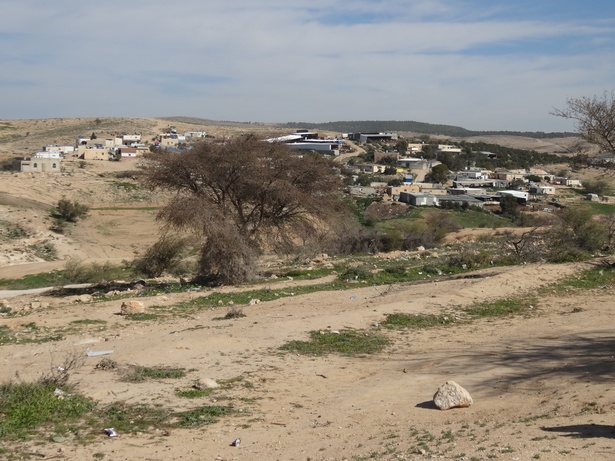
Netanyahu plans to demolish this village because it’s Arab

Umm Al Hiran

Israeli Arab human rights leader to address MPs in Commons on Monday June 1st

This is one of the most egregious examples of ethnic cleansing since the state of Israel was founded: an entire Israeli Arab village is to be demolished so that an Israeli Jewish village with the same name can be built on its ruins.

The 700 Arab residents of Umm Al Hiran have lived in the village for nearly 60 years, having been ordered to move there by the Israeli military commander of the Negev who gave them a lease to build a village, farm the land and graze their sheep.

The Israeli Supreme Court ruled by 2-1 that the state had the right to demolish the entire village and overruled a proposal from the third judge, Daphne Barak-Erez, that the villagers should be offered a plot of land to build their own houses in the new Jewish village of Hiran.

The local court in Kiryat Gat near is expected to approve the eviction notices at the end of May allowing the Israeli Army to move in with their D9 bulldozers to clear the site.

Thirty Jewish settler families are currently living in portakabins a couple of kilometres away waiting for the new houses to be built so they can move in.

The Arab village leaders have behaved with remarkable forbearance, inviting the settlers’ leader over for coffee to see if they can hammer out a compromise solution.

They told them there is no need for demolitions or evictions as there is room for both. “We are not against them living here, but we want to stay here too and live together with them as neighbours,” says Atwa Abu Alkia’n for the villagers.

They point out that there is plenty of space – 3¼ million acres – in the Negev and the settlers don’t need to move to the one small area where they are living.

At the time of Israel’s war of independence in 1948 the villagers were thrown out of their ancestral village in a more fertile area in the Western Negev to make way for a Jewish kibbutz as part of the drive to “make the desert bloom”.

In 1956 they were forcibly moved again to the less fertile northern Negev where they rebuilt their village and its sister village Atir. “It was a desert with no roads, water, houses or services. We built the village. We invested in the houses, the roads and the water pipes. Life has been tough, but we worked hard to develop this place into a beautiful and wonderful village,” said the village sheikh.

Like all the other “unrecognised” villages in the Negev, Umm Al Hiran is provided with no mains electricity, no paved roads, no water, no sanitation.  They have to do their best buying water from tankers and using solar panels for intermittent power.

This is not because it is remote. The Jewish Israeli owner of a dog-kennel only 800 metres away is provided with all services. The Israelis do this solely to make life difficult for Arab villagers in the hope that they will move.

Nor is it a question of money. When the villagers try to pave the roads, army bulldozers break them up; when they install water pipes, they are disconnected; when they build stone houses, they are demolished. The Israelis want the buildings to look temporary, ramshackle, worthless.

This makes it easier for the Israelis to sustain the myth that the villagers are Bedouin nomads who originate from other countries. In fact it is historically verifiable that their families have lived in the Negev for hundreds if not thousands of years.

While they are all proud of their Bedouin heritage and while a few are still engaged in the traditional Bedouin occupation of sheep-farming, the village also has lawyers, teachers and doctors among its 700 residents.

This is Israel expelling its own citizens, simply because of their race. Only the international community can save the village of Umm Al Hiran. Britain could play a leading role if it protested strongly enough to the new Israeli government.

MPs and candidates: How to ask/answer questions on Palestine

Palestine will be a bigger issue in this election than ever before.  In the week preceding the October 13 House of Commons vote on the recognition of Palestine, 57,808 emails were sent to MPs from the PSC website alone. In some constituencies MPs received over 1,500 emails from their constituents.

For more and more voters it is essential to know candidates’ views on Palestine before deciding whether to vote for them.  For all candidates and MPs it is essential to know how to answer questions on the Israel-Palestine conflict. 

Here we list the seven questions sent to every candidate by the Palestine Solidarity Campaign and our suggested answers, but there are many more questions being and individuals asking questions of candidates at hustings and candidates’ round-tables up and down the country.

The Israel advocacy organisation ‘We Believe in Israel’ has also circulated suggested answers. We include a response to their argumentation. 

Long answers are not required to an emailed questionnaire. One word will do if it’s the right one! But longer answers may be necessary at hustings. 

It’s very helpful if you cc info@palestinebriefing.org in emails to or from MPs.  

Question 1: I urge the UK Government to uphold the principles of equality, human rights and international law in all its relations and dealings with Israel.

Quick answer: Yes

Points to make: Every day Israel is in breach of international law in at least five ways:

  1. Building settlements in occupied territory (illegal under the Geneva Convention (see below),
  2. Building the wall on occupied land (85% of the route of the separation barrier is inside Palestine which the International Court of Justice ruled illegal in 2004),
  3. Blockading Gaza (illegal because it is a collective punishment),
  4. Annexing East Jerusalem (part of the West Bank illegally annexed to Israel in 1967 and not recognised by UN, US or UK),
  5. Denying human rights to Palestinians with Israeli citizenship (at least 50 Israeli laws discriminate against Israel’s Arab minority according to the civil rights organisation Adalah).

Far from being a model democracy, Israeli comes 44th in the 2014 Index of Economic Freedom behind Macedonia, Latvia, Armenia and Jordan, 96th in the 2014 World Press Freedom Index below Kuwait, Liberia, Mongolia and Panama and bottom in an international Freedom of Religion Index scoring zero along with  Iran, Saudi Arabia, China and Afghanistan.

What ‘We Believe in Israel’ says: “I am deeply concerned at violations of these principles by both the Palestinian Authority and Hamas…”

What we say: Their only answer on this question is to point to human rights violations by Hamas and by the Palestine Authority. No one would deny that there have been human rights violations under Hamas in Gaza and to a lesser extent under the PA in the West Bank. We condemn all violations. But it is significant that ‘We Believe in Israel’ tries to shift the focus rather than trying to deny it is guilty of human rights abuses and breaches of international law.

Question 2: I consider the construction of Israeli settlements on occupied Palestinian land in the West Bank and East Jerusalem to be illegal and unjustifiable.

Quick answer: Yes

Points to make:  International law on military occupation is contained in the Fourth Geneva Convention (which Israel has signed). It says an occupier “may not .. transfer parts of its own civilian population into occupied territory”. There is no room for doubt. The UK government repeatedly points out to Israel that settlements are illegal. Every country other than Israel says considers them illegal (although the US prefers the word “illegitimate”). On top of that at least a third of settlements are built on privately-owned Palestinian land which has been expropriated. The Fourth Geneva Convention allows the requisitioning of private land only for military purposes and it must be returned to its owners once it is no longer needed for military purposes.  Handing over requisitioned land to Jewish-only settlements is both illegal and discriminatory.

What ‘We Believe in Israel’ says: “The settlements issue is far more complex than this question suggests. All relevant UN resolutions prescribe that the final border should be settled by negotiations between the parties, hence the land in question is disputed until such an agreement is reached… Israel’s complete withdrawal from Gaza (including the destruction of all of its settlements) in 2005 indicate that Israel will be prepared to make such concessions again”

What we say: International law is not complex. It is clear. Israel refers to them as “disputed” territories, but they are disputed only by Israel. Everyone else calls them “occupied”. The PLO has always accepted there will need to be negotiations before a settlement, but what is already laid down in international law cannot be “negotiated”. It’s true that Israel withdrew from their settlements in Gaza in 2005 (destroying them as they went) but only 1-2% of Israel’s settlements were in Gaza. 98% were in the West Bank. Many of the settlers transferred straight from Gaza into West Bank settlements. In the year of their withdrawal from Gaza the number of settlements went up not down, and it has gone up every year since. It is now 650,000.

Question 3: Do you agree that one of the first acts of the next UK Government should be the recognition of Palestine?

Quick answer: Yes

Points to make:  Palestinians were promised statehood in 1949 and the promise has been repeated many times in the last 60 years.  William Hague said Palestine was ready for statehood in 2011 and the World Bank, the IMF and the EU all agreed that its institutions were ready for statehood.  But Hague told the Commons he would only recognise Palestinian “at a moment of our choosing and when it can best help bring about peace”. Most people thought that moment arrived when the Kerry talks collapsed in April 2014, but the UK dithered. Parliament voted 274-12 in favour of recognition and there have been similar votes in the Irish, French, Spanish, Portuguese, Danish and European parliaments. 135 countries have now recognised Palestine. Ed Miliband has said a Labour government will recognise Palestine.

What ‘We Believe in Israel’ says: I believe that a Palestinian state … should come about as an outcome of a peace settlement.

What we say: Saying recognition must wait until a peace settlement is signed is handing the Israelis a veto. Many believe the undeclared Israeli aim is to spin peace talks out indefinitely so they never need to recognise a Palestinian state and so they can gradually absorb the West Bank into Israel.  While there must be negotiations over the details of a peace settlement, the question of whether the UK government should confer diplomatic recognition on Palestine is a decision for the UK alone and should not be subject to an Israeli veto.  Similarly the question of whether Palestine should be recognised as a state is an issue for the UN and the whole world and not for Israel.

Question 4: Do you agree that the blockade on Gaza should be lifted immediately?

Quick answer: Yes

Points to make:  The economic blockade of Gaza is a collective punishment. It is punishing 1.8 million people for the actions of Hamas and other militant groups.  In international law a collective punishment is a war crime, in moral terms it is a form of hostage-taking and in political terms it is counter-productive. It is more likely to strengthen resistance than to weaken it. Although the ban on importing goods that have a possible military use is justified as a security measure, the ban on exports has no plausible security justification.  It leaves factories idle and most Gazans dependent on food aid. The ban on import of construction materials causes huge hardship (the 100,000 made homeless by the war are still homeless). And the restrictions on humanitarian aid (running at half the pre-blockade levels) are part of a deliberate policy of ‘semi-starvation’ as comments from senior Israeli sources have confirmed.

What ‘We Believe in Israel’ says: An immediate lifting of the blockade would have the effect of giving Hamas carte blanche to rearm and renew the conflict.

What we say: It is inhumane to continue to support an economic blockade which is causing poverty, hardship, hunger and suffering to 1.8 million people. It’s true that some building materials can be used for military purposes, but this is a vicious circle. Of course the Gazans will want to build up their defences if they are constantly attacked by the Israelis.  Isn’t this exactly what Israel does?  On the other hand the West Bank is demilitarised. The Palestine Liberation Organisation renounced violence in 1988 and adopted a policy of non-violent resistance backed by international pressure on Israel and the Palestine Authority enforces a strict ban on arms in the areas in controls. What has been their reward? The Israelis have stolen their land to build settlements, ransacked and demolished their homes, turned a blind eye to settler violence and killed hundreds of Palestinians. If Israel wants Gaza to become demilitarised, the first step must be to show that an unarmed Palestinian state can live safely and securely next to Israel.

Question 5: Do you agree that we should stop trade with Israel’s settlements on Palestinian land, and stop settlement goods being sold in Britain?

Quick answer: Yes

Points to make: The EU is the biggest donor to the Palestine Authority, funding projects to protect Palestinians from Israeli settlements. Yet the EU helps to keep those settlements in business by importing goods from settlements worth £198 million a year.

What ‘We Believe in Israel’ says: Palestinian workers in Israeli enterprises [in the settlements] enjoy terms and conditions far better than most other Palestinians.

What we say: This is the classic argument used during South African apartheid to justify the exploitation of black workers. The World Bank estimates that the Israeli occupation costs the Palestinian economy $3.4 billion a year. If Palestinian businesses were allowed to develop, Palestinians would be 35% richer. Furthermore the Israeli settlements take 80% of the water and 100% of mineral deposits in the West Bank and the Dead Sea which belong to Palestine. This is worth far more than a few jobs in Israeli-owned factories in illegal settlements.

Question 6: Do you agree that the EU Israel Association Agreement (giving tariff reductions to Israeli goods) should be suspended until Israel meets its human rights obligations? 

Quick answer: Yes

Points to make: Under Article 1 of the EU-Israel Association Agreement Israel enjoys privileged duty-free access to the EU market, worth an estimated £750 million a year, while third world countries have to pay tariffs ranging up to 85% before they can sell goods in Europe. The agreements Israel enjoys with Europe outstrip those offered to any other non-European state, even Turkey.  But under Article 2 of the agreement these tariff reductions are dependent on “respect for human rights and democratic principles” which are, it says, “an essential element” of the agreement.

The EU condemns Israel’s breaches of international law (such as settlements, the wall, the Gaza blockade, the annexation of Jerusalem) which undermine democratic principles and the human rights of Palestinians, yet it fails to enforce Article 2 of the EU-Israeli Association Agreement to suspend the agreement until Israel is in compliance. Under a similar association agreement with Ukraine, it took only a few weeks for the EU to impose a total ban on imports from Crimea.

The European Union is Israel’s biggest trading partner accounting for 34% of Israel’s imports and 32% of its exports in 2013 but the EU depends on Israel for only 0.7% of its trade.  The EU is therefore in a stronger position of influence over Israel than any other country, including the US.  By suspending the agreement, it could put effective economic pressure on Israel.

Question 7: Do you agree that the government should stop supplying arms and security equipment to Israel until it complies with international law?

Quick answer: Yes

Points to make:  UK policy is not to issue arms export licences for arms that “might be used for internal repression”. After the 2008-9 Gaza war David Miliband withdrew five licences. After the 2014 war more licences were reviewed. But the UK still has 131 arms export licences to Israel including components for drones and laser guidance systems for bombs. Past experience shows that undertakings not to use arms for internal repression are ignored.

What ‘We Believe in Israel’ says: Israel is a democracy facing serious threats from heavily-armed terror groups including Hamas, Hezbollah, ISIS and Al-Qaeda. The idea that we would refuse to provide it with the arms it needs to defend itself is repugnant.

What we say: Israel has the fourth strongest armed forces in the world, thanks partly to US support but Israel also has a massive arms industry of its own. The idea that Israel would be in danger if the UK stopped selling them arms because they are “facing serious threats from heavily-armed terror groups like Hamas” is laughable. Israel has the most sophisticated missiles and anti-missile systems in the world, while Hamas rockets are rudimentary home-made and lack any effective guidance systems. Israel uses the fact that its arms are “field-tested” (ie tested in live warfare) to market its arms exports; the UK should guard against complicity with Israel’s arms-export industry.
Now is the time to recognise Palestine and to lift the blockade of Gaza

It may take a week or two before the new government of Israel is formed, but it is clear that Netanyahu will still be Prime Minister and it will be a Likud-dominated coalition. Netanyahu made it clear during the campaign that he now opposes a Palestinian state so the new government will not even nominally support the two-state solution.
Lisa Nandy MPWhether Netanyahu changed his mind or whether he only pretended to support the two-state solution in the first place, the fact is that the international community will be at odds with the new Israeli government on this fundamental issue and there will no longer be any point in pursuing diplomatic initiatives that are bound to fail.  Only those who do not really want a solution will continue to pursue unconditional negotiations.

The solution is not hard to find. It is the same solution that is being used by the international community in every other case where a state defying international law.  It involves economic pressure.  In the case of Israel there is an even simpler step that can be taken and one that is already overwhelmingly supported by the House of Commons. That is to grant bilateral diplomatic recognition to the state of Palestine.

That is the course advocated by MPs at International Development questions on Gaza in the Commons yesterday. “Now is the time,” said Lisa Nandy MP (above) “to recognise the state of Palestine.”

“Now the mask has slipped and Netanyahu has said he will not allow a two-state solution and will not allow a Palestinian state.  Is not the only solution,” asked Grahame Morris MP”a concerted international action to lift the blockade?”

Recognition is also the course advocated in an article in the Irish Times yesterday by the man who was, until last year, the UK Government’s chief adviser on the Palestinian issue, the former UK Consul-General in Jerusalem Sir Vincent Fean:

“Recognise the state of Palestine now. It is the only way to safeguard the two-state solution to the long-term benefit of Israelis and Palestinians – and to uphold our own values and our own interest.

“Recognition of Palestine on 1967 lines is the logical step now for all states committed to an equitable two-state solution.

“Recognition serves three purposes:

giving hope to the beleaguered would-be peacemakers in Ramallah, whose readiness to negotiate is so heavily criticised by Hamas and by mistaken advocates of futile violence;

signalling to Israelis that there will indeed be a sovereign Palestinian state, so Israel’s leaders need to shape an agreement, not rule one out, and

showing to the world and to ourselves that right matters more than might.

“Sweden showed the way when it recognised Palestine last October.”

Read Vincent Fean in the Irish Times: Binyamin Netanyahu’s victory means we must recognise the state of Palestine

International Development questions, Wednesday March 18th 

Lisa Nandy (Wigan) (Lab): What assessment she has made of the humanitarian effects of the blockade of Gaza.

Guy Opperman (Hexham) (Con): What assessment she has made of the effectiveness of the efforts made by the (a) UN and (b) UK to improve the humanitarian situation in Gaza.

Minister of State Mr Desmond Swayne: Movement restrictions damage the Gazan economy, with the result that 80% of Gazans are dependent on aid, 57% are dependent on food aid and 43% are unemployed. Most of the UK contribution to the relief effort is delivered through the United Nations Relief and Works Agency, and I judge that to be effective within the limitations of the funding and the movement restrictions.

Lisa Nandy: As winter approaches, the Minister will know that the humanitarian situation in Gaza remains dire. It is welcome that the UK has pledged £20 million to help, but what is his Government’s long-term plan, given the re-election this morning of the Prime Minister who believes that the continuation of the blockade of Gaza is a good thing; believes in the building of illegal settlements; has abandoned a two-state solution; and believes that the deaths of more than 2,000 people in Gaza last summer were “proportionate”? Surely now is the time for the Minister to put pressure on his ministerial colleagues, recognise the state of Palestine and end this appalling situation.

Mr Swayne: The Member is right in that the state of affairs in Gaza is desperate. However, on the recent events and the election, I am tempted to call in aid the wisdom of the Ents and say that we should not be hasty. It will be some time before the true policies of the new Government emerge, after long negotiations over a coalition. In the meantime, we remain committed to the two-state solution and we make our representations known on all the issues that she has raised, at the highest level.

Guy Opperman: What specific assessment has been made of the Gaza reconstruction mechanism? How many people have been accessing the building materials?

Mr Swayne: As of this morning, more than 60,000 individuals have had access to building materials, out of the in excess of 100,000 who need such materials. I am confident that the mechanism is working effectively, but clearly there will have to be a step change in movement and access which can result only from a lasting solution.

Mr Andy Slaughter (Hammersmith) (Lab): Israel will have a Government opposed to a two-state solution and a Prime Minister who turned out his vote by an emergency broadcast that said: “Arab voters are heading to the polling stations in droves.” What is the international community going to do to get aid to Gaza, which is in occupation and under siege? How is the international community going to provide that aid when the occupation and siege are permanent?

Mr Swayne: A great deal of aid for Gaza was pledged at the Cairo conference. We have delivered a quarter of our pledge, and within the first few weeks of the financial year we will have delivered all of the £20 million we pledged. We have been entering into a considerable diplomatic effort to get other countries that have made pledges to step up to deliver, and I am glad to say that Qatar and Kuwait have now done so.

Michael Fabricant (Lichfield) (Con): The Minister will know that some 600,000 tonnes of concrete have been used for the construction of illegal tunnels for smuggling and to enable the firing of weapons into Israel. How can he ensure that aid gets to the people who need it and not to Hamas?

Mr Swayne: One part of the Gaza reconstruction mechanism is the material monitoring unit, which my Department supports. It is designed specifically to do what my friend requests: to ensure that any materials supplied, stored and dispersed are for the proper purpose and that any infractions are reported.

Grahame M. Morris (Easington) (Lab): The Minister says that we should wait and see what is going to happen in Israel, but now the mask has slipped and Netanyahu has said he will not allow a two-state solution and will not allow a Palestinian state. Is not the only solution that will relieve the suffering of the people in Gaza a concerted international action to lift the blockade?

Mr Swayne: We continue to make representations at all levels about movement restrictions, but I repeat what I have said: we will have to wait and see what the new Government’s policy is, after they emerge from the coalition negotiations.

Dr Julian Huppert (Cambridge) (LD): I share the concerns about the election results in Israel and what they mean for people in Gaza and elsewhere in that region. On a number of occasions Israel has had restrictions on parliamentarians being able to cross at the Erez checkpoint to see what is happening in Gaza. Will the Minister seek to get that changed so that people can see what is happening to the aid that we provide and to the people there?

Mr Swayne: I am aware that, like me, the Opposition Front-Bench spokesman, the MP for Luton South (Gavin Shuker), was recently admitted to Gaza. Such visits do involve bureaucratic obfuscation, and we will continue to make representations in that regard.

Debbie Abrahams (Oldham East and Saddleworth) (Lab): One of my excellent community groups in Saddleworth supports Palestinian women into education. Members of the group inform me that one of the education centres that they know well was recently ransacked by Israeli forces. The education centre is in Palestinian territory. Does the Minister agree that not only are these actions illegal, but they jeopardise future sustainable peace in the region?

Justine Greening: Much of our work in the occupied Palestinian territories focuses on providing basic services, including education. At the Cairo conference one of the main concerns of donors was the need to end the perpetual cycle of violence, reconstruction, then destruction and violence and the need for more reconstruction. I agree with the Member that this cannot continue ad nauseam.

Read Lisa Nandy and questions on Gaza

Minister outlines nine-point plan to ease Gaza blockade

Middle East minister Toby Ellwood used a debate in the Commons on Gaza to set out nine steps that he is pressing the Israelis and Egyptians to take to ease the blockade of Gaza, now in its eighth year:

  1. “We are concerned about the closure of the Rafah crossing between Gaza and Egypt.” [30,000 Gazans are stranded in Egypt unable to get home because the crossing has been closed since January 22.]
  2. “The Rafah pedestrian crossing [between Gaza and Egypt] needs to be converted into a crossing for vehicles.” [Although there is a lorry-park at Rafah crossing, no goods are allowed through except for emergency deliveries of medicines.]
  3. “The Kerem Shalom goods crossing between Israel and Gaza could be expanded.”  [This is the only goods crossing between Gaza and Israel and its capacity is only half what is needed just for humanitarian supplies at the pre-blockade level.]
  4. “The Erez crossing is another one that needs to be widened.” [Designed for vehicles and for 45,000 people per day, it currently handles only 400 people per day.]
  5. “Israel should allow the transfer of goods from Gaza to the West Bank.” [Israel imposes an almost total ban on exports, even to the West Bank. In the week ending March 2 only one lorry-load was allowed out of the Kerem Shalom crossing compared with an average 240 a week before the blockade.]
  6. “There should be an increase in the fisheries zone from six miles to the 20 miles as promised in the Oslo peace accords.”
  7. “We want further movement of people out of Gaza at some of the crossing points.”
  8. “The European Union could promote a secure sea-route – and umbilical link – from Gaza to the EU via Cyprus with the agreement of the Israelis.” The Minister has lobbied EU foreign policy chief Federica Mogherini to push this.
  9. “The Israelis should unfreeze the payment of tax revenues” which they collect on the Palestinians’ behalf but are illegally refusing to hand over as punishment for going to the ICC, causing the non-payment of salaries for several months in the Palestine Authority.
The Minister was responding to calls from MPs for government action to reduce the suffering caused by the blockade. Labour shadow minister Gareth Thomas asked: “The blockade of Gaza must end. What recent action has the Minister taken to press the Government of Israel on that critical issue?”
The debate was initiated by Michael McCann (East Kilbride) (Vice-chair of Labour Friends of Israel) who argued that the lifting of the economic blockade on Gaza had to be “utterly dependent” on the disarmament of the Gaza Strip.
Richard Burden (Birmingham, Northfield) (Chair of the All-party Britain-Palestine group) said he could not go along with the idea that one could justify or excuse the situation facing the ordinary people of Gaza because Hamas “commits some heinous crimes – and it does”.
“The reason is a moral one, but there is also a legal one. It is called collective punishment. Collective punishment is illegal under international law, and that is what has been happening to Gaza. It has been happening in a very extreme form since 2007, but it was going on from 2005 [before Hamas took control].”
“To resolve the problem, we need to lift the blockade.”
He pointed out that Israel’s economic blockade goes far beyond what could possibly be justified on grounds of security. “Why is it that Israel has even put restrictions on the export of strawberries between Gaza and the West Bank? How can that be justified on any kind of security grounds?”
Grahame Morris (Chair of Labour Friends of Palestine & the Middle East) challenged the idea that the Israelis would agree to lift the blockade of Gaza or end settlement building if the Palestinians agreed to disarm. The Palestine Liberation Organisation had adopted non-violent resistance in the West Bank in 1988. “What has been its reward? House demolitions, the expansion of illegal settlements, the arrival of hundreds of thousands of illegal settlers, continued oppression, the arrest of children and the subjugation of military occupation.”
Mark Durkan (Foyle) (SDLP) also said that the suggestion that Hamas would disarm in return for economic development “would make a hostage of all those peace-loving people in the Palestinian population who neither hold arms nor hold any brief for those who hold arms”.
Andy McDonald (Middlesbrough) (Lab) said most of the current Israeli Government were in any case on record as saying that they fundamentally oppose the establishment of a Palestinian state. “For the past two decades, negotiations have served as little more than a fig leaf to cover Israel’s expansionist aims so that it can consolidate what it has already taken by force of arms.”
David Ward (Bradford East) (LD) said the UK “can and should provide leadership. We are no longer waiting for banal responses; we need action from the Government to show that they are on the side not only of the Palestinians but, in the long term, of those in Israel who seek to live with the Palestinians in peace, side by side and in a neighbourly way.”

Ellwood dismisses demolition of Arab village as ‘planning matter’

Israeli Arabs in the Negev were dismayed last week when the threatened demolition of their village was described in the Commons as a “planning matter”.
“It is a planning matter that we have raised concerns about, “ Middle East Minister Toby Ellwood said at Foreign Office questions.
The Israeli government plans to demolish the entire village of Um Al Hiran so they can build a Jewish village on the same site – possibly as early as next Monday, the day of the Israeli elections.
The minister drew a distinction between the  demolition of Bedouin villlages in the West Bank which was “contrary to international law” and the demolition of villages inside Israel like Um Al Hiran which was “a different matter”.
MPs including Jim Cunningham (Lab), Andy Slaughter (Lab) and Sir Bob Russell (LD) urged him to ask the Israelis to raise the matter before the end of this week.
A court in the Israeli city of Beersheba agreed that the demolition and eviction orders on 500 villagers can go ahead from March 17th.
Village leaders have said that the Israeli settlers are welcome to move to a nearby site and live with them as neighbours, as there is plenty of land in the Negev.
Jim Cunningham MP asked the minister to urge Israel to drop the demolitions and instead let the two villages co-exist side by side in the spirit of peace.
Andy Slaughter MP wrote to the minister asking him to reconsider his answer:  “Replacing an Arab village with a Jewish village is not a planning matter.  The new village of Hiran will occupy exactly the same land as the existing village of Umm Al Hiran. There is no proposed change of use.  The only difference will be that the residents are Jewish and not Arab.”
He pointed out the Israeli government often tries to justify the demolition of Arab villages by saying the land is needed for an army firing range or a forest or a road – which are deliberately located so that Arab villages will need to be demolished.
“What is unusual about Umm Al Hiran is that they plan to put the Jewish settlement in exactly the same spot as an existing Arab village and they even plan to use the same name.  This makes it transparent that there is no genuine planning issue.  It is simply a part of the clearances of Arab villages to make way for Jewish settlements.”
MPs who voted for the motion to recognise Palestine are shown in blue-green, those who did not vote are shown in brown and ministers who were under instructions not to vote in black.

Palestinian students thank  MPs for backing recognition

Five Palestinian student leaders flew to London to show their appreciation for Members of the UK Parliament who voted in favour of recognising the state of Palestine in a debate in the House of Commons.
They presented 45 MPs – including Sir Alan Duncan, pictured right – with inscribed commemorative shields made in Bethlehem out of olive wood to thank them for their support at a meeting in the House of

Commons on Tuesday February 24th.

The five Palestinians, Iyad Dwikat, Mohammed 

Abuamira, Makram Daraghma, Tareq Eshnino and Abd-Alrahman Barghouthi, brought a letter of thanks to the MPs from the Palestinian prime minister Rami Hamdallah.

Makram Daraghma, who is the Prime Minister’s youth adviser, spoke briefly at the presentation and Tareq Eshnino, who is from Gaza, updated the MPs on the latest situation in the war-battered enclave.
The presentation was organised by the General Union of Palestinian Students which represents hundreds of students from the West Bank and Gaza studying at British universities.
The union’s Secretary-General, Fouad Shaath, told the MPs: “I don’t know whether MPs have any idea just how much encouragement this vote gave to Palestinians.  We often feel close to despair – but this vote gave us hope.
“The vote was supported by MPs of every party in Britain and it was welcomed by supporters of every party in Palestine.
“The example set by British MPs was soon followed in Ireland, France, Spain, Portugal and the European Parliament and we believe that parliamentarians can galvanise their governments into international action that will bring us justice and peace.”
The Palestinian students’ union has members in universities across the UK and will be pressing all parties, all MPs and all candidates to declare their support for the recognition of Palestine in the coming election campaign.
The House of Commons voted last October in a backbenchers’ debate on a motion “that this House believes that the Government should recognise the state of Palestine alongside the state of Israel. The result was 274 in favour and 12 against.
The MPs who were presented with commemorative plaques was also cross-party, including 11 Conservatives, six Liberal Democrats and 27 Labour MPs.
Six were former ministers in the present government and six were Opposition front-benchers or former ministers. They included Rushanara Ali, Dave Anderson, Gordon Banks, Anne Begg,   Clive Betts, Richard Burden, Sarah Champion, Katy Clark, Michael Connarty, Jeremy Corbyn, Margaret Curran, John Denham, Frank Doran, Rt Hon Alan Duncan, Sir Edward Garnier QC, Rt Hon Cheryl Gillan, Mike Hancock CBE, Nick Harvey, Philip Hollobone, Jim Hood, David Jones, Sir Gerald Kaufman, Barbara Keeley, Mark Lazarowicz, Karen Lumley, Fiona Mactaggart, Anne Main, Andy McDonald, John McDonnell, Jim McGovern, Ann McKechin, Grahame Morris, Eric Ollerenshaw, John Pugh, Hugh Robertson, Bob Russell, Anas Sarwar, Alison Seabeck, Andy Slaughter, Andrew Stephenson, Andrew Stunell, Valerie Vaz, David Ward and James Wharton.
 
The Palestinian student leaders who attended the presentation were:
·       Makram Daraghma, adviser to Palestinian Prime Minister Rami Hamdallah, former student leader Al Najah University, Nablus,
·       Iyad Dwikat, youth adviser to Prime Minister Rami Hamdallah, former student leader Al Najah University, Nablus,
·       Tareq Eshnino, former students leader Al Azhar University, Gaza,
·       Mohammed Abuamira, advisor to Mayor of Jenin, former student leader Jenin University
·       Abd-Alrahman Barghouthi, adviser to Mayor of Ramallah
The inscription on the shields was: “We would like to express our heartfelt gratitude and appreciation for your continuous efforts to champion Palestinian statehood and human rights”  The General Union of Palestinian Students
Contacts from the General Union of Palestinian Students:
Fouad Shaath info@gupsuk.co.uk  fouad@gupsuk.co.uk  07453 274293

The Arab village that Israel plans to demolish

Villagers say: ‘Why evict us when we can both live here? There’s plenty of space.’

This is the village that the Israelis plan to demolish in its entirety anytime after the middle of March and replace with a new village on the same site with the same name – Hiran – but with Jewish inhabitants instead of Arabs.

The 500 Arab residents of the village have lived in the village for nearly 60 years and were in fact ordered to move there by the Israeli military commander of the Negev who gave them a lease to build a village, farm the land and graze their sheep.

The village leaders say there is no need to evict them as the Jewish settlers can move onto a site nextdoor. “We are not against them living here, but we want to stay here too and live together with them as neighbours,” says Atwa Abu Alkia’n.

They point out that there is plenty of space – 3¼ million acres – in the Negev and the settlers don’t need to move to the one small acre of land where they have been living since 1956.

Thirty Jewish settler families are currently living in portakabins a couple of kilometers away waiting for the new houses to be built so they can move in.

The Israeli state has made it clear that the new village is for Jewish residents only and the Arabs must move out.

They have put demolition orders on every house in the village and the courts have fixed the middle of March as the date when the demolition orders take effect.

That means the demolition could coincide with the date of the Israeli election on March 17th.

See the village on YouTube:

Only international protest will save the villagers from being evicted

Villagers say only international protests can stop the Israelis from demolishing the village.  While Israelis are focused on the March 17 election, who will stop the bulldozers from demolishing the village of Umm Al Hiran?

This village is in Israel, not the Palestinian Territories. Its residents are full citizens of Israel.  Yet they are treated as though they had no rights, no importance.

At the time of Israel’s war of independence in 1948 the villagers were thrown out of their ancestral village in a more fertile area in the Western Negev to make way for a Jewish kibbutz as part of the drive to “make the desert bloom”.

Eight years later they were forcibly moved again to their present location in the Atir valley in the less fertile northern Negev where they rebuilt their village and called it Um Al Hiran.

“It was a desert with no roads, water, houses or services. We built the village. We invested in the houses, the roads and the water pipes. Life has been tough, but we worked hard to develop this place into a beautiful and wonderful village,” said the village sheikh.

Like all the other “unrecognised” villages in the Negev, they are provided with no mains electricity, no paved roads, no water, no sanitation.  They have to do their best buying water from tankers and using solar panels for intermittent power.

This is not because it is remote. On the contrary, the Jewish owner of a dog-kennel only 800 metres away is provided with all mod cons. The Israelis do this solely to make life difficult for Arab villagers so they will move.

And it is not a question of money. Often if the villagers try to pave the roads, army bulldozers break them up; if they install water pipes, they are disconnected; if they build stone houses, they are demolished. The Israelis want the buildings to look temporary, ramshackle, worthless.

This makes it easier for the Israelis to sustain the myth that the villagers are Bedouin nomads who originate from other countries. In fact, while they are all proud of their Bedouin heritage, it is historically verifiable that their families have lived in the Negev for hundreds of years.

And while a few of the villagers are still engaged in the traditional Bedouin occupation of sheep-farming, Umm Al Hiran also has lawyers, teachers and doctors among its 500 residents.

A few weeks ago the leader of the Jewish settlers came and drank coffee with the villagers to ask them, disingenuously, why they were trying to block plans for the new Jewish village in the courts.

Salim Abu Alkia’n, Atwa’s brother, explained patiently: “To all the Jewish people who want to live in this town I say that people are already living in this town. We have been living here for 60 years and, even if they demolish our homes, we will stay here forever.”

Israelis can be excused for not knowing about the village, as it does not appear on Israeli maps.  Even when the National Council for Planning and Building approved plans for a new Jewish town on the site in 2010, they submitted a map to the planning committee that made no reference to the fact that there was already an Arab village on the land.

When they applied for demolition orders, they claimed the buildings “had been discovered” by an inspection patrol and they had been “unable to identify or reach the people who owned the houses”.

When they applied for eviction orders, they described the villagers as “trespassers” squatting illegally on state land and the magistrate had to point out that they had lived on the land for years with the state’s knowledge and consent.

Statement on 25th anniversary of Nelson Mandela’s release

Time to free Palestine’s Marwan Barghouthi, the new Mandela, after 20 years in jail

On this day we should remember Nelson Mandela who was released from prison 25 years ago on February 11th 1990.
We should also remember Marwan Barghouthi, the Palestinian leader who has been held in Israeli jails for 20 years.  Like Mandela, he is the leader who could come out of prison, unite all the factions, win the presidency, negotiate a peace settlement, put it to his people, win their support and then preside over a process of truth and reconciliation in a newly independent country.
Instead he sits in Cell 28 of Hadarim Prison near the Mediterranean resort of Herzliya knowing that his release can only be the result of the kind of international campaign that succeeded, all those years ago, in freeing Nelson Mandela.
We appeal to all supporters of an independent Palestinian state to support the International Campaign to Free Marwan Barghouthi and All Palestinian Prisoners (http://fmaapp.ps/) and join with campaigns in France, Italy and other European countries to mark the anniversary of his abduction and arrest on April 15th 2015.

Time to remember Mandela’s release and demand Marwan’s freedom

by Ahmed Kathrada, who spent 26 years in apartheid jails, Founder of the Free Mandela Campaign, & Adolfo Perez Esquivel, Nobel Peace Prize Laureate, former political prisoner under the dictatorship in Argentina

On this day, 25 years ago, the world finally saw Mandela’s smile and his defiant fist raised to the skies. Free at last…free at last. Mandela’s release marked the start of a new era and was the first real sign that apartheid was close to its end.
There was still everything to do, but the apartheid government signaled through the release of Mandela and other anti-apartheid prisoners its readiness to engage in serious dialogue towards freedom, peace, reconciliation and coexistence.
While we celebrate this historical event that changed durably the face of South Africa and the world, we are reminded of the fate of another symbol of freedom: Marwan Barghouthi. Marwan’s path tremendously resembles Mandela’s. They both founded the youth branch of their political movements, drew their legitimacy from their activism on the ground and their central role in building a mass uprising against oppression.
They both were leaders at the moment of their arrest, and transformed into national and universal symbols while in detention. They both boycotted their courts and pleaded the case of their people rather than their own. While insisting on the right of their people to resist oppression, including through armed struggle, they both strongly advocated mass popular peaceful resistance to achieve freedom. They also both demonstrated an unbelievable capacity to be unitarian figures among their own, while engaging in dialogue with the other.
This year marks the 25th anniversary of Mandela’s release, and the 20th year that Marwan spends behind bars, including the last 13 years consecutively. In October 2013, an international campaign was launched from Nelson Mandela’s cell on Robben Island for the freedom of Marwan and all Palestinian political prisoners. We decided to set up, on this occasion, an International High Level Committee for the release of Marwan and all prisoners, as we ourselves, have experienced international solidarity in support of our freedom, and the freedom of our companions in struggle. Such international campaigns send a powerful message: our imprisonment entails a significant political and moral cost for the forces of oppression.
When we talk of political imprisonment, the Palestinian example is clearly the most significant and shocking of all. 800 000 Palestinians have been imprisoned at some point of their lives. Many Palestinians have spent over 25 or 30 years in prison. No one is immune; children, women, MPs and human rights defenders continue to languish in Israeli jails.
The anti-apartheid struggle became an emblematic reflection of the battle for freedom and human rights worldwide. Apartheid was considered as one of the worst manifestations of oppression and injustice. What conflict can today symbolise the struggle for freedom against oppression, of right over might, of justice against impunity, more than the Palestinian struggle? Israel’s colonial and discriminatory policies, both in the occupied territory, and within its own borders, are a clear demonstration that we are witnessing the rebirth of apartheid, a prospect none of us should tolerate.
By launching the Free Marwan and all Palestinian Prisoners campaign, inspired by the Free Mandela campaign, we are not only taking a strong stance against this occupation and what it inflicts upon the Palestinian people, but we are also testifying our belief that the Palestinian struggle is the legitimate prolongation of the anti-apartheid struggle and that the freedom of Marwan and of all Palestinian prisoners is the necessary prelude to the freedom of the Palestinian people.
We will one day celebrate the release of Marwan. And the world will discover his smile, and his defying fist, which will transform into an open hand ready to shake the hand of the future and work for peace, as soon as Israel manifests its intention to end its occupation, not further entrench it. All our victories over oppression, racism, discrimination, segregation and apartheid must combine to ensure the triumph of freedom and dignity in Palestine, and peace based on international law.
Note: The International Committee for the freedom of Marwan Barghouthi and all Palestinian prisoners regroups Nobel Peace Prize laureates, former political leaders, human rights figures and former political prisoners including the signatories of this text and Angela Davis, US civil rights movement icon, as well as the late U Win Tin, leader of the struggle for freedom in Burma. See more at http://fmaapp.org/the-international-high-level-committee/
Marwan Barghouthi

FREE MARWAN BARGHOUTHI

THE NEW MANDELA

Barghouthi’s tribute to Mandela; Robben Island Declaration; Foreword by Yahya
Idris; Marwan’s Story as told by Fadwa Barghouthi to Martin Linton; 32pp

Palestine Briefing

info@palestinebriefing.org £2+£1p&p/€5

Martin Linton
Palestine Briefing
martinlinton@palestinebriefing.org
020 7998 4732
07768 590077
160 London Road, Kingston KT2 6QW

Israel faces ICC charges after UK abstains on Security Council vote

It may come to be seen as one of the greatest ironies in the history of the Israel-Palestine conflict, when it is finally written, that what put the Israelis in the dock at the International Criminal Court was the non-vote of the UK delegation in the United Nations.
President Abbas has said many times that he would hold off applying to join the International Criminal Court – in spite of massive pressure from Palestinians – if only the Security Council would agree to a resolution setting a three-year timescale for the end of the occupation.
A timescale is surely not unreasonable. Negotiations with the Israelis are unlikely ever to reach a conclusion when there is no deadline. The Israelis use negotiations to build more and more settlements – ‘facts on the ground’ – on stolen Palestinian land.
The Foreign Secretary said in the House of Commons in October that Israeli announcements of new settlements not only undermined but were “intended to undermine” the peace process.
The implication of the word “intended” is that negotiations cannot succeed if it is left to the Israelis. There has to be international action. There have to be consequences to illegal actions and delay.
Why, then, did the UK not support Palestine’s most moderate politician, President Abbas, putting forward a moderate resolution to the United Nations setting a deadline of 2017?
Why did the UK allow France and Luxembourg, the two other West European countries on the Security Council, to provide the leadership on the Israel-Palestine issue while the UK sits on its hands?
 
Does the Foreign Secretary not realise that the UK’s non-vote plays into the hands of those Palestinians who argue that diplomacy and politics will not work and only violence yields results?
 
Does he not realise that the UK’s abstention also plays into the hands of Likud and other extreme parties in Israel by appearing to show that Israel does not need to change its behaviour and can always get away with breaking international law?
The consequence of the UK’s non-vote was that  the resolution won only 8 votes out of 15, one short of the nine votes required for a resolution to be carried.
The next day President Abbas did what he said he was going to do – he signed the Rome Statute that should make Palestine a member of the ICC from April 1.
He also applied to join Interpol – which will make it easier to secure the extradition of Israeli leaders or generals to face war crime charges at The Hague.
Israel refuses to ratify the ICC convention so that Israelis cannot be tried for war crimes committed in Israel but, now that the UN recognises Palestine as a state, Israelis can be tried for crimes committed in Gaza or the West Bank.
The UN found prima facie evidence of war crimes committed by Israel in the 2009 Gaza war and the same will be true of the 2014 war.
On top of that Isael is permanently in breach of international law over the building of settlements, the siege of Gaza, the annexation of East Jerusalem and the route of the separation wall.
The Israelis have tried to confuse the issue by saying that Hamas and other militant groups in Gaza have more to fear from the Hague court than they have.
This is bluster. Both Hamas and Islamic Jihad have signed a declaration supporting the application to the ICC on the basis that they are prepared to run the risk of prosecution in order to ensure that the Israelis are held to account.
It’s true that prosecutions are not automatic. They depend on the judgment of prosecutors at The Hague, but it seems unlikely they will see Hamas as their main priority when Israeli fire killed 1,473 civlians in the recent Gaza war while Hamas rockets killed four.
So ironically the UK – in a move intended to help the Israelis – have ensured that Israel ends up in the International Criminal Court.
Of course, had the Palestinian resolution received the required nine votes, the US could still have used its veto.  But at least then it would be clear that it is the US that is giving the Israelis immunity.
And in any case it is the EU, not the US, that is Israel’s major trading partner, so it is Europe, not the States, that have the power (and the responsibility) to bring peace to the Middle East.
RESOLUTION: The Jordanian resolution, tabled on behalf of the Palestinians, called for what is already promised in past UN resolutions – a state of Palestine based on 1967 borders with East Jerusalem as its capital – but with a timescale of 12 months for a peace settlement and three years for the withdrawal of Israeli troops.
VOTING RULES: The Security Council has 15 members, five permanent and ten rotating. A decision requires not just a majority but 9 votes in favour and any of the permanent members (US, UK, France, Russia and China) can veto a decision.
VOTING FOR: France, China, Russia, Argentina, Chad, Chile, Jordan, Luxembourg (8)
VOTING AGAINST: Australia, United States (2)
ABSTAINING: UK, Nigeria, Lithuania, South Korea, Rwanda (5)
OUTCOME: The Jordanian motion fell one vote short with 8 out of 15.  If the UK had supported it, it would have been carried. The US would then have had to decide whether to exercise its veto.
WHAT HAPPENED:  Until 30 minutes before the vote the Palestinians were confident that the motion would be carried with nine votes, but at the last moment Nigeria decided to abstain – after a phone call from US Secretary Kerry to President Goodluck Jonathan.
WHAT HAPPENED NEXT:  President Abbas made it clear that he would apply for membership of the International Criminal Court at The Hague if the Security Council did not approve the resolution. The day after the vote Abbas signed the papers that will give Palestine membership of 20 UN bodies, including the ICC.
WHAT WILL THAT MEAN? For the first time Israeli politicians and generals can face prosecution for war crimes committed on Palestinian soil and Palestinians can face prosecution as well.  This will include war crimes committed in the West Bank or Gaza last year.
WHEN WILL THAT HAPPEN? That will depend on prosecutors at the ICC in The Hague.
WHAT HAPPENS NEXT: The French and Jordanians are discussing the possibility of submitting the resolution again – when five new countries join the Security Council in January, possibly tipping the balance back towards the Palestinians.
WHY DID UK ABSTAIN? UK ambassador Mark Grant admitted that “the UK supports much of the content of the draft resolution. It is therefore with deep regret that we abstained from it.”
Before the vote he had told reporters that the UK was “not happy with the phrasing of the resolution. There’s some difficulties with the text, particularly language on time scales, new language on refugees.”
The only reason he gave after the vote was that: “We are disappointed that the normal and necessary negotiation did not take place on this occasion.”

Highlights from Foreign Office questions Tuesday October 28th

Question 5. Andrew Griffiths (Burton) (Con): What recent steps the Government have taken to assist with the reconstruction of Gaza.
Mr Philip Hammond: On 12 October, at the reconstruction conference in Cairo, the UK pledged £20 million to help kick-start Gaza’s recovery. It is essential that both sides take the necessary practical steps to allow reconstruction. Reconstruction of Gaza is necessary and urgent to get the economy back to business, but progress to a political settlement must follow quickly on its heels.
Andrew Griffiths: I thank the Secretary of State for his answer. Many were concerned about the impact on ordinary Palestinians during the 50-day conflict. Of particular concern was the bombing of the hospital in Gaza. Will he advise us what the Government are doing to help rebuild vital medical facilities in Gaza?
Mr Hammond: The Secretary of State for International Development is deeply engaged in that question. As I have said, we have pledged £20 million and we will continue to work with the UN and other agencies, but we urgently require an unsticking of the process that allows construction materials into Gaza so that physical reconstruction can commence. When that process is under way, I am sure there will be significant further pledges of assistance on top of the billions of dollars already available to reconstruct Gaza as a result of the Cairo conference.
Mrs Louise Ellman (Liverpool, Riverside) (Lab/Co-op): Have any arrangements been agreed to ensure that much needed building materials for hospitals, schools and homes will not be diverted to rebuilding the terror tunnels, which Hamas claims it has started to do?
Mr Hammond: This is the essential challenge: ensuring that construction materials in the quantities needed can enter Gaza under a monitoring regime that is satisfactory to the Israelis as well as the Palestinians and that they are applied to the rebuilding of homes, schools, hospitals and infrastructure, and not diverted for military purposes. Such a mechanism is in place. There was a temporary glitch—hopefully—earlier this week in its operation, but officials are working flat out to try to resolve it. I hope we see major progress over the next few days.
Robert Halfon (Harlow) (Con): Does he agree that, while Hamas continues to rule Gaza with such brutality and to amass missiles—as we have heard, many of them are from Iran—the prospect of a viable and democratic Palestinian state looks ever more unlikely?
Mr Hammond: The challenge to the authority of the Palestinian Authority from what is happening in Gaza is an impediment to progress on a broader Middle East peace settlement, but I am of the view that we must first bring humanitarian relief to Gaza, which means getting started urgently on reconstruction. We then need a sustained ceasefire and settlement around Gaza as a step to proceeding to a resumption of the wider Middle East peace process. I hope for significant American leadership to revitalise that process over the coming weeks and months.
Huw Irranca-Davies (Ogmore) (Lab): I agree that the urgent and pressing matter is the humanitarian and reconstruction needs currently faced by the people of Gaza. Is it a forlorn hope—can he give us some hope—for a political solution in the medium to long term that allows the security needs of the Israelis and the Israeli nation to be met at the same time as the lifting of the economic constrictions and the strangulation of Gaza? That has to be the way forward.
Mr Hammond: He is exactly right. All Members would agree that the Gazan economy needs to be reactivated so that people can get back to something like life as normal. The stranglehold imposed by the access regime needs to be relaxed, but it can be relaxed only in the context of Israel feeling safe and secure.
Israel and Palestine
Question 7. Mr Michael McCann (East Kilbride, Strathaven and Lesmahagow) (Lab): If he will encourage Israelis and Palestinians to participate in projects which bring them together and build a new generation of leaders committed to peace and dialogue.[905694]
Question 10. Ian Austin (Dudley North) (Lab): What steps his Department is taking to support projects that foster co-operation and co-existence between Israelis and Palestinians
Question 11. Grahame M. Morris (Easington) (Lab): Whether he has discussed with his Israeli counterpart the content of the debate on 13 October 2014 on Palestine and Israel; what recent discussions he has had with his Israeli counterpart on the future of the peace process; and if he will make a statement.[905698]
Mr Tobias Ellwood: Despite the tragic events during the summer, we remain committed to supporting efforts for peace. Our embassy in Tel Aviv and the British consulate general in Jerusalem work closely with all sectors of society, including the ultra-Orthodox communities, Israeli Arabs and Palestinian communities affected by the occupation, to build constituencies for peace.
Mr McCann: On an International Development Committee visit to the Middle East earlier this year, it was noted that the Conflict Fund had insufficient funding to support groups that were promoting peace from both sides. I urge the Minister to expand the Conflict Fund pool and look again at organisations such as Cherish, Parents Circle and Middle East Education Through Technology, which are trying to get peace in the region.
Mr Ellwood: Certainly, we are keen to receive strong applications for the Conflict, Stability And Security Fund—as the Conflict Fund is now called—for joint projects that bring Palestinians and Israelis together to achieve peace. I will certainly look at it and write to him..
Ian Austin: It is important to step up the work that the Minister outlined, because the only way to resolve this conflict is through a stable, two-state solution with security and peace for both Israel and Palestine. There is no legalistic, unilateral or bureaucratic route to that objective; it will be achieved only by getting Israelis and Palestinians working together to build trust, to compromise and to negotiate and by means of economic development and trade in the West Bank and by the reconstruction and demilitarisation of Gaza.
Mr Ellwood: The whole House would agree with him. I, too, had the opportunity to visit Gaza, Jerusalem, Israel and the Occupied Territories over the last few weeks. I was astonished by the amount of energy there and by the people who absolutely want to work together. One example of that is the UK-Israel tech hub, which is driving economic and technological collaboration between the UK and Israel. The hub is working with Israeli and Arab experts, including Palestinian, to support work and build partnerships in the quick-growing Arab internet sector.
Grahame M. Morris: May I draw the Minister’s attention to comments made last week by the Israeli deputy Defence Minister, Moshe Yalom, a Likud party MP and close ally of Prime Minister Netanyahu. He said about President Abbas: “He is a partner for discussion; a partner for managing the conflict. I am not looking for a solution, I am looking for a way to manage the conflict and maintain relations in a way that works for our interests.” Has the Foreign Secretary discussed those comments with Israeli officials?
Mr Ellwood: We take on board the comments made, and it is interesting to note that on Yalom’s visit to the United States, no senior representation was there to meet him. That is perhaps a reflection of how out of sync those comments were. As the Foreign Secretary has reiterated, it is important that we focus on humanitarian efforts, which were discussed at the Gaza donor conference in Cairo, which I attended. Then we should see an immediate return to negotiations.
David T. C. Davies (Monmouth) (Con): Even strong supporters of the state of Israel are concerned that building on the West Bank is likely to postpone the peaceful dialogue that we all want to see. What is the Government’s position on that?
Mr Ellwood: The Prime Minister, the Foreign Secretary and I have condemned the building in the Occupied Territories. Such building certainly makes it more difficult for Israel’s friends to defend it against accusations that it is not taking the process for peace seriously. We very much encourage all sides to come to the table. I visited the E1 area on my recent visit, and it was clear what difficulties this building would cause in the conurbation between Ramallah, Hebron and Bethlehem. We discourage the building of any further settlements there.
Sir Menzies Campbell (North East Fife) (LD): Illegal settlements are not just about how to defend the Israeli Government. Surely, the result of such settlements is to put the possibility of a two-state solution further and further into the future, to the extent that it could be argued that such a solution has now been completely undermined. Does my Friend accept that no leader of the Palestinians could accept a solution that, for example, made it impossible for a Palestinian state to have East Jerusalem as its capital?
Mr Ellwood: The issues raised by such settlements are very serious indeed, but we must not allow them to deflect from the bigger issue of reaching an actual settlement. It is possible for land swaps to take place and, as he implies, what is happening is illegal under article 46 of the Hague regulations. However, we do not want people to be distracted by the settlements; we want them to come to the table and restart the negotiations.
James Morris (Halesowen and Rowley Regis) (Con): Does the Minister agree that the key point is for the Israelis and the Palestinians to get round the negotiating table to discuss a two-state solution without preconditions, reflecting Israel’s security interests and the legitimate aspirations of the Palestinians?
Mr Ellwood: My Friend’s question illustrates the complexity of the situation. We do require leadership on both sides. From Israel we require a commitment to dialogue and to avoiding all actions that undermine prospects for peace, including settlement activity, while the Palestinian Authority must show leadership in recommitting itself to the dialogue and establishing itself as the authoritative voice in Gaza.
Huw Irranca-Davies (Ogmore) (Lab): There are massive asks on both the Palestinian and Israeli leadership in taking us to a place where we can have meaningful peace discussions. Will the Minister reconsider his earlier comment that the issue of settlement building was something of a distraction, and that we should not be fixated on it. It is no more a distraction than achieving peace in the region and security for the Israelis.
Mr Philip Hammond: I would like to answer this question, because I know exactly what Mr Ellwood was trying to say earlier on. The settlements are illegal and building them is intended to undermine the prospects of the peace process. We must not allow that to happen. These are buildings; buildings can be transferred and demolished. Where these buildings are built must not be allowed to define where the final settlement line can go. We must be very clear about that.
Mr David Ward (Bradford East) (LD): I very much welcome the comments condemning the illegal settlements, but if the Government’s response to calls for sanctions against Israel is “not yet”, how many additional illegal settlements are required for the answer to be “now”?
Mr Ellwood: The Foreign Secretary has just made it clear that we do not want the settlement issue to hog the wicket here. We need to focus on the humanitarian efforts. Gaza will face an emergency in a number of weeks when the winter weather approaches. That is a priority. Then we need both sides to come back to the table. That is our focus at the moment, and we do not want to be distracted by the settlement issue.
Richard Graham (Gloucester) (Con): I welcome the contributions by UK doctors and others to reconstruction in Gaza, but is not the cycle almost bizarre? We fund the United Nations Relief and Works Agency to do valuable work in building schools and homes, the Israeli defence force destroys some of them, and then regularly we pay to have them rebuilt after a long period of argument about whether the cement will be used for the schools or for tunnels. What can we do to resolve this cycle?
Mr Ellwood: My Friend is absolutely right. We do not want to repeat this cycle. In six years, we have been round this buoy three times. A different mood is developing. We are picking up the agenda that was arrived at in April with John Kerry. As I mentioned, we had a successful donor conference in Cairo, and there is growing pressure on Israel to come to the table, but also on the Palestinian Authority to show proper leadership in Gaza, and that was reflected in its cabinet meeting there two weeks ago.
Sir Gerald Kaufman (Manchester, Gorton) (Lab): Will the Government condemn in the strongest terms the current efforts by the Israeli Government and settler movements to divide the area of al-Aqsa mosque, one of the holiest places in the whole of the Muslim religion? Does the Foreign Secretary concur with the US State Department’s statement last week that Israel is poisoning the atmosphere and making support difficult, even from its closest allies?
Mr Philip Hammond: I share his concern. Anything that makes it more difficult to reach a peace settlement is extremely unhelpful and we condemn it. We want both sides to work for a sustainable peace. I think that the degree of frustration now being experienced, even among Israel’s closest friends, is expressed by the response he referred to from the United States, hitherto often seen as an uncritical supporter of Israeli actions.
MPs who voted for the motion to recognise Palestine are shown in blue, those who did not vote are shown in brown and ministers who were not allowed to vote in black.